Many business travelers book Frankfurt with a vague idea of what a business hotel should provide, then end up either overpaying for features they never use or settling for a room an inconvenient train ride away from their meetings. The city hosts everything from sleek towers in the banking district to practical airport stays, and the differences matter when your schedule is tight.
This guide explains what business hotels in Frankfurt typically include, which neighborhoods make sense for different types of trips, and how trade fairs reshape both prices and availability. You will also find realistic rate ranges, advice on when to book, a comparison of chains versus design hotels versus airport stays, and practical tips that save time on arrival. The goal is simple: help you match your hotel choice to your actual itinerary, so you pay for what you need and skip what you don’t.
What Business Hotels in Frankfurt Include
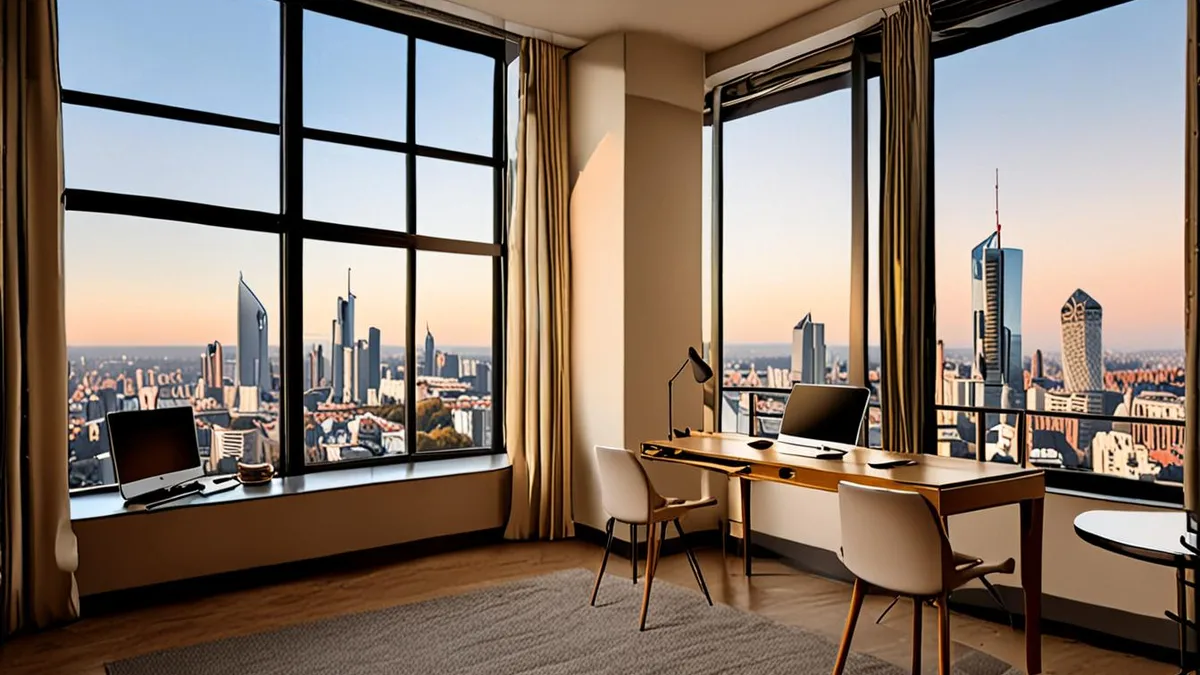
The baseline in a Frankfurt business hotel is straightforward: a proper desk in the room, fast and reliable Wi-Fi, and blackout curtains so you can sleep despite the early summer sunrise or the glow of the skyline. If a hotel in the upper price range lacks any of these, treat it as a red flag rather than a bonus. The same goes for smaller details that matter once you are on your second or third night: enough outlets near the desk so you can charge a laptop and phone at the same time, a shower that actually delivers hot water at 5:30 am, and soundproofing good enough that a late arrival in the next room does not cost you sleep. None of these show up in star ratings, but they separate a genuinely work-friendly hotel from one that simply markets itself that way.
Beyond the room, most properties add services aimed at travelers with irregular schedules. Late arrivals are normal in a city with Germany’s busiest airport, so reception and check-in are built around it. Breakfast is another area where business hotels differ clearly from leisure properties, with early serving times and quick options for people heading straight to a meeting. Typical extras you can expect include:
- On-site fitness rooms, usually compact but equipped with cardio machines and basic weights, so you can keep a routine without leaving the building.
- 24-hour reception with express check-in, letting you collect a pre-arranged key card within minutes of a midnight arrival.
- Early breakfast from around 6:00–6:30 am, often with a grab-and-go coffee option for guests who cannot sit down.
- Business corners with printers and computer access, useful for printing boarding passes or last-minute documents.
- Meeting rooms bookable by the hour, a practical middle ground when your hotel lobby is too noisy for a client conversation.
One practical habit: ask at check-in when breakfast starts and whether an earlier tray can be arranged on meeting mornings. Staff at business-focused hotels deal with this request daily, and a quick confirmation the night before saves you a rushed start.
Best Areas to Stay for Business Travelers
For meetings in the financial district, the Bankenviertel and the city center around the Hauptwache are the obvious choices. Staying here puts major office towers, banks and conference venues within a short walk, which means no commuting stress and easy returns to your room between appointments. The area also has plenty of restaurants for client dinners.
Near the Hauptbahnhof
Hotels around the central station suit travelers whose schedule mixes office visits with fairground appointments. The S-Bahn connection to Messe Frankfurt takes roughly 10–15 minutes from the central station area, and the station itself puts almost every part of the city within easy reach. The trade-off is a livelier street scene in the evening, which some travelers like and others avoid.
Airport and Messe-adjacent stays
Airport hotels make sense when you land late or fly out early, especially since Frankfurt Airport sits only about 10–15 minutes from the city center by S-Bahn or ICE train. You sacrifice skyline views for maximum convenience on a one-night stopover. If your week revolves around a trade fair, look at streets directly adjacent to the Messe grounds instead; being able to walk to the halls saves both time and daily transit costs. For a similar approach in another European business city, our guide to stylish hotels for a city break in Zurich shows how location choices shape the whole stay.
How Trade Fairs Change Prices and Availability
Few cities swing as sharply with the trade fair calendar as Frankfurt. During major events such as the Frankfurt Book Fair in October and Light + Building in spring, room rates can double or triple compared with a normal week. A hotel that feels reasonably priced in February may be out of reach during a fair week, even for a basic room.
Book early, or stay flexible
Rooms near the Messe fairgrounds often sell out months ahead during the biggest fairs, and what remains tends to be priced accordingly. If your dates fall during a major event, book as early as your travel policy allows, or consider hotels a few S-Bahn stops away where availability holds up longer.
The weekday rhythm
Occupancy in Frankfurt’s business districts peaks from Tuesday to Thursday, when corporate travelers and fair visitors overlap. Weekends are a different story: business hotels empty out, and rates often drop noticeably as a result. If your work allows it, shifting a trip to include a Saturday night can soften the budget considerably. The reverse also applies — arriving Sunday evening for a Monday meeting usually means paying peak prices, so factor the day of the week into your planning as much as the season.
What Rates Look Like and When to Book
Frankfurt hotel pricing swings more than in most German cities, and the reason is simple: trade fairs. When the fairgrounds are full, the whole city feels it, because Messe visitors and regular business travelers compete for the same rooms. On a quiet week in low season, a solid business hotel typically runs around €100–160 per night. During major fairs like the Book Fair in October or Light + Building in spring, that same room can easily climb to €250–400 or more.
Timing your booking matters as much as choosing the hotel. For a regular business trip, booking 4–8 weeks ahead usually gives you a decent choice of rooms at a reasonable rate. For fair dates, start looking 3–6 months in advance, because the best-located hotels near the Messe sell out long before the doors open.
One bright spot for flexible travelers: weekends. Business districts empty out from Friday evening, and hotels drop prices to fill rooms. Weekend stays often cost 20–40% less than weekday nights, which makes Frankfurt a surprisingly affordable city if your schedule allows a Saturday meeting or a leisure extension.
- Fair calendars are public: Messe Frankfurt publishes its event schedule well in advance, so you can check your travel dates against it before booking and avoid accidental rate spikes.
- Mid-range hotels move the most: Budget chains and upper-upscale houses keep relatively stable prices, but the mid-range business hotels where most corporate travelers stay show the sharpest jumps during fairs.
- Refundable rates cost more but pay off: If your trip might shift, a flexible rate booked months ahead of a fair week is usually cheaper than a last-minute non-refundable one.
- Sunday nights bridge the gap: Arriving Sunday evening instead of Monday morning often lands you closer to the quieter weekend pricing before the Tuesday-to-Thursday peak kicks in.
Choosing Between Chains, Design Hotels and Airport Stays
Most business travelers in Frankfurt end up choosing between three types of properties, and each serves a different style of trip. International chains are the default for a reason: you know exactly what you are getting, from the desk setup to the breakfast hours, and corporate loyalty programs add perks like lounge access or late check-out that matter on a packed schedule. If your company books for you, chances are you will end up in one of these.
Design-oriented city hotels are the interesting middle ground. Frankfurt has a good selection of them, particularly around the city center and the riverfront, and they offer far more character than a standard corporate tower. The better ones still deliver a proper workspace, reliable internet and a properly dark room for sleeping, so you lose very little in practicality. They suit travelers who entertain clients or simply want their evening to feel less like a business park.
When an airport hotel makes sense
Airport hotels trade skyline views for pure convenience. If you land late, fly out early, or are on a one-night stopover between connections, staying at the airport saves you the 10–15 minute train ride into the center twice. The rooms are usually every bit as functional as downtown business hotels, with the same desks, fitness rooms and early breakfasts. The trade-off is atmosphere: you are beside runways and highways, not cafés. For anything longer than a night or two, most travelers prefer the city.
A practical approach is to match the hotel type to the trip: chains for quick working visits, design hotels when you want Frankfurt to feel rewarding, airport stays when the schedule is dictated by flight times.
Practical Tips for a Smooth Frankfurt Work Trip
A few small decisions make a Frankfurt work trip noticeably smoother. The biggest one is transport: during rush hour, the S-Bahn beats a taxi almost every time. Both the airport and the Messe fairgrounds connect to the central station area by train in a matter of minutes, and services run frequently. You also avoid sitting in traffic on the city’s congested approach roads, which can turn a short drive into a long one.
Before you confirm any booking, ask the hotel two questions directly. First, how early does breakfast start? If you have an 8:00 am meeting across town, you want the earliest serving time confirmed in writing rather than assumed. Second, how flexible is late check-out? If your flight leaves in the evening, a guaranteed afternoon check-out is worth more than a free coffee voucher.
Drivers have one extra thing to verify. Frankfurt’s city center sits inside a low-emission zone, and your hotel’s location determines whether you can legally drive to the door. Check where your hotel sits relative to the zone boundary before you arrive, and make sure your vehicle meets the requirements for the relevant environmental sticker.
- Buy your transit ticket in advance: Ticket machines at the airport and Hauptbahnhof take cards, but having a day or multi-day pass sorted before your first morning removes one errand from a tight schedule.
- Ask about a packed breakfast: Many business hotels will prepare a to-go bag if your flight or meeting starts before the restaurant opens, but only if you request it the night before.
- Check luggage storage for late departures: If late check-out is not possible, most hotels will store your bags after check-out so you can work or meet clients unencumbered on your final day.
- Confirm meeting room availability: If you plan to host a small client meeting at the hotel, book the room when you reserve your stay rather than assuming space will be free on the day.
Wrapping Up Your Frankfurt Business Stay
So what separates a good business hotel in Frankfurt from an overpriced one? Start with the basics: a workspace you can actually use, a bed that lets you sleep properly, and a front desk that understands travelers land at odd hours. If a property charges a premium, ask yourself what it’s actually adding. Sometimes the answer is nothing but the address.
That said, don’t overpay for polish when convenience is what you need. A straightforward room near the Hauptbahnhof or the fairgrounds often beats a sleeker option that costs more and saves you less time. The trick is matching the hotel to your schedule, not the brochure photos.
One last thought: Frankfurt rewards travelers who plan around their reason for being there. A quick overnight stop has different needs than a week-long fair visit, and the best value usually comes from knowing which of the two you are. If this helped you plan your trip, feel free to leave a comment or share the article.