Many travelers book a stay on Lake Bled assuming they can ski straight from their hotel door, only to discover that the lake itself has no slopes at all. That does not mean a winter trip here is off the table. There are real Slovenia ski resorts within easy reach, and knowing which one suits your group makes the difference between a smooth ski day and a frustrating one.
This guide walks through exactly what to expect. We cover which resorts are actually near Lake Bled, how Kranjska Gora and Vogel compare, when to go for the best snow, what a day on the slopes typically costs, where to base yourself, and what non-skiers can do while you ride the lifts. We finish with a quick summary to help you plan. By the end, you will know whether these smaller Slovenian mountains fit your trip, or whether you should adjust your expectations before you pack your skis.
Which Slovenia Ski Resorts Are Actually Near Lake Bled
The first thing to understand is simple: Lake Bled has no ski slopes of its own. Bled is a lake town, famous for its island church and castle, and the skiing happens elsewhere. The two areas travelers actually use are Kranjska Gora, close to the Austrian and Italian borders, and Vogel, which sits high above Lake Bohinj in Triglav National Park.
Kranjska Gora is the closer and easier option of the two in practical terms. It lies about 35-40 km from Bled, which is roughly a 40-minute drive on main roads. That makes it the natural choice for a half-day outing or a relaxed day trip: you can ski in the morning, be back in Bled for a late lunch, and still have the evening to wander the lake shore.
Vogel: closer as the crow flies, but more of a journey
Vogel is roughly 25-30 km from Bled, so on paper it looks nearer. In practice, the trip takes a bit more planning. You drive to Lake Bohinj, park, and then take a cable car up into the ski area, which sits at around 1,500-1,800 m. The cable car ride is part of the experience, with views over the lake on the way up, but it adds time to your morning and means keeping an eye on lift operating hours for the ride back down.
There are also smaller local hills and sledging spots around Bled itself. These are pleasant for an hour or two with children or beginners, but they are not full ski resorts, so do not build your trip around them.
Kranjska Gora vs Vogel: How the Two Areas Compare
Kranjska Gora and Vogel are both genuine ski areas, but they offer noticeably different experiences, and the right choice depends on who is in your group and what you value on the mountain.
Kranjska Gora: gentle, sociable and family-friendly
Kranjska Gora has roughly 20-30 km of groomed pistes, with wide, gentle runs that suit beginners and intermediates. The ski area wraps around a proper village with cafes, rental shops and restaurants, so it feels like a resort town rather than just a lift station. If your group mixes first-timers with more confident skiers, or if you are only planning a short trip, this is usually the easier fit.
Vogel: fewer runs, bigger scenery and better snow
Vogel sits at about 1,500-1,800 m, which gives it more reliable natural snow than the lower Kranjska Gora slopes. The runs are fewer but longer, and the setting is the real draw: from the slopes you look straight down over Lake Bohinj and the surrounding peaks of Triglav National Park. Skiers who prioritize scenery and snow conditions over piste kilometers tend to prefer it.
One thing to keep in mind: neither resort matches the scale of the large Alpine domains you might know from France or from ski resorts in Austria in winter. You can cover the pistes at either area in a couple of days, so plan for 2-3 varied days split between the two mountains rather than a full week on a single one.
When to Go: Season Dates and Snow Conditions
The ski season near Lake Bled typically runs from early December to mid or late April, though the exact opening and closing dates depend on snowfall each year. Vogel, with its higher altitude of around 1,500-1,800 m, usually holds its snow longer and more reliably than Kranjska Gora, whose lower slopes depend more on snowmaking as the season progresses. That difference matters when you are choosing which mountain to visit in the shoulder weeks of December or April, when a short drive either way can mean the difference between good coverage and thin, patchy runs.
Timing shapes your experience more than you might expect. December and January bring the coldest conditions and the shortest days, with lifts closing by late afternoon, so start early to get your money’s worth. February is the busiest and most expensive month, driven by Slovenian school holidays, so book accommodation and passes well ahead if you travel then. March is a local favorite: milder temperatures, longer daylight and quieter slopes, though lower runs can soften by the afternoon, so aim for the morning snow. If your dates are flexible, checking school holiday calendars and weekend forecasts before booking can save you both money and queue time.
- Snowmaking coverage: Kranjska Gora leans heavily on artificial snow at the start and end of the season, which keeps key runs open but can make them firmer and icier than natural snow.
- Weekend versus midweek: Saturdays and Sundays draw local skiers from Ljubljana, so midweek days are noticeably quieter on the lifts and in the rental shops.
- Checking conditions before you go: Both resorts publish daily piste and lift status online, so check the morning of your trip, especially in December and late March when coverage can change quickly.
- Layering for the season: January cold can drop well below freezing on the Vogel cable car, while a sunny March day may feel warm enough for lighter gloves by lunchtime.
What a Ski Day Costs: Passes, Hire and Lessons
Skiing near Lake Bled is refreshingly affordable compared with the big Alpine names in neighboring Austria and Italy, but it helps to know where your money goes before you arrive. A standard adult day pass typically costs €35-55, with the price shifting depending on which resort you choose and whether you visit on a weekday, weekend or public holiday. Weekend and holiday dates sit at the top of that range, so if your schedule is flexible, midweek skiing is the easiest way to trim costs.
If you need to rent gear as well, budget for ski hire and a day pass together at roughly €60-90 per person per day. That figure covers ordinary recreational skis, boots and poles; premium or performance rental categories usually cost more. Snowboard hire follows a similar pattern. Families should also ask about child rates and multi-day passes, which reduce the per-day price noticeably if you plan two or three days on the snow.
Lessons are easy to arrange at both Kranjska Gora and Vogel, and English-speaking instructors are common, so language is rarely a barrier for visitors. Group sessions suit beginners who want an affordable introduction, while private lessons make sense for nervous first-timers or skiers who want fast, targeted feedback. Book lessons ahead in peak weeks, when instructor availability tightens up.
- Multi-day passes: If you ski two or more days, a consecutive-day pass usually works out cheaper per day than buying single-day tickets each morning.
- Family tickets: Many Slovenian resorts offer bundled family passes covering two adults and children, which can undercut buying individual passes separately.
- Beginner packages: Some rental shops and ski schools bundle a starter lift pass, equipment and a first lesson into one price, which simplifies budgeting for first-timers.
- Season timing: Prices and availability vary by week, so check current rates and opening status with the resort before you travel, especially at the edges of the season.
Getting There and Where to Base Yourself
A hire car is by far the most flexible way to ski from Lake Bled. Public transport exists but limits your timing, and with two very different ski areas in opposite directions, your own wheels let you chase the better weather or snow on any given morning. Ljubljana airport sits about 30-40 minutes from Lake Bled, so you can land, collect a car and be sipping coffee by the lake the same afternoon.
Where to base yourself
For a trip of two to three ski days, staying in Bled itself works well. You keep the lakeside evenings, restaurants and winter atmosphere, while both Kranjska Gora and Vogel remain within easy reach for day trips. This is the best choice for mixed groups, since non-skiers have plenty to do while the skiers head for the lifts.
Dedicated skiers should consider other bases. Kranjska Gora suits trips built entirely around skiing, with the lifts and village life on your doorstep and no daily driving. Bohinj is the pick for those who want Vogel’s scenery and snow reliability without the morning commute, and the cable car is only minutes away.
Winter driving tips
Winter driving on the main roads between Bled, Kranjska Gora and Bohinj is straightforward, and routes are well maintained. That said, mountain weather can change quickly: after heavy snowfall, check road conditions before setting out, allow extra time and make sure your hire car has winter equipment as required locally. Leaving a little earlier in the morning also secures easier parking at both ski areas.
Beyond the Slopes: Winter Activities Around Bled
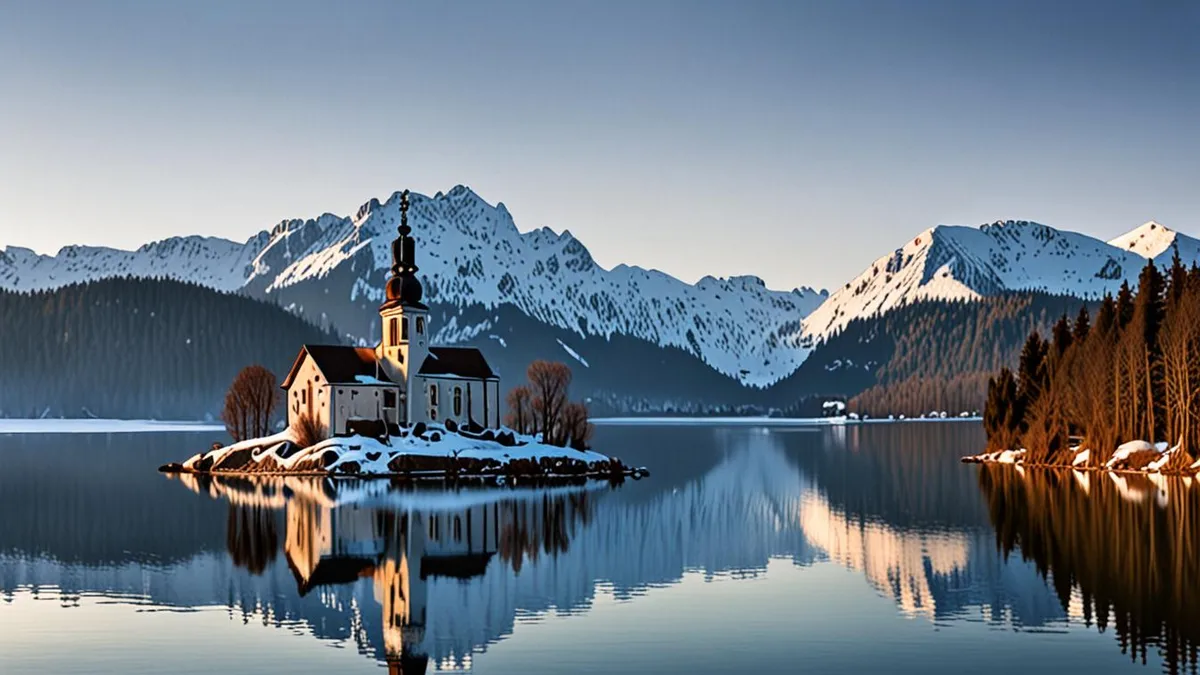
One of the best reasons to base a ski trip in Bled is that the days off the slopes are almost as good as the days on them. The lake itself becomes the main attraction in winter: when it freezes, ice skating on the lake is a genuine highlight, and even in milder winters, the shore path makes a beautiful, mostly flat winter walk with constant viewpoints over the island church and the clifftop castle above.
If you want to stay on snow without downhill skis, the area around Planica near Kranjska Gora is a hub for cross-country skiing and sledging, and the plateau areas above Bohinj offer similar options with quieter trails. These are easy add-ons to a downhill day or a relaxed alternative for anyone in the group who prefers gentler terrain.
Rest days deserve planning too. The region’s thermal spas and wellness centers are ideal between ski days, letting tired legs recover in warm water rather than on another chairlift. If a spa-focused break appeals, it pairs naturally with a wider winter trip — see what to expect and pack for a spa resort break for ideas that work just as well in this corner of the Alps.
- Planica’s ski jumps: The Nordic center at Planica hosts large ski jumping competitions in winter, and you can often watch training even outside event weekends.
- Sledging runs: Designated sledging slopes around Kranjska Gora and above Bohinj let families rent toboggans and ride down without any ski experience at all.
- Lake freezes vary: Ice skating on Lake Bled depends on a sustained cold snap, so treat it as a bonus rather than a guarantee and check local conditions.
- Viewpoint walks: Short trails to viewpoints above the lake give the best photos of the island church against a snowy backdrop, and they need nothing more than warm boots.
Wrapping Up Your Slovenia Ski Trip
So, does Lake Bled have skiing? Not on the lake itself, but the good news is that Slovenia ski resorts near Lake Bled are close enough for easy ski days. Kranjska Gora and Vogel are both within about 40 minutes by car, with Kranjska Gora offering wide, gentle pistes for beginners and families, and Vogel delivering high-altitude snow and dramatic views over Lake Bohinj.
Expect a season that typically runs from early December into April, with adult day passes around €35-55 and a ski day with hire usually totaling €60-90 per person. For a base, choose Bled for variety, Kranjska Gora for beginners, or Bohinj if you want Vogel’s scenery and snow reliability on your doorstep. If this helped you plan your trip, leave a comment or share the article with your travel companions.