Both Canary Islands promise year-round sun and beach resorts, but which one actually fits your holiday style and budget? In this guide to Fuerteventura vs Lanzarote, we compare the two neighbors off the coast of West Africa so you can pick the right island for your next trip. Both sit around a 4-4.5 hour flight from the UK, with sea temperatures of roughly 19-23°C all year, so the real differences lie in the beaches, the resort areas and what each island does best.
We start with beaches and scenery, then walk through the main resort areas on each island: Corralejo, Caleta de Fuste and the Jandía/Morro Jable area on Fuerteventura, and Puerto del Carmen, Costa Teguise and Playa Blanca on Lanzarote. From there, we look at the best time to book and travel, compare all-inclusive and board options on both islands, and match each one to families and different types of travelers. By the wrap-up, you should know exactly which island suits you.
Fuerteventura vs Lanzarote: Beaches and Scenery Compared
Fuerteventura is the beach purist’s island. It is defined by long stretches of golden sand, including roughly 20 km of continuous sand on the Jandía peninsula in the south, plus the famous dune beaches near Corralejo in the north. If your idea of a perfect holiday is walking out of your hotel onto wide, open sand, this is the island that delivers.
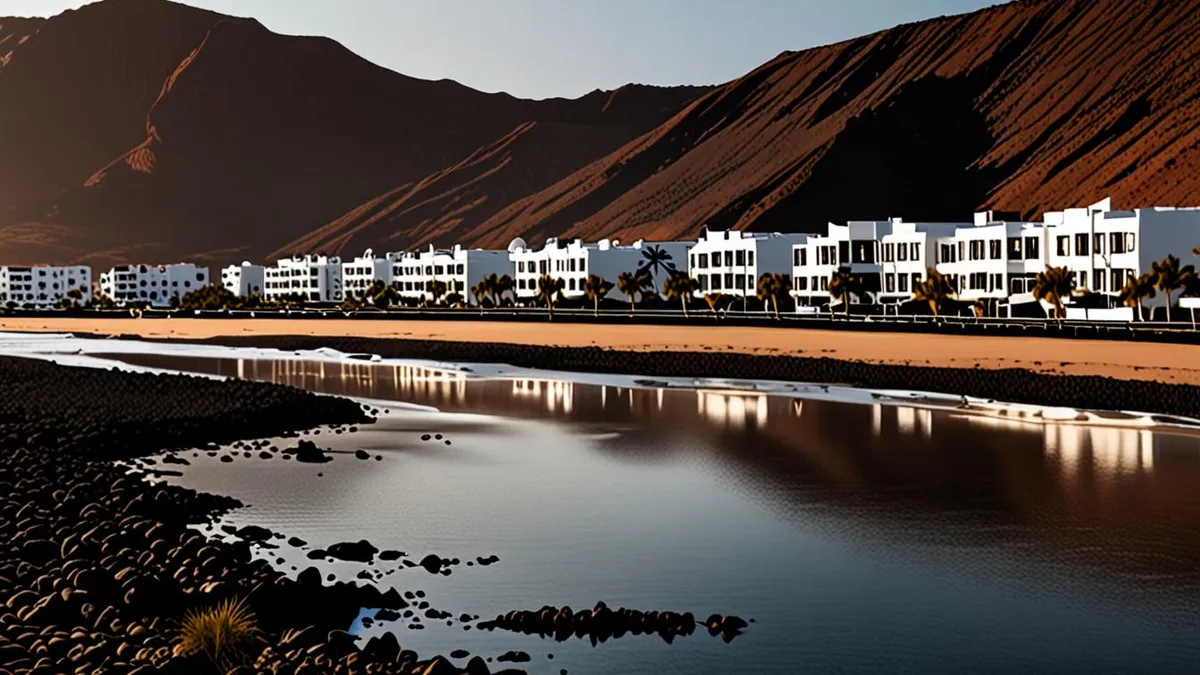
Lanzarote takes a different approach. Much of its coastline is volcanic: black rock coves, lava fields rolling down to the sea, and dramatic lunar-like landscapes inland. Its best-known beaches are often man-made, like the white sand beach at Playa Blanca, which was created with imported sand. The scenery is arguably the most striking of any of the islands, but the natural beach strips are shorter and patchier.
What about the wind?
Trade winds affect both islands, and they’re part of why summer highs stay comfortable rather than scorching. The difference is exposure: Fuerteventura’s east and west coasts feel noticeably windier, which is exactly why surfers and windsurfers love the island. Sunbathers should plan around it, choosing sheltered spots or a windbreak on breezier days.
The short version: choose Fuerteventura for classic wide-sand beach days, and choose Lanzarote for dramatic scenery with shorter, more sheltered beach strips.
Resort Areas in Fuerteventura: Where to Stay
Fuerteventura’s resorts are spread out, and where you base yourself shapes your whole trip in a way that isn’t quite true on its neighbor. The island’s three main resort areas each suit a different kind of traveler, so it pays to match the location to your priorities before you start comparing hotels and board options.
- Corralejo (north): Beyond the dune beaches and the lively old town with its harborfront restaurants, it’s the best base for exploring. Regular ferries run to the small, protected island of Lobos, an easy day trip where you can walk coves and snorkel. Corralejo also has the widest choice of bars and nightlife outside the hotels.
- Caleta de Fuste (east coast): The man-made bay means calm, shallow water even on windy days, and the compact layout puts shops, restaurants and the beach within a short walk of most hotels. It feels purpose-built and low-key rather than buzzing.
- Morro Jable and Jandía (south): Resorts here are more spread out along the coast, so a car is useful for reaching restaurants, shops and stretches of sand beyond your hotel’s immediate area. The payoff is a quieter, more relaxed atmosphere.
One practical point that catches many first-time visitors out: transfer times from Fuerteventura’s airport are long. Corralejo sits roughly 40-50 minutes away, and the Jandía area takes around 70-90 minutes by transfer bus or taxi. If you’re traveling with young children, factor that into your arrival day plans, especially for late landings when everyone is tired. Booking a hotel close to the airport, or planning a light first evening, can make the journey feel far less punishing.
It’s also worth deciding early whether you want to be within walking distance of everything or happy to drive. Fuerteventura rewards travelers who rent a car for at least part of their stay, since some of the island’s most memorable spots sit well outside the main resort areas.
Resort Areas in Lanzarote: Where to Stay
Lanzarote’s resort hubs are Puerto del Carmen, Costa Teguise and Playa Blanca, and they’re all noticeably closer together than Fuerteventura’s spread-out resorts. That makes the island feel easier to manage, especially on shorter breaks or for travelers who like to mix beach days with sightseeing. It also means you can base yourself in one resort and still reach the others for an afternoon, an evening meal or a change of scenery without much planning.
- Puerto del Carmen extras: The long seafront promenade doubles as the resort’s main artery, so you can walk between hotels, beaches, bars and restaurants without needing a car or taxis.
- Costa Teguise extras: Its position in the northeast puts it closest to the island’s northern sights, and the calmer atmosphere suits travelers who find bigger resorts too busy.
- Playa Blanca extras: As the newest of the three hubs, it has a higher proportion of modern, upscale properties, plus ferries to neighboring Fuerteventura for a cross-island day trip.
The logistics advantage is real. Puerto del Carmen sits a short drive from the airport, so you can often be unpacked and poolside well within an hour of landing. Costa Teguise and Playa Blanca are also straightforward transfers, and it’s worth checking approximate journey times with your operator or transfer provider before you book. Because the resorts sit relatively close together, day trips to volcanic attractions like Timanfaya National Park are far easier to organize than the cross-island journeys Fuerteventura often demands. You can head out early, explore the lava fields and be back by the pool in the afternoon.
If you want maximum beach time with minimum driving, Lanzarote’s compact layout works in your favor. It’s a particularly good fit for a first visit to the Canary Islands, or for anyone who’d rather spend their holiday budget on experiences than on car hire and fuel.
Best Time to Book and Travel
The good news about Fuerteventura and Lanzarote is that neither island has a bad season. Both sit off the coast of West Africa and work as year-round destinations, so a January coffee on the seafront is a realistic plan while friends back home scrape ice off the windscreen. Summer highs stay around 26-29°C thanks to the trade winds, which keeps the heat comfortable rather than oppressive.
Timing matters most for your wallet. Peak pricing hits from mid-June to early September and again around the Christmas-New Year window, when flights and family resorts fill up fast. If you want the same sunshine for less, aim for the shoulder months like May and October, which typically bring the cheapest all-inclusive weeks and noticeably quieter pools.
How far ahead should you book?
For summer and school-holiday stays, book 4-6 months ahead. Family resorts and sea-view rooms sell out first in these windows, and last-minute bargains are far less reliable than people hope. If your dates are flexible, compare shoulder-month quotes before committing to a peak-week one.
Swimmers should know the sea runs at roughly 19-23°C year-round. That means comfortable swimming from late spring through autumn, and cooler but still possible dips in winter. Reaching either island is easy too, with average flight times of around 4-4.5 hours from the UK. If you are weighing these islands against Mediterranean options, it may help to read a comparison of Cyprus and Malta for resort holidays, which covers a similar trade-off in a different part of the world.
Costs: All-Inclusive and Board Options on Both Islands
All-inclusive is where the two islands genuinely differ. Lanzarote has a denser supply of large, purpose-built all-inclusive complexes, especially around Costa Teguise and Playa Blanca. Fuerteventura mixes things up more: you will find all-inclusive properties, but also plenty of apartment-style stays and half-board hotels, particularly in Corralejo and Morro Jable.
On price, budget all-inclusive weeks typically cost £550-£900 per person in shoulder months like May and October. In peak summer, expect well above £1,200. The spread between quotes can be large, so it pays to understand exactly what you are comparing before you book. A good starting point is how to choose an all-inclusive resort based on costs and what to check, which breaks down the small print worth reading.
What does the rate actually include?
The cheapest quote is not automatically the best value. Some all-inclusive rates cover only house-brand drinks and buffet dinners, while others include branded drinks, à la carte dining and kids’ clubs. Two complexes at very different prices can end up costing you the same once you add the extras, so compare inclusions line by line rather than headline rates.
Do not dismiss half-board, especially on Fuerteventura. In Corralejo and Morro Jable, eating out is easy and varied, with plenty of reasonably priced restaurants within walking distance of the main hotels. Skipping the all-inclusive premium and paying for a couple of meals out can suit couples and food-lovers better than a wristband.
Which Island Suits Families and Different Travelers
Families with toddlers and young children have two standout options: Caleta de Fuste on Fuerteventura and Playa Blanca on Lanzarote. Both have sheltered bays where the water stays calm, plus compact resort layouts that keep walks to the beach, pool and dinner short. When your toddler naps at 1pm, being ten minutes from everything matters more than any brochure photo.
Whichever island you choose, check the specifics before booking. Kids’ clubs, shallow pools and proper family rooms vary widely between complexes on both islands, and a “family resort” label does not guarantee any of them. Ask exactly what is included and for which age groups. Sea temperatures of roughly 19-23°C mean younger swimmers will want wetsuits or patience outside the warmer months, though rock-pool exploring works year-round.
Couples, watersports and mixed-age groups
Couples and watersports fans tend to lean toward Fuerteventura, particularly Corralejo and the Jandía area. These spots offer space, wind and the conditions that make windsurfing and kitesurfing so popular here. If your ideal day ends with salt in your hair rather than a cocktail by a quiet pool, this is your island.
Multi-generational groups often do better on Lanzarote, in Puerto del Carmen or Playa Blanca. Flat seafront promenades suit grandparents and strollers alike, and shorter airport transfers reduce the logistics of moving a large party. For a deeper look at balancing different ages and needs in one booking, see how to choose a resort for a multi-generational holiday.
Fuerteventura vs Lanzarote: The Wrap-Up
So which island fits your holiday style? If you dream of wide-open golden sand, room to spread out and wind-powered watersports, Fuerteventura is the stronger pick, with Corralejo and the Jandía area offering the space that surfers and beach lovers chase. If you prefer compact resorts, dramatic volcanic scenery and shorter transfers, Lanzarote makes the logistics easier, with all three of its main resort hubs sitting close to the island’s highlights.
For families with toddlers and young children, the sheltered bays of Caleta de Fuste and Playa Blanca are the safest bets. On budget, shoulder months like May and October deliver the best prices, while peak-season trips deserve a 4-6 months’ lead time. Match the resort area to your travel style first, then compare specific properties and board options. Which island would you choose? Let us know in the comments or share this article with a fellow traveler.