All seven Canary Islands promise year-round sun, but choosing the wrong island for your trip style can quietly ruin a resort holiday. A couple after a quiet, design-led escape will hate ending up in a sprawling family complex, while parents with toddlers may find some of the smaller islands too limited in facilities. With temperatures of 18-28°C year-round and sea around 19-23°C, the climate rarely lets you down—but the island you pick shapes everything else about your stay. That’s why comparing Canary islands resorts island by island matters more than picking the first deal you see.
This guide walks through the main differences: how Tenerife and Gran Canaria compare as big-island bases, why Lanzarote and Fuerteventura suit travelers after quieter coasts and longer beaches, and how to match an island to your budget, board basis, and family needs. We’ll also cover the best times to book—including the 4-6 month lead time you’ll want for peak dates—so you can choose with confidence.
The Canary Islands at a Glance: Which Island Fits Which Trip
The Canary Islands may sit close together on the map, but each island has a distinct personality. Picking the right one matters more than picking the right hotel, because inter-island hopping eats up time and money. All seven main islands share the same appeal for European travelers: year-round temperatures of 18-28°C and a flight time of roughly 4-4.5 hours from London.
Tenerife is the all-rounder. Its south coast delivers the liveliest resort scene in the archipelago, while the island’s interior offers something few beach destinations can: a road trip up Mount Teide, Spain’s highest peak, through landscapes that feel more lunar than Atlantic. Gran Canaria follows a similar big-island formula but in a more compact package, with classic beach resorts and the option to tour the whole island in a day or two.
Lanzarote takes a different approach entirely. Strict building rules have kept its resorts low-rise and whitewashed, shaped by the artist César Manrique, so even busy towns feel calm and design-conscious. Fuerteventura is the beach purist’s pick, with sand stretching along more than 150 km of coastline and steady conditions for windsurfing and kitesurfing. The smaller western islands are where you go to escape resorts altogether.
- Tenerife: South-coast resorts sit only 15-25 km from Teide National Park, so a cable car excursion to the volcano’s summit can slot into a beach holiday without an overnight stay.
- Gran Canaria: The island’s compact size means you can drive from a beach resort to pine forests and mountain villages in well under two hours, making it ideal for travelers who want to rent a car for a few days.
- Lanzarote: The Timanfaya National Park’s volcanic fields dominate the island’s center, and several resorts were designed or influenced by Manrique, giving the whole island a cohesive, sculptural look.
- Fuerteventura: Beyond the main resort towns, long stretches of the east coast remain undeveloped, with dune-backed beaches accessible by car or boat.
- La Palma, La Gomera and El Hierro: These islands offer marked hiking networks, dark-sky stargazing and small guesthouses rather than large hotel complexes; El Hierro in particular has few resorts at all, so expect apartments and rural lodgings.
Tenerife and Gran Canaria: Big-Island Resorts Compared
Tenerife and Gran Canaria are the archipelago’s two heavyweights, and both deliver the full resort experience: big hotels, promenades, and enough restaurants and bars that you never run out of options. The difference comes down to character and layout rather than quality.
On Tenerife, the south-west coast is where most resort travelers end up. Costa Adeje is the upscale pick, with polished beachfront hotels, calm golden-sand beaches and a marina where whale and dolphin watching boats depart daily — pilot whales and bottlenose dolphins are resident in these waters, so sightings are common year-round. Next door, Los Cristianos feels slightly more traditional, with a fishing-village core, a pedestrianized center and often gentler prices.
Gran Canaria’s dunes and dense resort belt
Gran Canaria answers with Maspalomas, famous for its sweeping dunes that feel more Sahara than Atlantic, backed by a long beach and a wide choice of hotels. Nearby Playa del Inglés adds family-friendly beaches and a huge dining scene, while Puerto Rico, tucked into a sheltered cove to the west, is compact, calm and popular with families and older travelers. The resort supply here is dense, which keeps competition — and often prices — in travelers’ favor.
Both islands suit travelers who want more than the pool deck. From either Costa Adeje or the Maspalomas area, you can reach nightlife, shopping centers and organized excursions — volcano trips, boat tours, mountain villages — typically within 30-60 minutes of your hotel. If you like the idea of a mainland-style Spanish coast with resort infrastructure, it’s worth comparing these islands with the options in our guide to Costa Brava and Costa del Sol resorts.
One practical tip applies to both islands: book on the south coast. The trade winds push clouds against the northern slopes, so the north is often overcast while the south enjoys sunshine. Staying south gives you noticeably better beach weather, especially outside high summer.
Lanzarote and Fuerteventura: Quieter Coasts and Longer Beaches
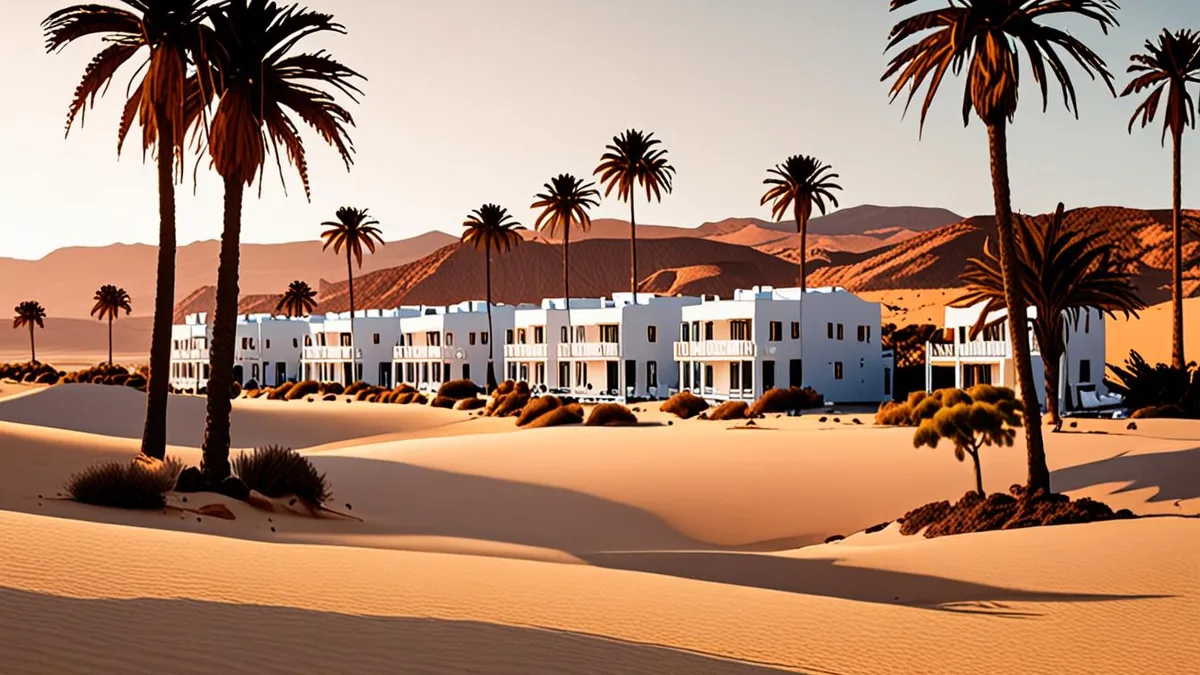
If Tenerife and Gran Canaria feel too busy, the eastern islands offer a calmer pace. Lanzarote’s two main resort towns, Puerto del Carmen and Costa Teguise, are built low and painted white, with strict local planning keeping high-rises out. The result is a relaxed, spread-out feel that suits couples who want seafront promenades, good restaurants and evenings that stay quiet rather than raucous.
Fuerteventura plays a different hand: space. Its beaches span over 150 km of coastline, and the standouts are Corralejo in the north, with its dune-backed sands, and the Jandia peninsula in the south, home to the widest and longest stretches of sand in the archipelago. Even in busier weeks, you can usually walk a few minutes and leave the crowds behind.
Wind, water sports and transfers
That open coastline makes Fuerteventura the go-to island for windsurfing and kitesurfing, with Corralejo and the Jandia beaches drawing riders of all levels. Schools and rental centers are well established, so beginners can book lessons on the spot. The trade-off is wind for everyone: it’s a constant on both islands and strongest in the summer months, so if you’re sensitive to a breeze on the beach, pick a sheltered cove or a hotel with windbreaks around its sun terraces.
Practicalities matter here too. Resorts on both islands typically sit 30-45 minutes from the airport by transfer, longer than the quick hops on Tenerife or Gran Canaria. It’s not a dealbreaker, but it’s worth factoring in if you land late in the evening or travel with restless children.
When to Book Canary Islands Resorts: Seasons and Lead Times
The Canary Islands are one of the few places in Europe where winter sun is a realistic promise, which is exactly why the December-March season is the busiest of the year. Resorts fill up quickly, especially over the Christmas and New Year weeks. If you want to travel in winter, book 4-6 months ahead to lock in the best rates and the widest room choice.
The sweet spot for value is May-June and September-October. Daytime temperatures typically sit between 22-26°C, warm enough for beach days without the intensity of midsummer, and resort rates drop to their lowest levels of the year. Flights from London take roughly 4-4.5 hours, so even a shoulder-season week feels like a proper escape.
One common mistake is assuming summer is the expensive season. In the Canaries, July and August are actually mid-priced compared to winter, because the islands’ climate is so stable that summer loses its usual premium. If you have school-age children, that’s good news for the summer holidays; if you don’t, consider the shoulder months instead.
- Sea swimming window: water temperatures of 19-23°C mean swimming is comfortable from late spring to autumn, though January swimmers should expect the cooler end of that range.
- Winter booking urgency: the mid-December to early January peak and Easter week sell out first at family-oriented resorts, so reserve those exact dates earliest.
- Shoulder-season perks: in May-June and September-October you’ll often find poolside sunbeds, restaurant tables and excursion boats readily available without advance reservations.
- Green-minded travelers: if sustainability matters to you, check a resort’s credentials before booking; our guide to what eco certifications in Europe actually mean explains how to read them.
Matching the Island to Your Budget and Board Basis
All-inclusive weeks in the Canaries typically run €600-1,200 per person depending on the island and the season. The cheapest packages are generally found on Fuerteventura and Gran Canaria, where the dense resort supply keeps prices competitive. The same week in a comparable hotel on Tenerife’s south coast often costs noticeably more.
Where to find value on Tenerife
Costa Adeje skews pricier than the rest of the archipelago, thanks to its upscale hotel stock. If Tenerife appeals but the rates don’t, look at Los Cristianos next door or Puerto de la Cruz on the greener north coast. Both offer solid resort options at gentler prices, though remember the north is more often under cloud cover.
Half-board versus all-inclusive
On islands with strong restaurant scenes, half-board often beats all-inclusive on both cost and quality. Lanzarote is a good example: its resort towns are full of well-regarded local restaurants, and eating out a few nights a week can cost less than the all-inclusive premium while giving you much better food. Before paying extra for any package, compare exactly what it covers. Some all-inclusive deals exclude branded drinks, à la carte dinners or kids’ snacks, which can quietly erode the savings. For a full breakdown of the trade-offs, see our comparison of all-inclusive versus half-board resorts and which one saves money.
Family Fit: Which Islands Work Best with Kids
Not every Canary Island works equally well for a family trip, and the differences show up fast once you arrive with kids in tow. Gran Canaria’s Puerto Rico and Tenerife’s Costa Adeje have the deepest choice of kids’ clubs, family pools and supervised activities in the archipelago. If entertainment programs are a priority, these two resort areas should top your shortlist.
Fuerteventura takes a different approach. Families who care more about shallow, sandy beaches than structured entertainment will love it here, with the island’s long stretches of sand giving children plenty of space to play. The trade-off is that some resorts are quieter in the evenings, with fewer shows and kids’ discos than the big-island hotspots.
One detail that catches families out in winter: pool heating. The Atlantic feels cool year-round, and unheated resort pools can feel genuinely chilly in January. Always ask whether the pool is heated before booking a winter stay, especially if your children plan to spend hours in the water.
- Room types matter: look for family rooms or apartments rather than standard doubles; Canarian resorts commonly offer apartment-style accommodation with a kitchenette, which helps with early breakfasts and picky eaters.
- Beach depth: Fuerteventura’s gently shelving sands let younger children paddle safely, while some south-Tenerife beaches can have stronger surf on windy days.
- Kids’ club ages: check the minimum age and opening days before booking; some clubs only run during school holidays or accept children from age four or five.
- Pool extras: family-focused resorts in Puerto Rico and Costa Adeje often add splash zones, lazy rivers and separate children’s pools, which are worth confirming on the hotel’s own description.
Wrapping Up Your Island Choice
So, which island suits your trip? If you want variety, big-name facilities and plenty to do beyond the pool, Tenerife and Gran Canaria are the safest bets. Lanzarote rewards travelers who prefer calm, design-led resorts, while Fuerteventura is the pick for anyone whose holiday revolves around long sandy beaches. Match the island to your style first, then choose the resort.
Timing and details matter too. Book winter stays 4-6 months ahead, or travel in May-June or September-October for the best value. And remember to match your board basis and kids’ facilities to the island itself, not just the hotel on your shortlist. Get that combination right and a week in the Canaries rarely disappoints. If this helped you decide, leave a comment or share the article with a friend planning their own island escape.