Both Finland and Sweden promise dreamy lakeside lodge stays, but which country actually fits your budget, season and travel style? That’s the question behind any honest comparison of lakeside lodges in Finland vs Sweden, and the answer depends on more than pretty photos. Finland counts tens of thousands of lakes woven into connected waterways, while Sweden offers a handful of huge, open lakes with a strong sailing culture. The lodge styles, seasonal highlights and even the feel of the shoreline differ in ways that matter once you’re actually there.
This guide walks through the core differences between the two countries, the best seasons to book, what you can realistically expect to pay per night, and the activities on and around the water. We’ll also match each option to your travel style, whether you’re a couple chasing a private sauna, a family needing shallow swimming shores, or a solitude seeker after real quiet. By the end, you’ll know which country to pick and when to book it.
Lakeside Lodges in Finland vs Sweden: The Core Differences
Finland and Sweden both deliver world-class lake country, but the scenery works in fundamentally different ways. Finland’s Lake District, especially the Saimaa region, covers over 4,000 km² of connected lakes, channels and forested islands. Lodges here often sit on a narrow strip of shoreline with water on two or three sides, and you can boat or paddle from one lake to the next without ever leaving the network. The view is intimate: bays, reeds, headlands and neighboring islands rather than a wide horizon.
Sweden takes the opposite approach. Its lakes are fewer but far bigger, and Vänern is Western Europe’s largest lake at around 5,650 km². Staying on Vänern or Vättern means open water views, real waves on windy days, and a long-standing sailing culture with marinas, guest harbors and boats of every size. If you want the feeling of standing beside an inland sea, Sweden is where you’ll find it.
Cabin style and atmosphere
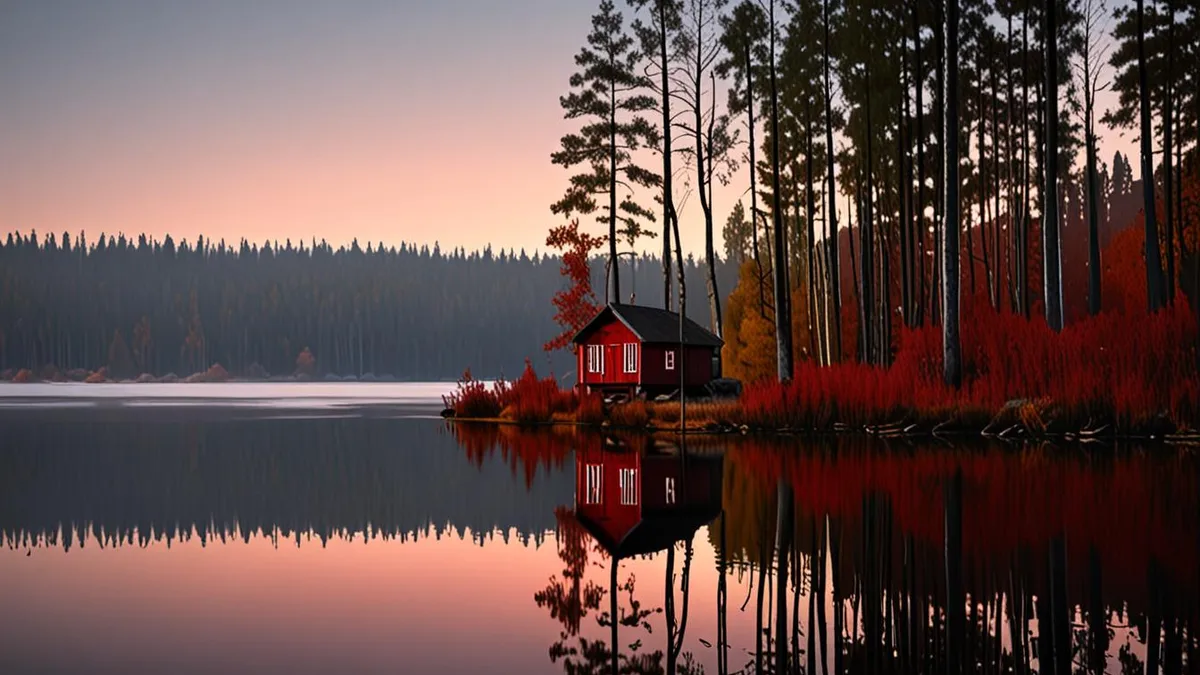
Finnish lodges lean traditional: dark timber cabins, wood-fired or electric saunas right by the shore, and a rowboat tied to the jetty as standard equipment. Swedish lodges often mix classic red cabins with modern design builds, so you’ll find more glass walls, minimalist interiors and contemporary architecture alongside the traditional stock. Neither style is better, but the vibe of your evenings, sauna steam in a timber cabin versus a glass of wine watching the sun drop over open water, genuinely differs between the two countries.
Best Seasons for a Lake Lodge Stay
Timing shapes a lake lodge trip more than any other decision, and the good news is that both countries share the same broad rhythm. Finland’s lake season for swimming and boating runs roughly mid-June to late August, and Sweden follows a similar pattern, with lakes at their warmest in July, when water temperatures often sit around 17-20°C. In this window you get long daylight, warm evenings on the terrace and water that’s actually pleasant for a swim rather than a dare.
Outside summer, the lakes transform rather than shut down. Autumn brings color and quiet, and the darker months open up a completely different spectacle on clear nights. Here’s what each shoulder and winter season offers:
- Early June to early July in Finnish Lakeland: midnight sun nights, when the sky never goes fully dark and you can read outside at midnight, a phenomenon Sweden’s big-lake regions don’t match at the same scale.
- September: autumn colors reflected in calm water, plus noticeably fewer guests at lodges, making it a favorite month for photographers and quiet-seekers.
- September to March: the window when northern lights are possible near lakes in both countries, with dark skies over the water giving you an unobstructed view of the horizon on clear nights.
One practical note: if northern lights are your priority, plan around weather and moon phase rather than dates alone, and pick a lodge with an open western or northern shoreline. Lakes help here, since they cut light pollution in a way towns can’t.
What Lakeside Lodges Cost in Each Country
Lakeside lodge pricing is refreshingly similar on both sides of the border. In Finland and Sweden alike, a cabin typically costs €90-€200 per night, and the upper end of that range is where you’ll find the extras that make a lake stay special: a private sauna, your own stretch of shoreline and a jetty. Basic cabins without those features sit at the lower end, and honestly, a simple cabin with a shared sauna can be the more atmospheric choice.
Season matters more than country when it comes to what you’ll pay. July is the most expensive month everywhere, coinciding with the warmest water and Swedish school holidays. Late August and September drop prices noticeably, and the weather is often still pleasant enough for evenings outside. If your dates are flexible, shifting a trip by two or three weeks can save a meaningful chunk of your budget.
How far ahead to book
Book summer lake cabins 3-6 months ahead, especially for July weekends, when the best shoreline properties go first. Midweek stays in late summer are far easier to find, and last-minute deals do appear outside the peak window. For a sense of how neighboring markets compare, our guide to what lodge stays in Latvia cost by season shows how quickly rates shift between high and low season in the Baltic region too. The same principle applies here: the earlier you lock in July, the better your pick of shoreline and the closer you’ll stay to the lower end of that €90-€200 range.
Activities On and Around the Water
The water is the whole point of a lakeside lodge, so it makes sense to plan your days around it before you book. Finland and Sweden take slightly different approaches, and knowing the difference helps you pick the right lodge for how you actually want to spend your time.
In Finland, most lodges include a rowing boat as standard, and the rhythm of the day tends to revolve around the shore: swim, warm up in the sauna, repeat. The Saimaa region, with its maze of connected waterways, is also one of the few places where you can join a guided boat tour to look for the rare Saimaa ringed seal, one of Europe’s most endangered seals. Anglers will find pike and perch in most lakes, and many lodge owners can point you to their favorite spots or arrange permits.
Sweden’s big lakes favor bigger water activities. Vänern and Vättern both have a genuine sailing culture, and kayaking is popular on their clearer, more open expanses. The shore roads around both lakes are also well suited to cycling, with villages, beaches and cafés spaced along the way.
- Rowing and shore saunas (Finland): Most Finnish cabins come with a rowing boat included, so you can explore quiet bays without booking anything extra, then finish the evening with a wood-fired sauna steps from the water.
- Saimaa seal spotting tours (Finland): Local operators run guided boat trips to see the Saimaa ringed seal; sightings are never guaranteed, so treat it as a bonus rather than a promise.
- Sailing on Vänern and Vättern (Sweden): Both lakes support real sailing communities, and some lodges can help arrange a boat or a skippered day out if you don’t have experience.
- Lakeshore cycling (Sweden): Paved roads hug long stretches of both big lakes, making it easy to combine a morning ride with an afternoon swim.
- Winter on the ice (both countries): When the lakes freeze solid, ice fishing and ice skating become the main events; conditions vary year to year, so always check ice thickness locally before heading out.
Choosing by Travel Style: Couples, Families and Solitude Seekers
The best lake lodge for you depends less on the country and more on who you’re traveling with. A cabin that’s perfect for a couple’s quiet week can feel isolated for a family with restless kids, and vice versa.
Couples
Finnish lakeside lodges are hard to beat for romance. Many cabins come with a private sauna right on the shore, and if you time your trip for the midnight sun window in Finnish Lakeland, you can sit by the water late into a bright evening with no one else around. Book a cabin with its own stretch of shoreline and you may go days without seeing another guest.
Families and solitude seekers
Families usually do better on the Swedish side. Lodges near the big lakes like Vänern and Vättern tend to sit close to towns, so you get easy access to shops, restaurants and medical care if you need it, plus proper swimming beaches with shallow, gently sloping shores that suit younger children. The bigger towns also make day trips and logistics simpler when you’re juggling kids.
Solitude seekers, on the other hand, should head for remote Finnish Lakeland. The sheer density of lakes and forests means you can find cabins that are genuinely hard to reach, reachable only by boat or a long gravel road, and the isolation runs deeper than what most Swedish lake areas offer. If quiet is your main goal, Finland wins clearly. And if you want to compare the feeling with somewhere nearby, our guide to peaceful lake lodges in Lithuania shows how the Baltic version of this style of holiday compares.
How to Decide: Finland or Sweden for Your Lake Trip
Both countries will give you a memorable lake holiday, so the decision comes down to matching your priorities and your dates. Work through the steps below before you start comparing individual lodges, and the choice usually makes itself.
- Decide what scenery you want. If you picture endless chains of lakes and forest islands melting into each other, pick Finland — the Saimaa region alone spreads across more than 4,000 km² of linked waterways. If you’d rather look out over wide, open water that feels almost like the sea, Sweden’s big lakes fit better.
- Choose your signature experience. Finland is the clear pick for sauna culture, with a wood-fired sauna by the shore as the heart of the evening. Sweden is the pick for sailing and bigger-water boating, and its logistics are slightly easier, with the lakes within reasonable reach of Stockholm.
- Factor in the light. If seeing the midnight sun matters to you, plan for Finnish Lakeland between early June and early July — Sweden doesn’t offer the same effect at lake-lodge latitudes.
- Match your dates to the season. Check your travel window against the season guidance before anything else: swimming and boating run roughly mid-June to late August, northern lights are possible from September to March, and July is peak season in both countries.
- Only then compare specific lodges. Once country, season and travel style are settled, shortlist cabins within your budget and book well ahead of the summer rush — July weekends in particular go first, so reserving early is the safest way to secure a shoreline spot.
Follow the steps in order and you’ll rarely regret the choice. Most disappointment with lake holidays comes from a mismatch between dates and expectations, not from picking the “wrong” country — so get the season right first and both Finland and Sweden will deliver. It also helps to be honest about how you actually travel: if you know you’ll want a restaurant dinner or a town stroll every other day, favor the more accessible Swedish lake areas; if you’re happiest with a rowboat, a sauna and total quiet, lean Finnish. Talk to lodge hosts before booking, too — they’ll tell you candidly whether their spot suits couples, families or solitude seekers better than any listing description will.
Wrapping Up Your Finland vs Sweden Lake Choice
So, Finland or Sweden? If your dream is dense, connected lake scenery, a private sauna by the shore and midnight sun evenings in early summer, Finland is the stronger pick. If you picture wide open water, sailing and easier logistics from a capital city, Sweden edges ahead. Neither is the wrong answer.
On the practical side, the two countries are closer than you might expect: cabin stays typically run €90-€200 per night in both, July is peak season everywhere, and booking 3-6 months ahead makes the difference between the lodge you want and whatever is left. In the end, your travel style and your season window matter more than the country on the passport stamp. Match those two first, then compare lodges. If this helped you decide, leave a comment or share the article with a friend planning the same trip.