You’ve found the perfect stretch of countryside, the dates are set, and now comes the hard part: do you book the round canvas yurt with room for everyone, or the wooden treehouse perched up among the branches? It’s a genuine dilemma, because yurts vs treehouses are two very different kinds of stay, and the right answer depends on when you’re traveling, who’s coming along and what you want to spend.
This guide breaks the decision down piece by piece. We’ll start with the core differences between the two stay types, then look at how season and weather affect each one, what you can typically expect to pay per night, and who each option suits best. We’ll finish with practical booking advice so you can lock in the right stay at the right time. By the end, you should know exactly which one fits your trip.
Yurts vs Treehouses: The Core Differences at a Glance
The fastest way to choose between these two stays is to understand what each one actually is, because they solve very different problems. A yurt is a round, single-level canvas tent stretched over a lattice frame on a wooden platform. Most offer 25–50 m² of open floor space and sleep 2–6 guests, which makes them one of the most flexible glamping formats around. A treehouse, by contrast, is an elevated wooden cabin built 3–6 m above ground, typically 15–35 m² and designed for 2–4 guests.
Where each one shines
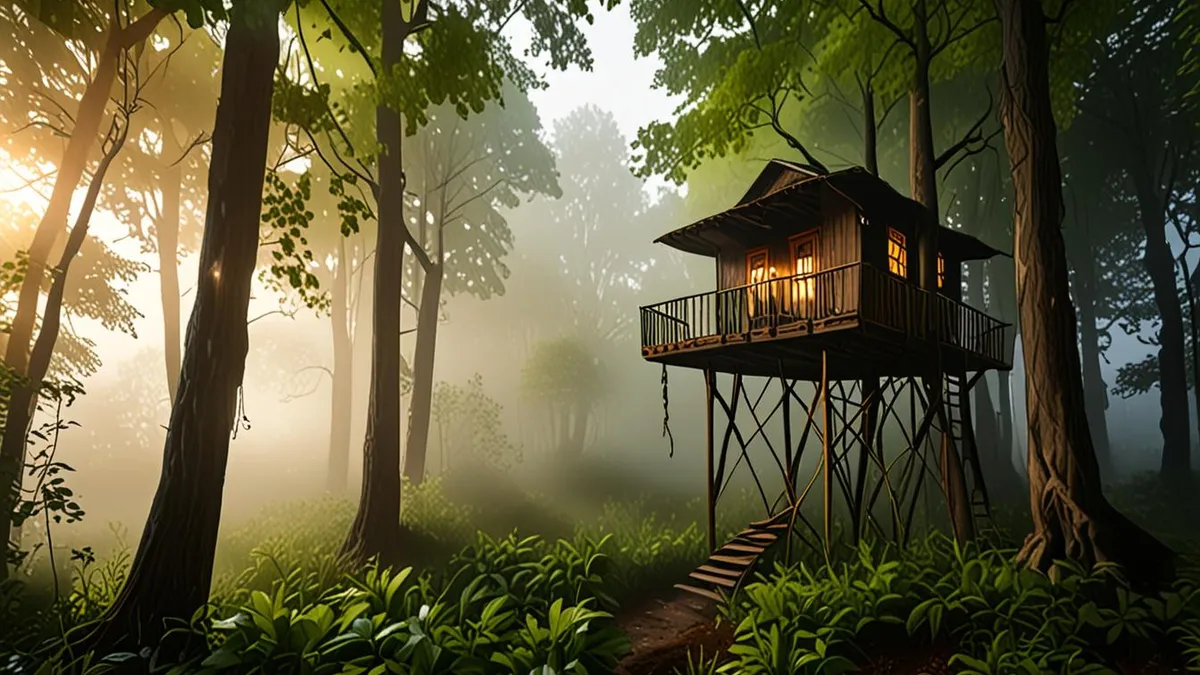
Think of it this way: yurts favour space and flexibility, while treehouses favour height, views and a tucked-away feel. In a yurt, you get one generous round room where everyone shares the same space, which works well for families and groups. A treehouse trades that floor space for atmosphere — you’re up among the branches, often with a terrace or window framing the canopy, and the setting itself becomes part of the experience.
Comfort-wise, the gap has narrowed a lot in recent years. Both stay types usually include a real bed, heating or insulation, and often a private or shared bathroom either en suite or a short walk away. The differences that really matter come down to season, group size and price, which we’ll cover next.
Season and Weather: Which Stay Works When
Season is the single biggest factor separating these two stay types. Yurts with a wood stove handle cold months well, which makes them a realistic choice from roughly October to March. A well-insulated yurt with a crackling stove can be genuinely cozy in winter, and many sites keep a handful of units open year-round for exactly this reason. If you’re planning a cold-weather trip, our winter glamping guide covers what to expect and how to pack for it.
Treehouses are mostly a warm-season affair
Most treehouses close or see limited use outside April–October, because exposed wooden structures cool fast in wind and rain. Even with heating, a small cabin 3–6 m off the ground loses warmth quickly, so many operators simply shut down for the colder months rather than promise an uncomfortable night. Always check the operating season before you get attached to a specific treehouse.
In summer, both options work well, but they behave differently on hot days. A treehouse can get warm in afternoon sun, especially if it has large windows facing west, while yurt canvas breathes better and tends to stay more comfortable through the day. One more tip for cold-season yurt bookings: before paying, check whether heating, insulation and covered walkways to bathrooms are listed in the description. If the bathroom is a 30-meter walk across open ground, that changes the experience in January.
What Each Stay Costs per Night
Price is where the two stay types really diverge. Yurt stays in Europe typically run €80–180 per night, with family-sized units at the upper end of that range. Treehouse stays typically run €120–300 per night, reflecting both their smaller capacity and the more complex engineering of building a cabin 3–6 m off the ground. If you’re comparing options across the board, it helps to look at the full spread of glamping rates by stay type and season before committing to one.
Per person, the math often favors yurts for groups of 4–6, since one unit can absorb the whole group at a shared rate instead of forcing you to book two separate cabins. A yurt’s larger floor area also means you get more space per euro than in a compact treehouse. For a couple, a treehouse typically costs about the same as a mid-range hotel, so you’re essentially paying for the elevated setting and privacy rather than a premium over conventional lodging.
Whichever type you choose, timing affects the price:
- July–August weekends see the highest rates and thinnest availability at both yurt and treehouse sites, so expect to pay top of the range for those dates.
- Midweek stays outside peak summer are usually the cheapest way to try either type, and some sites discount them noticeably.
- Shoulder-season treehouse dates in April–May or late September can offer better value than midsummer, as long as the site is open.
One last tip: whatever your budget, book early. Popular sites fill up months in advance, and last-minute bargains at the well-run places are rare.
Who a Yurt Suits Best
A yurt shines when the whole crew travels together. Because a single round room typically sleeps 2–6 guests, families and small groups can keep everyone under one roof instead of booking two or three separate cabins. Parents get their own bed zone, kids get room to spread out toys on the floor, and nobody has to walk between units at night. If you are planning a trip with children, our guide to family glamping in Ukraine for easy trips shows how this works in practice.
Cold-season and shoulder-season base camp
Yurts with a wood stove stay comfortable from roughly October to March, which makes them one of the few glamping options that work as a genuine winter base. After a day on the slopes or a long hike in cold rain, you come back to a heated, weatherproof room rather than a tent that cools as fast as the air outside. Shoulder-season travelers benefit too: in late autumn or early spring, a yurt gives you a warm, dry landing spot when most other stays are either closed or uncomfortable.
Space over novelty
If you care more about room to move than sleeping in the canopy, the yurt’s generous round footprint is hard to beat. The single-level, circular layout feels social and open, with beds arranged around a shared center rather than stacked in corners. That extra space matters most on longer stays of 3+ nights, when you want room to unpack, dry gear, play cards in the evening and simply live in the space instead of just sleeping in it. For a week of day hikes, the practical floor plan usually beats a view from the branches.
Who a Treehouse Suits Best
A treehouse is at its best when the stay itself is the reason for the trip. For couples planning a short romantic break of 1–2 nights, the elevated setting and privacy are the whole point: you climb a staircase or spiral stair, shut the world out, and spend the evening looking out over the grounds from 3–6 m above ground. For a couple, the nightly rate often feels comparable to a mid-range hotel, but the experience is nothing like one.
Sleeping among the branches
Nature-focused travelers choose treehouses because they want to sleep up among birds and branches rather than on open ground. Wake up at canopy height, listen to birdsong through the window, and watch morning mist drift past a deck that most ground-level guests never see. Because the typical footprint is a compact 15–35 m², the design usually centers on a bed with a big view rather than a full living space, which suits travelers who spend their days outdoors and their evenings soaking in the setting.
When the accommodation is the highlight
Some trips are built around a base for day trips; others are built around the stay itself. If the plan is to arrive, cook dinner on the deck, stargaze and linger over breakfast rather than drive off each morning, a treehouse delivers. Ask yourself honestly whether you will spend time at the property: if the answer is yes, the atmosphere is worth paying for.
Timing matters as well. Most treehouse operators run seasonally, roughly April to October, and see full availability in the warm months. Outside that window, timber cabins perched in the open lose warmth quickly once the weather turns wet and windy, so many units close or run at limited capacity. Plan your treehouse trip between April and October and you will have the widest choice of properties and dates.
How to Decide and Book the Right One
Choosing between a yurt and a treehouse comes down to a few practical checks rather than gut feeling. Both stay types look dreamy in photos, but they suit very different trips, and the fastest way to a good booking is to run a short checklist before you get attached to any single listing. Start with the two factors that matter most: when you are traveling and how many people are coming. A heated yurt with a wood stove makes sense for cold-weather trips, while a treehouse only really works in the warm months when operators run at full availability. Group size matters just as much, because most treehouses are built for couples rather than families. Once season and headcount are settled, the remaining questions are about lead time and the small print of each listing. Work through the steps below in order, and the right stay usually picks itself.
- Match the stay to your season first. Winter or early spring trips point clearly to a heated yurt with a wood stove, since most treehouses close outside the warm months. Summer trips open up treehouses, when operators run at full availability and the canopy is at its best.
- Match it to your group. Count heads before falling in love with a listing. Most treehouses cap out at 2–4 guests, so a group of 4 or more usually needs a yurt, which typically sleeps 2–6 in one round room.
- Book with the right lead time. For regular dates, 2–3 months ahead is usually enough to find a good selection. For July–August weekends, book 4–6 months out, when demand peaks and availability thins fast in both stay types.
- Confirm the details before paying. Check the bed configuration actually fits your group, whether the bathroom is private or shared and how far it is, whether heating is listed for cooler nights, and whether breakfast or transfers are included in the rate or cost extra.
Once these boxes are ticked, compare the shortlist on atmosphere and location rather than price alone. A stay that fits your season, your headcount and your daily rhythm will almost always beat a cheaper option that misses on one of them. It also helps to read recent guest reviews with the checklist in mind, looking specifically for comments about heating, bathroom access and noise from neighboring units, since these are the details photos rarely show. If a listing is vague about any of them, message the host before booking rather than hoping for the best. Treat the checklist as non-negotiable, and enjoy the booking process.
Wrapping Up: Picking Between a Yurt and a Treehouse
So, yurt or treehouse? Start with two questions: when are you going, and who is coming? Season and headcount decide this choice more than anything else. Yurts win on space, group size (2–6 guests) and cold-season usability from October to March, typically at €80–180 per night. Treehouses win on atmosphere and privacy, especially for couples, running €120–300 per night in their April–October season.
If you are four or more people, or traveling in the colder months, a yurt is the practical pick. If it is a short couple’s escape in warm weather and the stay itself is the highlight, a treehouse delivers. Either way, book 2–3 months ahead for regular dates, or 4–6 months out for peak summer. If this helped you decide, leave a comment or share the article with your travel crew.