Picking a Greek island is hard enough with dozens of options, but choosing between hundreds of villa styles, price brackets and locations makes the decision feel impossible. Many travelers end up either overspending on a famous name or booking a bargain that turns out to be a long walk from the nearest beach. The truth is that the right choice depends on how you travel, who you travel with and what you want from your days.
This guide walks you through the whole process, starting with why Greece villas often beat hotels for island holidays, then helping you match an island to your style, time your booking well, set a realistic budget, and choose the features that actually matter for your trip. A final vetting section shows you how to check a villa before you pay a deposit, so your money and expectations stay protected.
Why Greece Villas Work for Island Holidays
The case for a villa starts with what you get for your money. A typical island villa comes with a private pool, a full kitchen and several rooms of living space, which a hotel room at a similar nightly rate rarely matches. On many islands, a family or group of friends can share a villa with a pool and terrace for less than the combined cost of two or three hotel rooms, and nobody has to fight for sun loungers at a shared pool.
Group travel changes the math
Renting with a group is where villas really pay off. Split a large villa six or eight ways and the per-person cost often drops below what each of you would pay for separate hotel rooms, while you also gain a communal dining table, a fridge full of breakfast supplies and space to spread out. Kitchens help here too: even a few self-catered meals a week takes real pressure off a holiday budget, especially on smaller islands where restaurant prices climb in summer.
Location is the other quiet advantage. Many of the best villas sit in old villages or on hillsides above the coast, a short drive from the action rather than in the middle of it. That means quieter evenings, wider views and a more local rhythm to your stay than you would get on a resort strip lined with bars and package hotels.
Choosing the Right Island for Your Greece Villas Stay
Your island choice shapes everything else: price, transfer time, villa availability and the daily rhythm of your trip. The Cyclades headline names deliver exactly what they are famous for, but they come at a cost. Santorini and Mykonos suit travelers who want dramatic caldera views, beach clubs and nightlife, yet they carry the highest villa prices in Greece and the biggest summer crowds. If those are your priorities, book early and budget accordingly.
For most travelers, the middle tier offers the best balance. Naxos, Paros and Crete combine long sandy beaches with genuine taverna culture and a deep supply of family-friendly villas. You get space, value and enough restaurants and activities to fill two weeks without repeating yourself. If you are comparing villa holidays for families across destinations, it can help to read about Portugal villas for family holidays to see how different coastlines handle the same needs.
Then there are the quiet islands. Folegandros and Paxos reward travelers who want slow mornings, empty coves and village squares where dinner lasts three hours. The trade-off is access: these smaller islands typically require a ferry or short flight transfer of anywhere from 30 minutes to 5 hours from Athens, so build that journey time into your plans.
- Crete works for longer stays: its size means you can base in one villa region and still reach beaches, gorges and archaeological sites without long drives.
- Paros suits mixed groups: it pairs a lively main port town with calm inland villages, so couples and families in one group both find their pace.
- Paxos rewards repeat visitors: the island is small enough to learn in a week, and its pebble coves stay calm even when open-sea beaches elsewhere are windy.
Timing Your Booking: Seasons and Lead Times
Villa availability, not price, is usually the first thing to run out on a Greek island. The most desirable properties with pools and strong views get reserved long before casual searchers even start looking, so your lead time matters as much as your budget. Unlike hotel rooms, villas are single, unique properties: once the one with the shaded terrace and the short walk to the taverna is gone, no comparable replacement appears down the street. That is why a methodical search pays off. Work through the booking process in this order:
- Fix your dates before anything else. Villa owners and agencies hold calendars, not rooms, so exact dates are the foundation of every search. Flexibility of even a few days on either side of peak season opens up significantly more inventory.
- Book 6-9 months ahead for peak season on popular islands. On places like Santorini and Mykonos, the best peak-season villas are often gone by early in the year, so early booking is the difference between the villa you want and whatever is left.
- Consider the shoulder months of May-June or September-October. Rates drop noticeably in these windows while sea temperatures stay around 20-24°C, which is comfortable enough for most swimmers and far quieter than August.
- Check minimum-stay rules before you fall in love with a listing. Many Greek villas require 5-7 nights in high season, and some agencies enforce changeover days, so a short break may not be possible at the property you want.
- Confirm the deposit and balance terms in writing. Ask when the balance is due and what the cancellation conditions are, since these vary widely between individual owners and booking platforms.
One last note on timing: if your trip falls in late June to early September, remember that August is the busiest and most expensive month across the islands. Shifting your stay even two weeks earlier or later usually means better prices, calmer beaches and more villa choice for the same money. It also helps to set calendar reminders for the moment your chosen booking window opens, and to shortlist two or three backups in case your first pick is already taken. A little planning here protects the whole holiday.
Setting a Realistic Villa Budget
Budgeting for a Greek island villa starts with the season, not the property. A mid-range two-bedroom villa typically costs €120-300 per night in shoulder season, which covers May-June and September-October. The same property in August on a sought-after island like Santorini or Mykonos can commonly reach €300-800+ per night. That gap is why flexible travelers often get twice the villa for the same money simply by shifting dates.
When you compare prices, look at what the rate includes. Some villas charge extra for air conditioning, cleaning between stays, or a final cleaning fee, and these add-ons can shift a nightly rate noticeably. Ask the owner or agent for a total price rather than a headline figure.
Don’t forget the transfer costs
Getting there matters for your budget too. Depending on which island you choose, the ferry or short flight from Athens can take anywhere between half an hour and most of a day, and the price difference between routes is often significant. High-speed catamarans and flights are usually the pricier options, while conventional ferries cost less but take longer, especially to the more remote islands.
For a group, add up those transfer tickets for everyone before deciding which island fits your budget. A cheaper villa on a harder-to-reach island can end up costing more overall than a pricier one on a well-connected route, once you multiply tickets by the number of people traveling. It also pays to check whether the villa owner offers airport or port pickup, since taxi fares on smaller islands can be surprisingly high for long cross-island rides. Build these transport costs into your total from the start, and you will avoid the unpleasant surprise of a “budget” villa that turns out to be anything but once you factor in the journey.
Matching Villa Features to Your Travel Style
The best villa for your trip depends less on star ratings and more on how you actually spend your days. A family of four and a couple on a honeymoon want very different things from the same property, and knowing your priorities makes shortlisting far easier.
Families should put safety and convenience first. A fenced pool matters far more than a designer kitchen when young children are around, and multiple bedrooms let everyone sleep properly. Short drives to sandy beaches also save daily logistics, especially if you plan to swim most mornings rather than lounge at the villa all day.
Couples usually have the opposite trade-off. A one- or two-bedroom villa with a caldera or sea view and genuine privacy often beats a bigger property with more rooms but no outlook. If your days revolve around breakfast on the terrace and a swim at sunset, spend your budget on the view rather than square footage.
- Wind exposure: Cyclades villas face strong meltemi winds in July and August, which can make pool water choppy and terraces uncomfortable on some afternoons, so ask how sheltered the outdoor space is.
- Pool heating vs. summer use: if you travel outside peak summer, ask whether the pool can be heated, since unheated pools can feel cool in the shoulder months.
- Kitchen and dining setup: check whether the villa has a proper oven, grill or outdoor dining area if you plan to cook, because some rental kitchens are minimal.
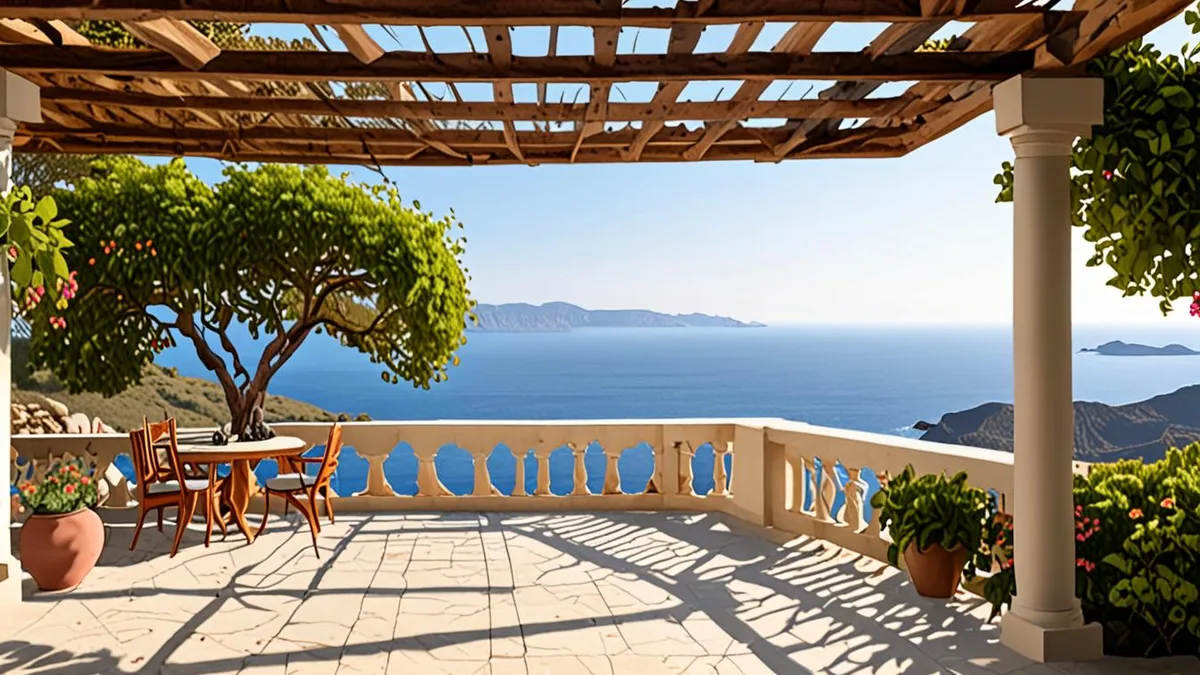
- Shade and cover: pergolas or covered terraces matter in the Greek summer sun, particularly for families with small children who need midday shade.
Vetting Villas Before You Commit
Villa listings are marketing documents first and accurate descriptions second, so a little vetting before you pay a deposit goes a long way. Start with reviews: read the most recent ones rather than the overall score, and pay attention to how quickly and helpfully the owner responds to questions. Slow or vague communication before booking usually continues after you arrive. It also helps to cross-check the listing on more than one platform, since occasional scams use copied photos and descriptions from legitimate properties.
Location is the most common trap. Some listings describe a villa as “walking distance to the beach” or “near the village” when the reality is a hot 20-minute uphill walk or a drive. Pin the exact location on a map before committing, and check what is actually around it: a taverna, a minimarket, or nothing at all. On small islands, also factor in the transfer from Athens, which typically involves a ferry or short flight of anywhere from 30 minutes to 5 hours, since a remote villa can add real travel time to every outing.
- Request specific photos: ask for current pictures of the pool, each bedroom and the view from the terrace, since hero shots can be taken from angles or seasons that flatter the property.
- Confirm the pool size and depth: “private pool” can mean anything from a plunge pool to a proper 10-meter swimmer, which matters for families.
- Ask about the road access: some island villas sit at the end of rough dirt tracks, which affects whether a small rental car is enough.
- Clarify who handles problems locally: find out whether a housekeeper, manager or agent is reachable on the island during your stay if something breaks.
Wrapping Up Your Greece Villa Choice
There is no single best villa in Greece, only the right match for your trip. A quiet hillside house on Folegandros, a family villa near the sandy beaches of Naxos and a caldera-view rental on Santorini each suit completely different holidays. When you match island character, season and budget instead of chasing a “perfect” option, the choice becomes far simpler.
Most of the stress disappears with two habits. First, get your dates locked in as early as you can — the most sought-after rentals on Santorini and Mykonos tend to disappear long before summer arrives, so treat this as your first task once you know your travel window. Second, write down your non-negotiable features before you start searching, whether that is a shaded terrace, a short walk to a taverna or enough bedrooms to keep everyone happy.
Add a short vetting checklist before paying any deposit, and you protect both your budget and your expectations. If this guide helped you narrow things down, leave a comment with your pick or share it with your travel group.