Both Cyprus and Malta deliver year-round sunshine, lively resorts and warm Mediterranean waters, so the Cyprus vs Malta question comes down to something more personal: your beach style, your budget and when you actually plan to travel. Do you want long stretches of sand or cobbled rocky coves? A compact island you can cross in a morning or a bigger destination with room to roam? The honest answer is that each island suits a different kind of traveler.
This guide breaks the decision down for you. We compare the beaches and coastline, then tour the best resort areas on each island, from family-friendly sandy bays to livelier nightlife hubs. We cover getting around and travel logistics, the best time to go and how to time your booking, plus realistic budget and value-for-money comparisons. By the end, you’ll know which island fits your holiday, not just which one photographs better.
Cyprus vs Malta: Beaches and Coastline Compared
If your holiday revolves around the beach itself, Cyprus has the stronger hand. The southeast coast around Ayia Napa and Protaras is lined with long stretches of fine golden sand, where you can walk out over soft ground for dozens of meters before the water deepens. Nissi Beach near Ayia Napa is the famous example, wide and lively in summer, while Fig Tree Bay in Protaras offers calmer, shallow water that suits casual swimmers. Along Larnaca Bay, the sand continues in a gentler, more laid-back style, with a long palm-lined promenade backing the shore.
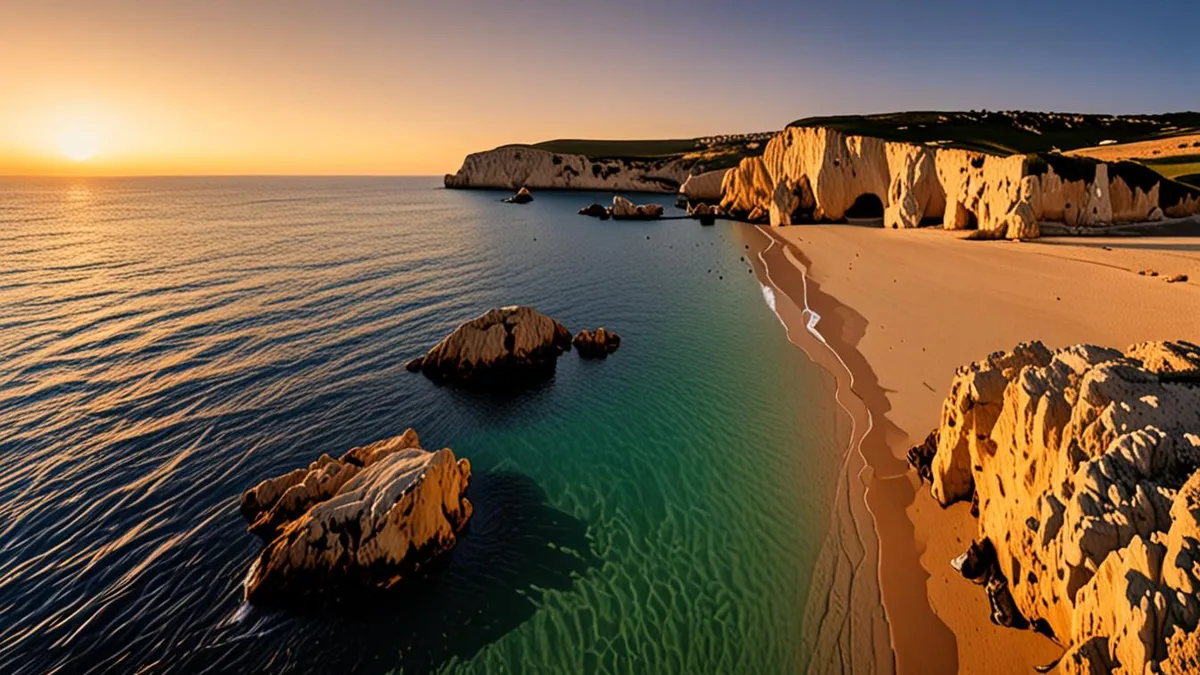
Malta’s coastline tells a different story. The island is essentially one big limestone platform, so most of the shore is rocky: flat slabs, low cliffs and ladders leading into clear, deep water. Sandy spots do exist, but they are concentrated in the northwest, mainly at Mellieħa Bay and Golden Bay. Mellieħa Bay is the largest sandy beach on the island and shelves gently, while Golden Bay is a dramatic crescent that fills up quickly on summer afternoons. Beyond these, swimmers mostly use rocky lidos and platforms rather than open sand.
Which coast suits you?
Swimmers who want to spread a towel on wide, walkable sand, wade in gradually and spend whole days at the water’s edge will generally be happier in Cyprus. The beaches there are simply bigger and more numerous, and many sit right in front of the resorts.
Cove-hoppers and snorkellers often prefer Malta. The rocky coast means exceptionally clear water, plenty of spots to explore with a mask, and small coves a short walk apart. If you don’t mind sunbathing on limestone rather than sand, Malta’s coastline rewards those who like variety over one long stretch. Check current conditions and access before you travel, as some smaller coves involve steps or rough paths.
Best Resort Areas in Cyprus
Cyprus is a much bigger island than Malta, roughly 240 km long, so choosing your resort area matters more here than almost anywhere else in the Mediterranean. The good news is that each coast has a clear personality, which makes the decision easier once you know what kind of holiday you want.
The southeast coast is where most beach-focused travelers head. Protaras is quiet, family-friendly and built around shallow, gently shelving bays, while nearby Ayia Napa adds a livelier scene with more bars and restaurants alongside its resort hotels. If your priority is waking up, walking to the sand and staying put, this is the area for you.
Paphos, on the west coast, has a different rhythm. It is a working harbor town with a seafront promenade, and the archaeological sites around it are among the most accessible on the island. Couples and travelers who want a mix of resort comfort and sightseeing tend to settle here happily.
Limassol is the city-plus-beach option. It has the island’s liveliest urban energy, a long seafront and plenty of dining, though its beaches are pebblier than the sand you will find in the east. If you like stepping out into a real city, it works well.
- Fig Tree Bay area in Protaras is the stretch most families aim for, thanks to calm, shallow water that suits younger children.
- Cape Greco, just south of Ayia Napa, offers sea caves and cliff-side walking trails if you want a break from sunbeds.
- The Tombs of the Kings near Paphos sit within walking distance of many resort hotels, making archaeology an easy half-day outing.
- Limassol’s marina and old town put cafes, shops and a castle museum within a short stroll of the seafront hotels.
Whichever base you pick, remember that distances between areas can exceed 100 km, so hopping between coasts on a week-long stay is unrealistic. Choose the character that fits you first, then book the hotel. If you enjoy pairing beach time with coastal sightseeing, it is also worth browsing our guide to Baltic Sea coastal resorts for beach holidays for a very different shoreline experience.
Best Resort Areas in Malta
Malta may be small, but its resort areas each have a distinct personality. The island’s main hotel strip runs from Sliema through St Julian’s, where you’ll find the widest choice of accommodation, from apartment-style stays to full-service seafront hotels. The promenade here stretches for kilometers along the rocky shore, and Valletta is only a short ferry ride or bus trip away, which makes this area a strong pick if you want beaches plus city sightseeing without hiring a car.
Head north and the character changes. Mellieħa Bay is Malta’s family stronghold, built around the island’s largest sandy beach with shallow, calm water that suits young children. It feels more like a traditional beach resort than the Sliema strip, though it’s quieter in the evening. Further along the northern coast, Buġibba and Qawra focus on value: plenty of mid-range and budget hotels, restaurants and bars, with swimmers using rocky lidos and bathing platforms rather than sand.
- St Julian’s nightlife: the Paceville district at its edge has the island’s densest cluster of bars and clubs, so light sleepers should pick a hotel on the quieter Sliema side of the bay.
- Sliema ferries: a regular passenger ferry crosses to Valletta’s harbor, often faster than the bus in traffic and a scenic way to arrive at the capital.
- Mellieħa Bay extras: pedal boats, sunbed rows and beachside snack bars line the sand in summer, so you can spend a full day there without leaving.
- Buġibba and Qawra perks: the seafront promenade connecting the two towns is one of the longest on Malta, good for evening walks, and bus connections across the island are frequent.
Getting Around and Travel Logistics
Malta wins on logistics, and it is not close. The island is only about 27 km long, which means most resorts sit within a 30-45 minute drive of the airport. That makes Malta ideal for short breaks, since you can realistically land in the morning and be on a seafront terrace in Sliema or Mellieħa before lunch.
Cyprus is a different proposition. The island is roughly 240 km long, and resort areas can be more than 100 km apart. If you stay in Paphos in the west but fly into Larnaca in the east, expect a transfer of around 1-1.5 hours. The practical advice: pick your resort base first, then choose whichever airport is closest. Flying into one side and staying on the other turns a beach holiday into a road trip.
Flight times from central Europe
Direct flights from central Europe take about 3 hours to Malta versus roughly 4 hours to Cyprus. Neither is a long-haul haul, but that extra hour matters if you are squeezing a long weekend out of a few annual leave days. Malta’s shorter flight and quick transfers together make it the easier option for a three or four-night escape, while Cyprus rewards travelers planning a full week or more.
When to Go: Seasons and Booking Timing
Both islands share a remarkably similar season. Swimming is comfortable from May to October on both Cyprus and Malta, with sea temperatures peaking near 27°C in August. If your trip is all about the beach, that five-month window is your playground, and neither island has a real edge on water warmth.
Shoulder season: the sweet spot
May and October are the smart traveler’s months. High-season resort rates in both islands typically run 40-60% above shoulder-season prices, so booking for May or October can cut a significant chunk off your bill while the weather stays warm enough for proper beach days. The sea is a little cooler than in August, but most people find it perfectly swimmable, and you get quieter beaches and restaurants as a bonus.
How far ahead to book
Timing your booking matters as much as timing your trip. For July and August stays, plan on booking 5-6 months ahead, especially for the larger beachfront resorts in Cyprus and the seafront hotels in Malta, which fill up early. For shoulder-season travel, 3-4 months is usually enough to get a good choice of rooms and reasonable rates. If you are flexible on dates, shifting your stay by even a week either side of peak summer can change both the price and the crowds noticeably.
Budget and Value for Money
On pure accommodation cost, Malta generally comes out slightly cheaper. Its compact size means shorter, cheaper airport transfers and less money spent on internal travel, and the density of hotels around Sliema, St Julian’s and the northern resorts keeps competition high. For a week-long stay, those small savings add up, particularly on shorter trips where transfer costs form a bigger slice of the budget.
Where Cyprus offers better value
Cyprus shines on large beachfront resorts outside the peak July-August weeks. Outside those busiest weeks, the big family resorts around Protaras and Ayia Napa often undercut comparable beachfront properties elsewhere in the Mediterranean, and you get long sandy beaches thrown in. If you want a full-service resort with pools, kids’ clubs and direct beach access, Cyprus frequently delivers more space and facilities for your money than Malta’s more compact hotel stock.
Food and everyday costs
Eating out runs similar on both islands, with tavernas and casual restaurants in the same general price band. The difference is in the portions: Cyprus taverna meals often stretch further, with meze spreads and generous plates that can turn one order into dinner for two lighter appetites. Neither island is a bargain destination by European standards, but careful travelers can eat well on both. The honest summary: Malta edges it on total trip cost for short stays, while Cyprus gives better value per euro once you commit to a week at a beachfront resort outside peak summer.
Which Island Should You Choose?
So, which island wins? If your holiday revolves around long stretches of sand, spacious beachfront resorts and that relaxed, spread-out island feel, Cyprus is the stronger pick. You trade some convenience for variety, with resorts scattered along the coast and a bit more ground to cover.
Malta suits travelers who want everything close: short airport transfers, city-and-coast combos and compact sightseeing packed into one small island. Since both share a May-October swimming season, your timing and budget often decide more than the destination itself. If you’ve been to either island, leave a comment or share this article.