Geodesic domes look irresistible in photos: a rounded white shell on a hillside, fairy lights inside, mountains through the window. But behind that dreamy image sit real questions. Will the dome actually stay warm in October? Is a €200-a-night dome twice as good as a €100 one? And does that transparent ceiling mean you wake at dawn whether you like it or not? Judging a dome stay from a listing photo is genuinely hard.
This guide walks through dome stays step by step. We explain what a dome actually is and how it differs from a tent or cabin, break down what you can expect to pay across Europe, and describe honestly what the inside feels like at night. We then cover which seasons work best, when and how far ahead to book, and how to match the right dome to your trip, whether that is a couples’ escape or a family base for hiking. By the end, you will know exactly what to check before paying.
What a Dome Stay Actually Is
A geodesic dome is a round structure built from a framework of triangles, with panels stretched or fixed across that frame. The triangular design is what makes it strong: weight spreads evenly across the shape, so the dome can handle wind and snow far better than a flat-sided tent. Most dome stays in Europe sit somewhere between 5 and 7 meters across, which works out to roughly 20 to 38 square meters of floor space. That is comparable to a small hotel room, though the curved walls mean furniture is usually arranged around the edges.
What you typically find inside
The standard setup is closer to a hotel room than a campsite. You get a real bed on a proper frame, lighting, and heating, either a wood stove or an electric heater. Bathrooms vary the most: many domes share a private bathroom in a separate unit a short walk away, while premium domes have an en-suite toilet and shower built in. If the bathroom situation matters to you, always confirm it before booking.
How domes differ from tents and cabins
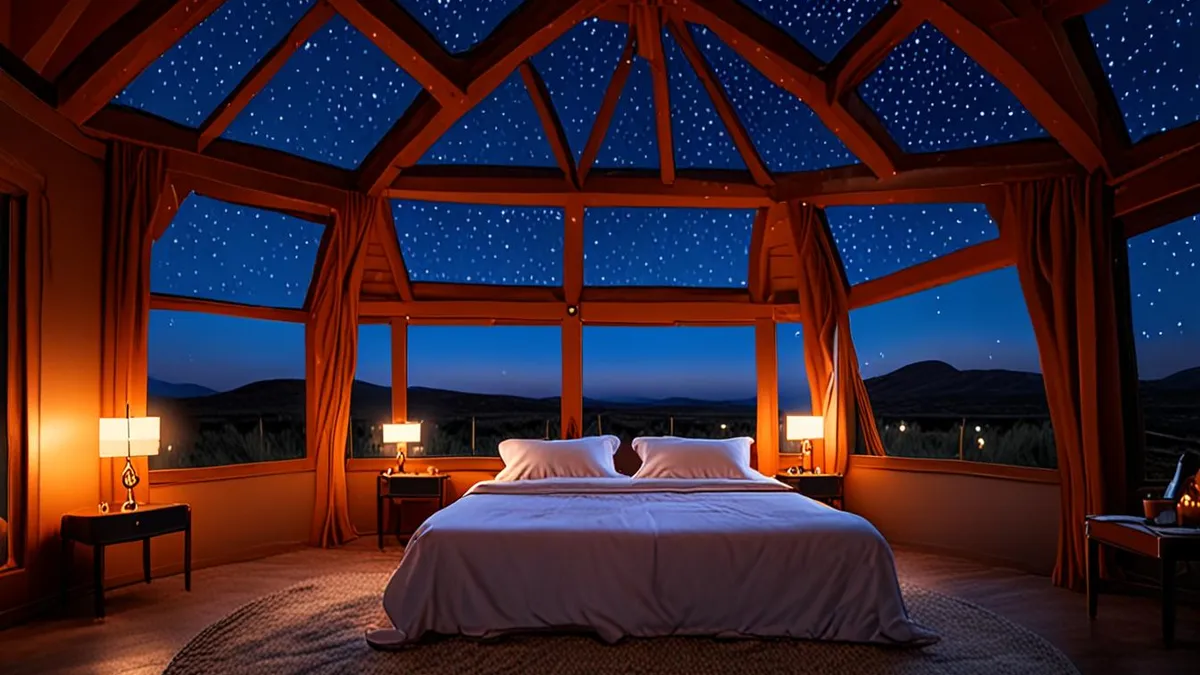
Unlike a bell tent, a dome has a solid, insulated cover rather than a single layer of canvas. Unlike a cabin, it usually has no solid walls at all above head height, but it does feature a transparent ceiling panel, often positioned above the bed for stargazing. Nearly all domes sit on a raised wooden deck, which keeps you off wet ground and gives you space for a small terrace with chairs.
How Much Dome Stays Cost
Dome stays in Europe typically cost between €90 and €250 per night, with luxury domes reaching €300 and beyond. At the lower end you get a comfortable dome on a simple site, often with a shared bathroom. The upper range buys you premium touches like en-suite facilities, panoramic locations and private hot tubs.
What drives the price up or down
Four factors matter most. First, the bathroom: en-suite domes command noticeably higher rates than those relying on a separate unit. Second, extras like a hot tub or sauna can add a significant chunk to the nightly rate. Third, the view: a dome perched above a lake or valley charges more than one in a field. Fourth, size: most domes sleep 2 to 4 guests, while family-sized models fit up to 5 or 6, and larger domes cost more.
For a broader comparison with tents, cabins and treehouses, this guide to glamping costs in Europe puts dome pricing in context.
Timing your stay to save money
June through August is peak season, when rates sit at the top of the range and good domes fill up fast. May and the September to October shoulder months bring milder weather, lower rates and quieter sites. If your dates are flexible, shifting a trip by a few weeks can easily save you a meaningful amount per night.
Comfort: What It’s Really Like Inside
The honest answer is that comfort depends almost entirely on insulation and heating. A well-built dome with proper heating keeps its interior 10 to 15°C warmer than the temperature outside, which is what makes winter stays viable at all. Without that insulation, a dome is just an expensive tent, so this is the single most important thing to verify before a cold-season booking.
Noise and light: the parts photos don’t show
Canvas-style covers are not soundproof. Wind, rain and even a nearby stream are clearly audible at night, which some guests find cozy and others find disruptive. Light is the other surprise: that transparent ceiling panel lets daylight in early, so expect to wake with the sun rather than in darkness. Light sleepers should pack earplugs and an eye mask.
What to check before you book
Four questions separate a good night from a cold one. Ask whether the dome has real heating, meaning a wood stove or electric heater, not just a small plug-in unit. Ask if the floor is insulated, since cold rises straight up through a thin deck. Ask what blackout options exist for that transparent ceiling. And confirm whether the bathroom is en-suite or in a separate shared unit, especially if you plan midnight trips in winter rain. For a fuller picture of cold-weather trips, this winter glamping packing guide covers what to bring when temperatures drop.
Best Seasons for a Dome Stay
Timing shapes a dome stay more than almost any other choice. The same dome that feels magical in September can feel crowded and pricey in late July, so it pays to match your dates to what you actually want from the trip.
From June to August, dome sites run at full capacity. Nights stay warm enough that you can lie back and stargaze through the transparent ceiling panel without piling on blankets, and every facility on site is usually open, from outdoor kitchens to saunas. The trade-off is straightforward: this is when rates peak and sites are at their busiest, so expect neighbors close by and book well ahead.
May and the September–October window are the sweet spot for many travelers. Weather is generally mild, often still good for hiking, and sites are noticeably quieter. Rates typically drop outside the peak, and you get a calmer atmosphere without giving up the glamping experience. If you’re flexible on dates, these shoulder months deliver the best balance of comfort and value. For a regional deep dive, see this guide to glamping areas and seasons in the Dolomites.
Season length varies a lot by location. Many dome sites simply close for winter, while alpine domes with proper heating operate year-round, letting you watch snow fall from a warm bed. Before booking a cold-month stay, confirm the dome is genuinely winterized rather than a summer unit left open out of season.
- Winter alpine stays come with shorter daylight hours, so plan hikes and drives around early sunsets rather than long evenings outdoors.
- Spring trips in May can mean lingering snow on higher trails, so pack layers even when the dome itself feels warm.
- Autumn stays often coincide with clearer air and golden larch or foliage colors, making September and October popular with photographers.
- Heated year-round domes tend to fill first around Christmas and New Year, so treat those dates like peak-season bookings.
- If a site closes November to April, ask whether amenities like water pipes and bathrooms are fully winterized in the months just before closing.
When and How to Book a Dome
Booking a dome is less forgiving than booking a regular hotel room. Most dome sites are tiny operations with only a handful of units, so a single full weekend can wipe out their availability for a month. Unlike hotels with dozens of identical rooms, a site with three or four domes simply has far fewer dates to sell. A little planning goes a long way, and the sequence below will save you both money and stress.
- Match your lead time to your destination. For a summer weekend at an ordinary site, reserving 2–4 months ahead is usually enough. For famous alpine spots like Zermatt, where domes with Matterhorn views are scarce, start looking 6–12 months out.
- Choose midweek dates if your schedule allows. Monday to Thursday nights typically cost less than Friday and Saturday, and you’ll have far more domes to choose from. Some sites also throw in perks like late checkout midweek.
- Read the minimum-stay rules carefully. Many small dome sites require a 2-night minimum, particularly on weekends and in peak season. A one-night plan may only work midweek or in the shoulder months.
- Check cancellation terms before paying. Small operators often have stricter policies than hotels, sometimes offering only partial refunds or credit. If weather matters to your trip, look for flexible terms or consider travel insurance.
- Confirm what’s included. Before you pay, verify whether bedding, firewood, hot tub use and breakfast are part of the rate or charged separately, so the final price doesn’t surprise you.
It also pays to contact the host directly before booking, especially if you have specific questions about your stay. Ask about parking, how far the dome sits from shared facilities, and whether the site accepts dogs if you’re traveling with a pet. Small operators often reply personally within a day or two, and their answers tell you a lot about how well the site is run. If a host is slow or vague before you’ve paid, expect the same treatment afterward.
Once you’ve booked, set a reminder to reconfirm your arrival time a week before your trip. Many dome sites are unmanned and rely on check-in instructions sent by email or message, and late arrivals in remote areas can be tricky without them. Write down the access code or gate instructions in advance rather than digging through your inbox in the dark. A quick confirmation message also gives the host a chance to flag anything unusual, like a road closure or a shared bathroom during low season. Do this and the only surprise left will be the view through the ceiling panel.
Choosing the Right Dome for Your Trip
Not all domes suit all travelers, and picking the wrong size or setting is the most common mistake first-timers make. A cozy 5-meter dome that feels romantic for two can feel cramped with two kids and their luggage, while a big family dome can feel cavernous for a couple. Start with who’s going and what you want from the trip.
For couples, smaller domes are usually the sweet spot. A 5-meter model with a proper bed, a transparent ceiling panel above it and a private hot tub on the deck is the classic romantic setup. Stargazing from bed is the main draw, so prioritize domes positioned away from site lighting and ask whether exterior lights are switched off at night.
Families should look at the larger end of the range. Domes of 6–7 meters offer roughly 20–38 square meters of floor space, which matters when you’re fitting extra beds, luggage and wet outdoor gear. Most domes sleep 2–4 guests comfortably, but family domes fit up to 5–6, so check the exact bed configuration rather than just the guest count.
Location matters just as much as size. Alpine domes put you at trailheads for hiking and deliver mountain views straight through the window, while lakeside and coastal domes trade drama for calm, making them ideal for slow travel, reading and long breakfasts on the deck. Match the setting to your energy level, not just your Instagram plans.
- Couples should check whether the hot tub is private to their dome or shared with other guests, as this varies widely between sites.
- For families, ask if the extra beds are proper beds or fold-outs, and whether cots for toddlers are available at no extra charge.
- Alpine domes vary in altitude, so in cooler months a lower-valley dome may be far more comfortable than a high one at 2,000 meters.
- Lakeside domes often include kayaks, paddleboards or swimming access on site, which can replace the need for daily excursions.
- If you plan to work remotely, ask about mobile signal and Wi-Fi strength, since remote dome sites can have surprisingly good or surprisingly poor connectivity.
Key Takeaways for Your Dome Stay
A dome stay can absolutely live up to the photos, as long as you match the dome to the season and your expectations. Rates typically run €90–€300+ per night depending on size, bathroom setup and when you travel, so decide first what you actually need: an en-suite bathroom and a hot tub cost more, while a smaller dome in May or September–October delivers much of the magic for less.
Comfort comes down to heating and insulation. Well-built domes hold interiors 10–15°C warmer than the outside temperature, which makes winter trips viable, but only if you confirm winter capability with the host before booking a cold-month stay. For summer, reserve 2–4 months out, or aim for the shoulder months for the best balance of price, weather and quiet. If this helped you plan your trip, leave a comment or share the article with a fellow traveler.