Glamping promises the best of both worlds: sleeping close to nature without giving up comfort. In practice, glamping for beginners often goes sideways. First-time travelers book the wrong season, overpack bulky gear they never use, or misjudge what a nightly rate actually covers, and a luxury escape turns into a frustrating trip with cold nights and surprise fees.
The good news is that most of these problems come from a handful of predictable mistakes, and every one of them is easy to avoid with a little planning. This guide walks through why first trips go wrong, then covers the five most common errors: booking the wrong season, booking too late or too cheap, packing incorrectly, choosing a location that doesn’t match your travel style, and ignoring the fine print on amenities. A practical checklist at the end pulls everything together so you can plan your first glamping trip with confidence.
Why Glamping for Beginners Goes Wrong
Glamping is not a hotel with a canvas roof, and that’s exactly where first-timers trip up. The bed may be real, the linens soft and the view stunning, but the outdoor setting still shapes your comfort in ways a city hotel never would. Night temperatures, insects, morning dew and the walk from your unit to the bathroom are all part of the deal. Travelers who arrive expecting a sealed, climate-controlled hotel room are often the ones who leave disappointed.
Choosing a stay type without understanding it
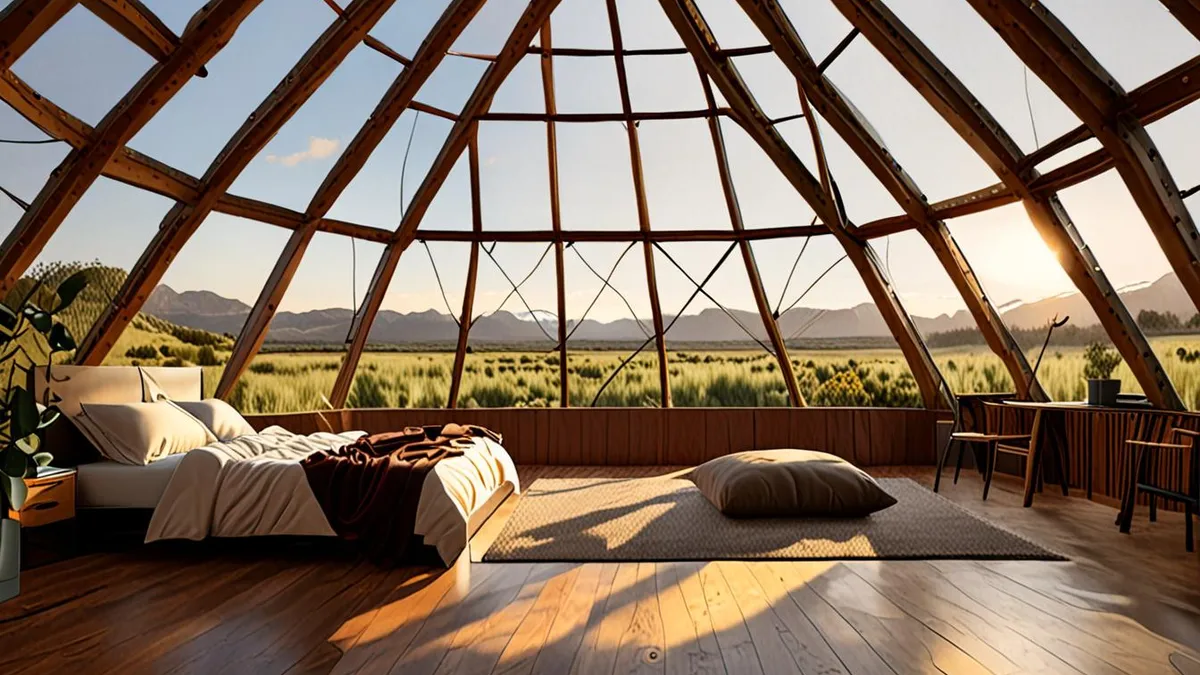
A safari tent, a geodesic dome and a wooden cabin are very different propositions. Tents and domes usually sit on open platforms, which means more atmosphere but less sound insulation and more sensitivity to wind and temperature swings. A cabin generally offers solid walls, better privacy and steadier warmth, but often less of that “sleeping under canvas” feeling. None of these options is better across the board; each handles weather and privacy differently, and the right choice depends on the season and how exposed you want to be.
Assuming everything is included
The second common trap is assuming all amenities come standard. Many sites provide bedding, but towels and toiletries are frequently left out or offered as an extra. Heating, firewood, breakfast and hot tub access can also carry separate charges depending on the operator. Before you pay a deposit, treat the listing like a contract: read what is actually included, ask the host about anything unclear, and budget for the extras rather than discovering them on arrival.
Mistake 1: Booking the Wrong Season
Season choice is the single biggest factor in how comfortable and how affordable your glamping trip will be. In most of Europe, peak season runs from June to September, when nights are at their warmest and the longest daylight hours let you actually enjoy that deck or fire pit you are paying for. That warmth comes at a price, though: summer weekends bring the highest rates of the year and the biggest crowds, so you may pay a premium to share a quiet hillside with a dozen other tents. Popular dome and safari tent sites sell out well before the school holidays begin, so a July weekend is not something to decide on a whim.
If your schedule allows flexibility, the shoulder months are where smart travelers save. May and late September can cut prices by 20-40% compared with peak dates, and sites are noticeably calmer, with more space around the pool, at reception and on the trails. The trade-off is cooler evenings and shorter days, so pack accordingly rather than assuming summer clothing will carry you through.
Mistake 2: Booking Too Late or Too Cheap
Glamping’s most photogenic stays, the domes and safari tents you see all over social media, are also the first to disappear from booking calendars. There is a simple reason: most sites only have a handful of these units, so a single busy weekend can clear out the entire calendar. Leaving your reservation to the last minute usually means choosing from the leftovers, and the leftovers are rarely random. They tend to be the least insulated units, the ones parked closest to the road, the shared kitchen or the neighbors, or sometimes nothing at all in your target area.
- Book early for peak weekends: popular dome and safari tent sites typically sell out 2-3 months ahead for summer weekends, so set a reminder rather than hoping for a late cancellation.
- Be skeptical of bargain listings: rates under 80 EUR per night often signal shared bathrooms, thin insulation or a site with minimal services, which changes the experience significantly.
- Compare what the price includes: within the typical 80-250 EUR per night range for European glamping, some rates cover heating, towels and breakfast while others charge for each separately, so list the inclusions side by side before deciding.
- Read recent reviews for temperature and noise comments, since they reveal how a unit actually performs at night, not just how it photographs by day.
- Confirm the cancellation terms before paying a deposit, because inflexible policies turn a weather change into a lost payment.
Price alone tells you very little about a glamping stay. Two listings at the same nightly rate can differ enormously in what they actually deliver, from insulation quality to bathroom access. A rate that looks like a deal can shrink in value once you discover that heating, linens or breakfast all cost extra, while a slightly higher rate at a nearby site may cover everything in one payment. Watch for add-ons that inflate the real total too, such as cleaning fees or per-guest surcharges that only appear late in the booking process. When in doubt, message the host directly and ask exactly what is included, then screenshot the answer before you pay. For a fuller breakdown of what drives costs across the continent, this guide to how much glamping costs in Europe in 2025 is a useful benchmark before you commit to a deposit.
Mistake 3: Packing Wrong for a Glamping Trip
One of the most common packing mistakes first-time glampers make is swinging to one extreme or the other. Some treat it like a backcountry camping trip and haul along sleeping bags, camp stoves, coolers and a tent-repair kit they will never touch. Others treat it like a hotel stay and pack nothing but a change of clothes, then shiver through the night. The sweet spot sits in the middle: glamping units almost always come with proper beds made up for you, so the bulky gear can stay home, but the outdoor setting still demands some thought.
Layered clothing is the single most useful thing in your bag. Even in the middle of summer, alpine sites can see nights drop below 10°C, and a tent or dome that felt cozy at sunset can turn chilly by 2 a.m. A base layer, a fleece and a warm pair of socks take up almost no space and solve the problem completely. If you are planning a trip in the colder months rather than summer, it pays to read a proper winter glamping packing guide before you zip up the suitcase, because cold-season trips need a noticeably different kit.
The second trap is assuming the bathroom situation works like a hotel’s. Bedding is usually part of the deal, but a towel set and your own soap are frequently on you, and arriving without them means either an uncomfortable shower or a drive to the nearest shop. A quick message to the host before you leave home settles it.
Finally, do not underestimate the walk between your unit and the main building after dark. Even upscale sites often keep outdoor lighting deliberately low to preserve the atmosphere and avoid disturbing wildlife, which leaves paths dim at best.
- A headlamp or small flashlight: Choose a hands-free headlamp over a phone light, since you may be carrying a drink, a towel or a child at the same time, and keep it by the bed so you are not fumbling in the dark.
- Slip-on shoes or sandals: Lace-up boots are pointless at a glamping site, but you will step outside several times a day, and shoes you can slide into at the tent door make those quick trips painless, especially on dewy grass first thing in the morning.
- One extra warm layer per person: Bring a dedicated sweater or hoodie that stays at the site for the whole trip, so nobody ends up wearing their only clean shirt around the fire and then to breakfast the next morning.
- A small toiletry kit as a backup: Even if the host confirms soap is provided, a travel-size shampoo and toothpaste cover you if the supply runs out mid-stay or turns out to be a single shared dispenser at a wash block.
Mistake 4: Picking the Wrong Location for Your Travel Style
Glamping sites are not interchangeable, and the biggest location mistakes come from booking a place that suits someone else’s travel style rather than your own. A gorgeous listing photo tells you nothing about whether the site is built for couples, families or solo nature seekers, so it is worth digging into how the property is actually laid out before you commit.
Couples: look for privacy, not a petting zoo
Many of the most photogenic glamping sites in Europe are family-oriented farms or activity hubs, with units clustered close together, playgrounds in the middle of the property and a steady hum of children from breakfast until dark. That can be a wonderful trip, just not a romantic one. If you are traveling as a couple and want quiet evenings, prioritize sites that advertise privacy-focused layouts: separate units spaced well apart, natural screening such as hedges or trees between them, and no shared communal schedule of group activities. Reading recent guest reviews is the fastest way to find out whether a site is genuinely peaceful or simply markets itself that way.
Nature seekers: check what is actually nearby
If your goal is starry skies and birdsong rather than convenience, do the opposite check. Look at the map before booking and find out how far the site sits from the nearest road and the nearest town. A unit beside a busy road loses much of its appeal no matter how stylish the interior is, while a site twenty minutes down a dirt track delivers the silence you were paying for. Ask the host directly about road noise and whether deliveries, farm machinery or neighboring campsites are audible at night.
Finally, match the destination to the point of the trip. Mountains, lakes and coastal sites each create a completely different experience: mountain sites deliver dramatic views and cool nights, lake sites suit swimming and paddling, and coastal sites bring salt air and long beach walks. Decide what your days should look like first, then choose the landscape that supports it, rather than falling for a pretty tent in a setting that does not fit your plans.
Mistake 5: Ignoring the Fine Print on Amenities
The fine print is boring right up until the moment it matters. Glamping listings often show a stunning photo of a dome under the stars and leave everything else vague, and the details that get left out are usually the ones that decide whether you sleep well. Go through the amenity list as if it were a checklist rather than an assumption, and ask the host about anything the listing does not state clearly.
Heating is the number one item to verify. A tent or dome that feels magical in July can be uncomfortable in May or late September, when evenings cool down noticeably, and not every unit has heating at all. If you are traveling outside the June to September peak, confirm in writing that your specific unit type has a working heat source, not just the site in general, since a safari tent and an insulated cabin on the same property can be very different propositions. Air conditioning matters in the opposite direction: in hot spells, some tents and domes heat up badly during the day.
Bathroom setup is the second dealbreaker. “Bathroom available” can mean anything from a private en-suite with a hot shower to a shared wash block a two-minute walk away, and the difference shapes your whole stay, especially at night or in the rain.
Cooking is the third. Some glamping units have no kitchenette whatsoever, which turns every meal into a restaurant visit or a barbecue session, so check what you are working with before you plan self-catering days.
- Ask whether heating runs all night: Some sites switch heaters off overnight or rely on a wood stove that needs refueling, so a unit that is “heated” on paper can still be cold by morning; a wood-burning stove also means learning to light it, which is worth knowing before you arrive.
- Count the steps to the facilities: If bathrooms are shared, ask how far they are from your unit and whether they are lit at night, because a three-minute walk in the rain at midnight feels very different from an en-suite door two steps from the bed.
- Get the kitchen details, not just “kitchen access”: A shared outdoor kitchenette may lack an oven, a fridge space or basic cookware, so confirm what appliances, utensils and food storage you can actually use, and whether there is a barbecue or fire pit for cooking instead.
- Confirm what else the price omits: Some sites charge separately for firewood, final cleaning, bed linen for a second person or use of hot tubs and bikes, so ask for a full list of any extras before you book rather than discovering them on the final invoice.
Your Glamping for Beginners Checklist
Glamping trips tend to go sideways for first-timers for a handful of predictable reasons: the season doesn’t match the expectations, the booking doesn’t deliver what the photos promised, or the packing list was written as if for a hotel stay. None of these are complicated problems, and each one can be sidestepped entirely with a bit of forethought before you hand over a deposit.
The fix comes down to three habits. First, time your trip to match your comfort level rather than your calendar. Second, read listings carefully and ask direct questions about what your money actually covers before committing. Third, pack for the setting you’re visiting, not the one in the marketing photos. Do these three things and your first night under canvas will feel like the escape you planned, not a pricey lesson in outdoor living. If this helped you plan your trip, leave a comment or share the article with a friend.