Choosing between Greek island resorts vs mainland resorts is one of the most common dilemmas travelers face when planning a trip to Greece. Both options deliver beautiful resorts, great food and plenty of sunshine, but they differ sharply when it comes to beaches, costs, seasons and logistics. Picking the wrong one for your travel style can mean wasted hours in transit or paying a premium for a setting you barely use.
This guide compares both options side by side. We look at what island resorts actually offer along the coastline, what mainland resorts near Athens, the Peloponnese and Halkidiki bring to the table, and how getting there works with ferries versus roads. We also compare seasons and prices, share realistic booking timelines, and finish with a straightforward breakdown of which type fits your trip. By the end, you should know exactly where to book based on your dates, budget and how much moving around you want to do.
Greek Island Resorts: What You Get
The biggest draw of a Greek island resort is simple: you step out of your room and you are already on vacation by the water. Most island resorts are built directly along the coastline, which means direct access to beaches and uninterrupted sea views from your terrace, pool or breakfast table. There is no shuttle ride or long walk to reach the sand — the beach is part of the property’s setting, and many resorts organize swimming, snorkeling, paddleboarding and boat trips straight from their own stretch of shore.
Classic Cycladic settings
The scenery matters just as much as the water. On islands like Paros, Naxos and Crete, resorts are framed by classic Cycladic architecture — whitewashed buildings with rounded edges, blue accents, stone terraces and bougainvillea spilling over walls. Naxos and Paros offer a mix of sandy family-friendly beaches and quieter coves, while Crete combines long beaches with a more varied landscape of gorges and vineyards inland. The look is unmistakably Greek, and it photographs as well in person as it does in the brochures.
So who should choose an island resort? Travelers whose main goal is swimming, sunbathing and water activities will get the most out of it. If your ideal day is a morning swim, hours on a lounger, a long seaside lunch and a sunset drink with the sea in front of you, an island resort delivers that experience with almost no effort. If instead you want to pack sightseeing, road trips and resort time into one holiday, the mainland sections ahead are worth a closer look.
Mainland Resorts: What You Get
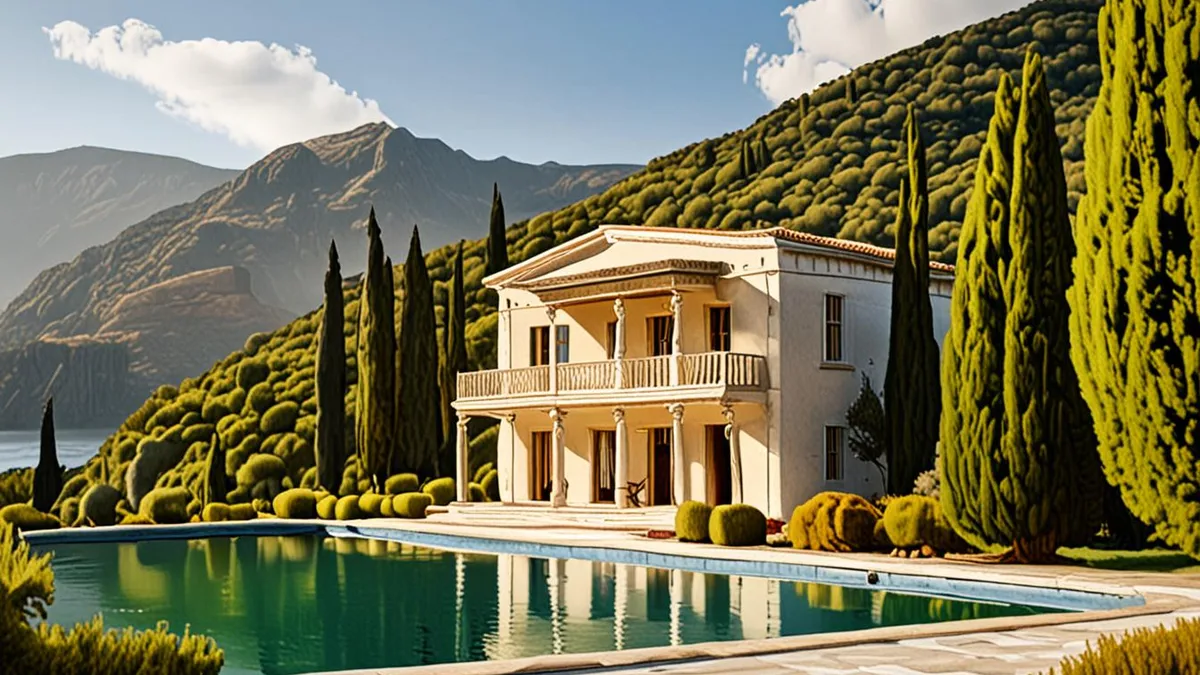
Mainland resorts trade some of the island romance for something arguably more practical: variety. The main clusters sit near Athens, across the Peloponnese and along the three “fingers” of Halkidiki in the north. These properties typically combine everything on one site — swimming pools, private or nearby beaches, and mountain scenery rising behind the coastline. In Halkidiki, pine forests often run almost to the water’s edge, while Peloponnese resorts can pair sea views with a backdrop of hills and olive groves.
Day trips to the ancient sites
The real advantage is what lies beyond the resort. From a mainland base, easy day trips put you at some of Greece’s most important archaeological sites: Delphi on the slopes of Mount Parnassus, the ancient theater of Epidaurus with its remarkable acoustics, and Ancient Olympia, birthplace of the Olympic Games. None of these require a ferry — you simply drive or join an organized excursion and are back at your resort by evening for a swim and dinner.
This makes mainland resorts the better fit for mixed trips that blend resort relaxation with sightseeing and road travel. You can spend one day doing nothing but pool and beach, and the next exploring ruins, mountain villages or coastal towns, all without repacking or changing hotels. If your group has different priorities — some wanting downtime, others wanting culture — a mainland resort keeps everyone happy from a single base. The next section looks at how the two options compare when it comes to actually getting there.
Getting There: Ferries vs Roads
Getting to an island resort is part of the adventure, but it takes planning. From Athens, you typically reach popular islands like Mykonos, Paros and Naxos by ferry from the ports of Piraeus or Rafina, with crossings taking around 3-6 hours depending on the island and vessel. Crete is the outlier: ferries there take roughly 6-9 hours, which is why many travelers opt for a domestic flight instead. Flights are faster, but they add airport transfers and baggage logistics to the journey.
Mainland resorts are far simpler to reach. Most are accessible by car or bus from Athens in roughly 1.5-4 hours, with no ferry dependency and no weather-related cancellations. You land, pick up a rental car or hop on a bus, and you are at your resort the same day — often by lunchtime if you take an early morning arrival.
Before booking either option, keep these practical points in mind:
- Ferry schedules shrink outside summer. In the cooler months, many routes run less frequently or not at all, so an island trip in spring or autumn needs careful timetable checking well in advance.
- Strong winds can delay crossings in shoulder months. The meltemi wind can disrupt ferry service, occasionally leaving travelers waiting in port for hours — build buffer time into any flight connections.
- Rental cars work well for mainland trips. Driving from Athens airport to resorts in the Peloponnese or Halkidiki is straightforward on good highways, and having a car makes day trips to sites like Delphi or Epidaurus much easier.
If your trip has tight connections, young children or lots of luggage, the mainland’s road access removes a whole layer of stress. If you have flexible dates and time to spare, the ferry ride itself can be a highlight — just book ahead and check schedules for your exact travel dates.
Seasons and Prices Compared
Timing changes the whole equation when you compare islands and the mainland. Greek islands have a clearly defined beach season that runs roughly from May to late October, and the sea is at its warmest in July and August. Outside that window, many island resorts scale back services or close entirely, so an early spring visit can feel quieter than you expect.
That peak season comes at a price. Island resort rates typically top out in July and August, often running 30-50% higher than what the same room costs in May, June or September. If your dates are flexible, shifting a trip by even a few weeks can free up a serious chunk of budget for a nicer room or an extra night.
The mainland’s longer season
Mainland resorts are less tied to sea temperature. Pools, spas and indoor facilities keep them comfortable well outside the summer core, and spring and autumn bring milder weather that suits sightseeing far better than August heat. If your trip mixes resort time with exploring, the mainland simply gives you more usable months.
The shoulder months are the sweet spot for budget-conscious beach lovers, too. In May-June and September-October, sea temperatures sit around 20-24°C — refreshing rather than bath-like — with noticeably fewer crowds on the sand and at resort restaurants. Swimmers who find that too cool might prefer a cooler-summer alternative such as Baltic Sea coastal resorts for a beach holiday, where the water feels similar but the season is shorter.
How to Book: Timing and Lead Times
Booking lead times differ sharply between islands and the mainland, mostly because island supply is tighter and demand is far more concentrated into a handful of peak weeks. For July and August stays at popular island resorts, plan on booking 3-6 months ahead. The rooms everyone wants — the ones with direct sea views and steps down to the water — sell out first, and what remains later tends to be pricier or facing the wrong way. Waiting until a few weeks before departure during those months is a gamble: you may find availability, but rarely in the room category you actually wanted, and often at a rate that no longer feels like good value for what you get.
For stays in May, June, September or October, a lead time of 1-3 months is usually enough. Demand is softer, and resorts are more willing to offer flexibility on room categories and dates, sometimes upgrading early bookers for free. Mainland resorts are less seasonal overall, so booking 2-3 months ahead typically secures good rates without much stress, even for summer dates. That said, if your mainland trip overlaps with a major local event or holiday period, treat it more like an island booking and reserve earlier, since regional demand can spike quickly.
- Watch cancellation terms closely in peak season. Island resorts often tighten their cancellation windows for July and August bookings, so read the policy before paying a deposit.
- Book sea-view categories by name, not just “sea view.” Some island properties grade rooms (front sea view, side sea view, partial view), and the difference in what you actually see can be significant.
- Confirm transfers at the time of booking. If a resort offers an airport or port pickup, arrange it when you reserve, especially for islands where arrival times depend on ferry schedules.
- Recheck rates after booking. In the shoulder months especially, prices can drop after you book, and some properties will honor a lower rate or add a perk if you ask politely.
Which Type Fits Your Trip
The right choice comes down to what your trip is actually about. If your ideal day is wake up, swim, eat, swim again, an island resort delivers that rhythm better than anything on the mainland. Islands also suit honeymoons and longer, uninterrupted stays, where you settle into one place, unpack once and let the days blur together. Beach-focused travelers rarely regret basing themselves on the water’s edge, especially outside the July and August peak when crowds thin out and the islands feel more local.
Mainland resorts shine when your plans mix relaxation with movement. Basing yourself near Athens, the Peloponnese or Halkidiki lets you spend a morning at an archaeological site and an afternoon by the pool, all without repacking a suitcase. Road trips and cultural itineraries fit naturally around a mainland base, and flexible daily plans are far easier when your transport is a rental car rather than a ferry timetable. You can also change plans on a whim if the weather turns, something island travelers with fixed ferry bookings cannot always do.
- Families with young children often lean mainland. A 1.5-4 hour drive from Athens is easier to manage with toddlers than a ferry crossing, and there are no weather-related cancellations to worry about.
- Honeymooners usually get more from an island. The combination of calmer settings, sunset views and walkable beachfront dinners makes islands the classic romantic pick, particularly in the shoulder months.
- Mixed groups should look at the mainland first. If half your party wants museums and ruins and the other half wants sunbeds, a mainland resort keeps everyone within reach of both.
- Short trips favor the mainland. On a four or five day visit, time spent on ferries eats into beach hours; a mainland base protects your relaxation time.
The Bottom Line
So which should you pick? Island resorts win on beaches and scenery, with direct sea access and that classic whitewashed setting. The trade-offs are higher prices in July and August, when rates often run 30-50% above the shoulder months, plus a dependence on ferries that winds and reduced schedules can complicate outside summer.
Mainland resorts offer easier access by car or bus, cultural day trips to major archaeological sites, and a longer usable season thanks to milder spring and autumn weather. In the end, let your trip style make the decision: if your days should revolve around the sea, go island; if you want variety and easier logistics, go mainland. If this helped you decide, leave a comment or share the article with a fellow traveler.