Choosing Madeira villas sounds simple until you start comparing locations. The island’s south coast promises sunshine and easy access to restaurants, the north coast delivers lush green drama and lava pools, and the mountain interior trades beach proximity for hiking trails and cloud forest. Add in seasons that change both the weather and the prices, and it is easy to feel stuck before you have even booked.
This guide breaks the decision into manageable pieces. You will learn why Madeira villas work so well for scenic holidays, which areas suit different priorities, what each season offers, what villas typically cost, and how to match a location to your travel style. By the end, you should be able to pick a coast, a season and a booking window with confidence, rather than scrolling through hundreds of listings wondering which side of the island you actually want.
Why Madeira Villas Suit Scenic Holidays
Madeira has a natural advantage over most villa destinations: the scenery is built in. Dramatic cliffs drop straight into the Atlantic, hillsides are layered with terraces of vines and bananas, and almost any property with a bit of elevation commands an ocean view. On a flat beach island, a good view is a premium feature; here, it is often the default.
This matters most on the steep south and west coasts, where villas are frequently built into the slope with terraces, infinity pools and outdoor dining positioned to face the water. You can swim, eat breakfast and watch the sunset without sharing the landscape with anyone. For travelers who want scenery enjoyed privately rather than from a crowded viewpoint, this setup is hard to beat.
A compact island that works from one base
Madeira is roughly 57 km long, which means a single villa base can serve as your home for an entire trip. You can drive from Funchal to the north coast, return for dinner and never feel like you are wasting hours on the road. That said, the terrain is rugged, so expect journeys between coasts to take around 45-90 minutes even when the map distance looks short. For a scenic holiday, though, the drives themselves are part of the experience, winding through tunnels, over ridges and past viewpoints you will want to stop at anyway.
Best Areas for Madeira Villas: South Coast and Funchal
The south coast is where most villa seekers end up, and for good reason. Funchal and nearby Caniço offer the most sheltered, sunny weather on the island, along with restaurants, supermarkets and services within short drives. If you want a villa holiday where you can pop out for dinner, stock the kitchen easily and still enjoy sea views from your terrace, this is the most convenient stretch of coastline.
Travel a little west and the atmosphere changes. Câmara de Lobos and Ribeira Brava suit travelers who want sea views with a more local feel than the capital offers, working fishing towns and residential neighborhoods rather than resort strips. Further along, Calheta on the southwest coast stands out for a simple reason: it has some of Madeira’s few sandy beaches, plus some of the island’s most sun-reliable villa locations. If beach time matters to your group, Calheta deserves a close look.
For travelers comparing Madeira with other family-friendly villa destinations, it is worth reading our guide to Portugal villas for family holidays, which covers similar trade-offs between convenience and scenery on the mainland.
- Funchal’s restaurant scene: the capital offers the widest choice of dining on the island, from traditional Madeiran kitchens to modern tasting menus, most within a short drive of south coast villas.
- Caniço’s hotel infrastructure: this area has several established resorts whose facilities, spas and restaurants are often open to outside guests, giving villa renters extra options nearby.
- Calheta’s marina and arts center: beyond the beach, the town has a small marina for boat trips and a contemporary arts center, adding rainy-day and evening activities that quieter coastal villages lack.
- Ribeira Brava’s central position: it sits at the mouth of a major valley road, making it a practical base for drives into the island’s interior as well as along the coast.
North Coast and Mountain Villas for Dramatic Views
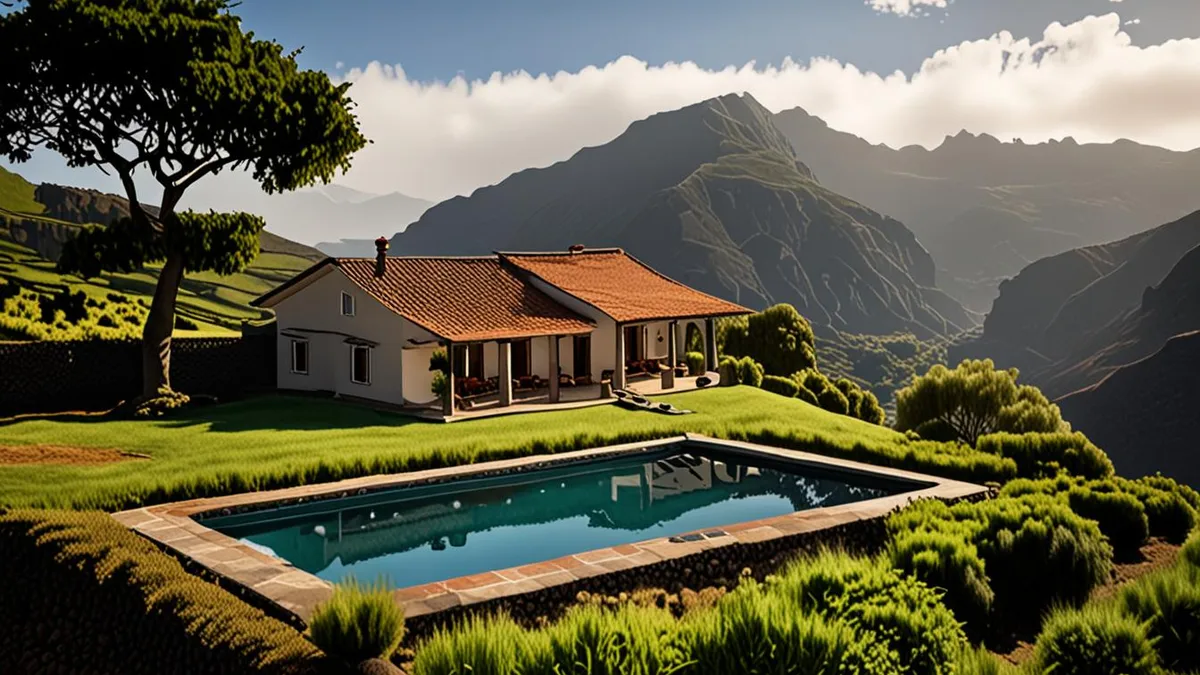
If your idea of scenery involves green valleys rather than golden light, the north coast delivers. Santana and Porto Moniz offer lush, almost tropical landscapes, natural lava pools carved into the shoreline, and noticeably cooler temperatures than the south. Villas here sit in a greener, wetter world, and the dramatic seascapes are among the most photographed on the island. If you are weighing dramatic island scenery against other Mediterranean options, our guide to Greece villas for island holidays shows how different islands balance views, weather and access.
Valley settings and the mountain interior
Villas around São Vicente and Ponta Delgada sit in valley settings with mountain backdrops, and the views can be spectacular. The trade-off is weather: these spots see more cloud and rain than the south coast, sometimes for days at a stretch. Pack accordingly and choose a villa with good indoor space as well as outdoor terraces.
Inland, spots near Santo da Serra and the plateau suit travelers who prioritize hiking access over beach proximity. You will be closer to the trail networks that crisscross the island’s high ground, and the landscapes shift from coastal cliffs to heather moorland and forest. The plateau areas feel exposed and wild, which is exactly the appeal for many visitors, though the cooler, mistier conditions are a real consideration when choosing where to base yourself.
Choosing the Right Season for a Madeira Villa Stay
Madeira works as a villa destination all year, but the experience changes noticeably with the seasons. The island sits far enough south to stay mild even in winter, yet the Atlantic and the mountainous terrain mean that sunshine, sea temperature and rainfall vary far more between coasts and months than most first-time visitors expect.
June to September is the island’s high season and the safest bet for a pool-and-terrace holiday. These months bring the driest weather, the warmest sea temperatures and, inevitably, the peak villa rates of the year. If swimming in your private pool and long evenings on the terrace are the point of your trip, this is the window to aim for.
The shoulder months are the sweet spot for many travelers. April-May and October deliver mild temperatures of roughly 17-24°C, with spring flowers or autumn colors transforming the hillsides. Villa prices drop noticeably compared with summer, and the popular levada walking trails are in good condition during this stretch of the year.
Winter, from November to March, remains mild but is noticeably wetter, especially on the green north coast where clouds and rain settle in more often. If you want a winter villa stay, base yourself on the south coast, which stays the most reliable and sheltered part of the island.
- October often brings warm sea temperatures left over from summer, so a late-season swim is still a realistic prospect from many south coast villas.
- Spring on the island is famous for its flowers, and April-May hillside terraces are at their most photogenic for anyone booking a villa for the views alone.
- Winter rates make larger villas far more affordable, which is why long-stay snowbirds often choose the south coast between November and March.
- Mountain and inland areas run cooler than the coast in every season, so pack layers even for a summer villa stay if your base sits high up.
How to Book Madeira Villas and What They Cost
Villa pricing on Madeira is seasonal but predictable. For a family-sized villa with a private pool, expect roughly €90 per night in low season, rising to €300+ per night at the height of summer. Smaller properties and apartments sit below these figures, while large view-focused villas on the south and west coasts can exceed them. Prices also shift with location: the sun-reliable south coast commands a premium, while greener northern valleys often cost less for the same space and privacy.
A few practical notes on budgeting. Check whether the quoted rate includes cleaning fees, pool heating (worth asking about outside the warmest months) and a local tourist tax, as these are sometimes added at checkout. If you are traveling as a group, per-person costs on a large villa frequently beat two or three hotel rooms, especially in shoulder season when rates soften.
Check drive times, not distances
Madeira looks small on a map, but its rugged terrain means drive times are far longer than distances suggest. Winding mountain roads, tunnels and steep descents slow everything down, so a trip that appears short on paper can easily take the better part of an hour. When comparing villas, look at realistic drive times to Funchal, the airport and the sights you care about, not the straight-line distance.
Confirm access before you book
Many of the most scenic villas sit on steep, narrow lanes that can be challenging for larger rental cars. Before booking, confirm that the property has dedicated parking and workable road access, and ask your host or agent about the approach road if the listing shows dramatic hillside views. A little checking here saves a lot of stress on arrival day.
Matching Your Villa Area to Your Travel Style
Madeira’s villa areas each attract a slightly different kind of traveler, and matching the base to your style matters more than picking the “best” area in the abstract. A honeymooning couple and a family with two small children will want very different things from the same island.
Couples chasing scenery and quiet tend to fit the west coast best. Around Calheta and Ponta do Sol, villas perch above the ocean with dramatic sunsets, and the pace is noticeably slower than in the capital. Ponta do Sol is also among the sunniest corners of the island, which helps when your whole holiday revolves around a terrace and a view.
Families with children are usually better served by Funchal, Caniço or Calheta. These areas put supermarkets, restaurants, medical services and beaches within short drives, which makes day-to-day life far easier. Calheta adds the bonus of Madeira’s few sandy beaches, ideal for days when the kids want sand rather than a pool.
Hikers and nature travelers should look north or inland. Basing near the north coast or in the island’s interior puts you closer to the levada trail network and the wilder landscapes, cutting down the driving on walking days. Just remember that these areas trade convenience for greenery and cooler air.
- The west coast around Ponta do Sol and Calheta has some of the island’s most reliable sunshine, a real advantage for couples planning poolside days.
- Calheta’s marina and sandy beach give families an easy, low-effort outing without a long drive from their villa.
- Staying near the north coast shortens early starts for popular levada walks, letting hikers reach trailheads before parking fills up.
- Inland bases sit at higher altitude, so evenings can be cool even in summer; hikers should pack warm layers for post-walk dinners.
Planning Your Madeira Villa Holiday
Choosing between Madeira’s coasts comes down to one simple trade-off: the south coast, including Funchal and the beaches near Calheta, offers the sunniest weather and the most convenient villa bases, while the north coast and inland areas deliver the wildest, greenest scenery. Pick the south for ease and sunshine, the north for drama and hiking.
Timing matters just as much. June to September suits beach and pool holidays, while April-May and October balance mild weather with noticeably lower rates. Book summer villas 4-6 months ahead to secure the best properties, and match the area to your travel style, whether that’s quiet couples’ retreats, family convenience or levada trail access. Do that, and your scenic villa holiday practically plans itself. If this helped you decide, leave a comment or share the article with a fellow traveler.