Many parents book a resort that looks family-friendly online, only to arrive and discover none of the facilities their toddler actually needs day to day. No shallow pool, no high chairs at breakfast, a cot that has to be chased down at reception, and a kids’ club that starts at an age your child won’t reach for another two years. Resort holidays with toddlers work very differently from a trip with older children, and the difference comes down to facilities, not price or polish.
This guide walks you through exactly what to look for before you pay. We’ll explain why the facility list matters more than the star rating, what makes a pool genuinely toddler-safe, how to judge family rooms and sleeping arrangements, and what to check about buffets and meal times. We’ll also look at play areas and childcare, share a practical booking strategy with the questions to ask in advance, and finish with a checklist you can use on any resort’s website.
Why Facility Lists Matter More Than Star Ratings for Resort Holidays with Toddlers
Star ratings tell you about luxury and service: thread counts, à la carte restaurants, turndown service. They do not tell you whether the resort has cots, high chairs or a shallow pool your toddler can actually stand in. That’s why a well-rated resort can still be a poor fit for a family with a one- or two-year-old.
Consider a common scenario. A four-star resort with beautiful pools but no fenced toddler area can be harder work than a simple three-star property with a dedicated shallow pool, because you spend every minute within arm’s reach of deep water. The simpler resort may cost less and give you a far more relaxed week.
How to check before you book
Start with the resort’s own facility list, not just the photo gallery. Then look at recent guest photos, which often show the reality of the toddler pool, the buffet seating and the room size better than professional shots do. Once you’ve confirmed the facilities that matter for your child, then compare prices. Doing it the other way around is how families end up paying more for a resort that doesn’t suit them.
Pools and Water Play: Depth, Shading and Access
Water is the number one attraction for toddlers on a resort holiday, and also the number one worry. The key distinction is between a shallow corner of the main pool and a genuinely dedicated toddler pool. A separate pool of 30-40 cm depth with gradual steps lets your child splash, stand and play while you stand beside them, rather than holding them at arm level the whole time. Ask the resort for the exact depth of the kids’ pool, and check recent guest photos to see whether the “toddler pool” is really a separate basin or just the first step of the big one.
Shading matters just as much as depth. Toddlers overheat quickly in midday sun, roughly between 11:00 and 15:00, so look for shaded loungers or covered areas right beside the water, not ten meters away in full sun. If you’re considering a coastal destination instead of a pool-focused resort, our article on Baltic Sea coastal resorts for beach holidays covers shallow, gently sloping shorelines that suit small children.
Finally, treat fencing around the main pool as a genuine safety feature, not a bonus. A clear barrier between the sun loungers and deep water means your toddler can’t wander in while you’re unpacking a bag or fetching a snack.
- Entry style: gradual, wide steps or a beach-style sloping entry are much easier with a toddler than a ladder or a single deep step.
- Water temperature: a heated kids’ pool extends the usable hours of the day, especially outside peak summer and in spring or autumn stays.
- Surrounding surface: non-slip paving around the toddler pool reduces falls when wet feet meet tiles, which happens constantly at this age.
- Poolside visibility: check whether the toddler pool sits where you can also see the main pool, so one parent isn’t forced to choose between supervising two children in different basins.
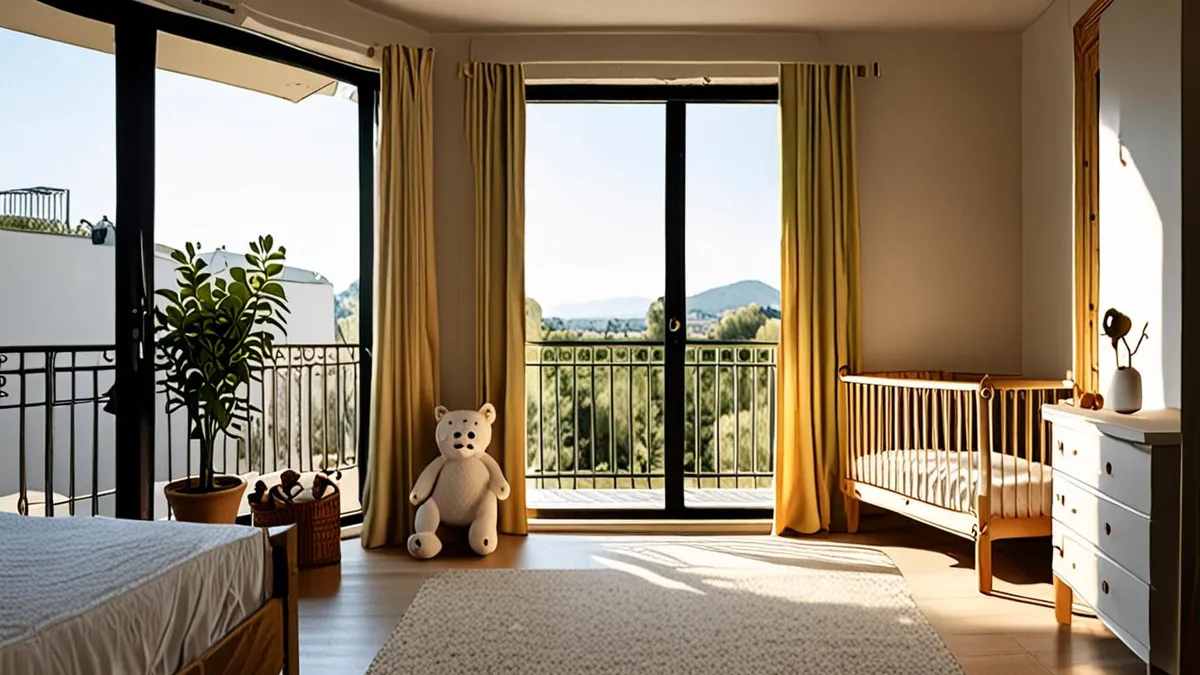
Rooms and Sleeping Arrangements
Room size is the facility families most often underestimate. A standard double room can technically hold a travel cot, but if the cot blocks the walkway to the bathroom or the balcony door, every evening becomes a game of shuffling furniture in the dark. Family rooms of 25-30 m² or more give you space for a cot without blocking walkways, plus room for a buggy to park indoors.
Request both the cot and a blackout solution at booking, not at check-in. Cots are limited in number at most resorts and are allocated first come, first served, so families who ask early get them. A blackout blind or curtain matters too: in summer, many destinations stay light well past a toddler’s bedtime, and a dark room is often the difference between a 19:30 bedtime and an hour of protest.
Think about meals and snacks in the room as well. A small kitchenette, or even just a kettle and a fridge, makes bottle prep, morning milk and afternoon snacks far easier than a trek to the bar each time. And check the balcony: the railing should be high and closely spaced. If it isn’t, ask for a ground-floor room instead, where an open door is less of a hazard.
- Bed configuration: ask whether the “family room” is two proper beds or a sofa bed, since a sagging sofa bed with a restless toddler in it rarely works well.
- Air conditioning: confirm it’s in the sleeping area, not just the living space, and that it runs at night.
- Bathroom setup: a shower with a hand-held head and no step-over bath edge makes bath time with a wriggling toddler much simpler.
- Floor level and noise: a room away from the pool bar and evening entertainment means naps and early bedtimes survive the resort’s social life.
Food: Buffets, High Chairs and Meal Times
Feeding a toddler on holiday can quietly become the most expensive part of the trip. Ordering separate dishes and drinks at every meal adds up fast, which is why half-board or all-inclusive plans typically save families 20-40% compared with paying for every toddler meal separately. You also skip the daily negotiation about where to eat, which is worth as much as the money.
But a meal plan only works if the timing matches your child. Many toddlers eat dinner at 17:00-18:00 and are asleep before a resort’s main evening service even starts. Check that breakfast runs late enough for a slow morning and that dinner starts early, or ask whether the kids’ buffet opens before the adult one. Meal times on the website are often for high season only, so confirm for your exact dates.
Beyond timing, look closely at how the restaurant actually handles small children. These details rarely appear in the brochure, so ask directly:
- High chair supply: high chairs run out at peak times, so confirm at booking that one is reserved for your table rather than hoping one is free when you arrive.
- A kids’ station: a basic corner with plain pasta, fruit and yoghurt beats a gourmet menu your toddler will refuse, and it lets you serve dinner in three minutes instead of thirty.
- Buffet layout: low-level counters and self-serve fruit or bread mean your toddler can pick their own food, which famously increases the odds they actually eat it.
- Takeaway options: some resorts provide covered plates or boxes so you can take fruit or bread back to the room for the post-nap snack.
Finally, remember that a toddler’s holiday appetite is unpredictable. A simple, repeatable food routine matters more than any chef’s credentials, so prioritize the resort that gets the basics right.
Play Areas and Childcare: What Age Groups Are Actually Covered
Kids’ clubs sound like the answer to everything, but read the age limits carefully. Most resort kids’ clubs accept children from age 3-4, so a one- or two-year-old will not be signed in anywhere. For toddlers, the play offer that matters is parent-supervised: a soft play corner, a shaded playground, a sandbox. You are the entertainment, so the question is whether the resort makes that easy and comfortable.
Heat and rain are the two things that can trap you in your room with a bored toddler. A covered indoor play space solves both, giving you somewhere to go during the midday sun or a wet afternoon without resorting to screen time on the bed. Ask whether it has air conditioning, soft flooring and toys suitable for under-threes, since many “indoor play areas” are really aimed at older children.
If you do want an evening off, check the childcare options early. Some resorts offer in-room babysitting through external providers, others have nothing at all, and availability is often limited. And before you book at all, think about distances: with a toddler, a 10-15 minute walk from room to pool and restaurant is the practical maximum, and anything longer turns every single trip into a negotiation.
Details worth checking with the resort directly:
- Playground surface: sand and rubber flooring stay usable in the sun; metal slides and dark surfaces can get too hot to touch by early afternoon.
- Shade over the playground: a pergola or sail over the equipment makes the difference between a five-minute visit and an hour of play.
- Toy lending: some resorts lend buckets, spades and balls at no charge, which saves packing a whole bag of beach toys.
- Babysitting arrangements: ask who provides it, whether the same carers are used each time, and how far in advance you need to reserve an evening.
A resort does not need an impressive kids’ club to work for a toddler. It needs shade, soft play, short distances and honest answers about what supervision it actually provides.
Booking Strategy: Timing, Room Types and Questions to Ask
Once you know which facilities your toddler needs, booking becomes a checklist exercise rather than a gamble. The biggest constraint is supply: resorts keep only a small share of their rooms in family configuration, and those rooms sell out first, especially for summer dates. That means the order you do things matters. Confirm the details, then pay, not the other way around. Work through the steps below before you commit to anything.
- Reserve early for summer. Book family rooms 3-6 months ahead for summer stays, since the limited stock sells out first and last-minute availability is usually the worst rooms or nothing at all.
- Email before paying. Ask the resort to confirm in writing that a cot and high chair will be available, what the toddler pool depth is, and how late the dinner buffet runs. Written answers give you something concrete to fall back on at check-in.
- Consider shoulder season. Weeks in May-June or September typically mean quieter pools, easier high chair access and lower rates, with weather that is often still warm enough for water play.
- Compare totals, not headline rates. Price the full stay for a half-board family room, including any resort fees and child supplements, rather than the cheapest nightly rate for a standard room that will not fit a cot.
- Request specifics on the booking itself. Put the cot, high chair and any room preference (ground floor, quiet side) directly in your reservation notes, not just in a separate email.
A short email exchange before payment tells you a lot about a resort. If staff answer your questions about cots, pool depth and buffet times clearly and promptly, that is usually a good sign of how they will handle everything else during your stay. If the answers are vague, or the cot is “probably available,” treat that as a warning sign and keep looking. Ten minutes of confirming now prevents the classic arrival scene: a travel cot missing, a high chair queue and a tired toddler melting down in the lobby while you argue with reception.
Wrapping Up Your Toddler Facility Checklist
If you have ever arrived at a resort that looked family-friendly online, only to find no cot, no high chairs and a pool your toddler cannot use, you know the frustration. The fix is simple: judge resorts by the toddler facility list, not the star rating. Stars measure luxury; facilities measure whether your days will actually work.
When you compare options, prioritize the essentials first: a shallow toddler pool, a family room large enough for a cot, high chairs at every meal and a covered play space for hot or rainy hours. Then book 3-6 months ahead for summer, because family rooms sell out first, and confirm every facility in writing before you pay anything. Do that, and the resort you pictured online will be the one waiting for you at check-in. If this checklist helped you plan your trip, leave a comment or share the article with another traveling parent.