Choosing between a resort vs villa in Greece is one of the biggest decisions families face when planning a summer holiday, and it is easy to feel stuck. A resort promises everything under one roof, while a villa offers space and privacy, but which one actually delivers better value and less stress for your family? The honest answer depends on your budget, your kids’ ages and how much you want to organize on your own.
This guide breaks the decision down clearly. We compare what a week really costs, look at space and comfort for families, and weigh up convenience factors like meals, kids’ clubs and getting around. We also highlight which islands and regions suit families best, share advice on when to book and when to travel, and finish with a simple framework for deciding which option fits your family.
Resort vs Villa in Greece: The Core Differences at a Glance
A resort and a villa are two very different ways of experiencing Greece, and the difference starts with the basic setup. Resorts bundle accommodation, swimming pools, restaurants, bars and often kids’ facilities into a single managed property, so everything you need on holiday is steps from your room. A villa, by contrast, is a private house rented to you alone, usually with its own pool, a full kitchen and outdoor space such as a terrace or garden.
Which one suits which family?
Resorts work best for families who want services and daily structure: housekeeping, buffet dinners, organized entertainment and staff on hand if something goes wrong. Villas suit families who value space, privacy and the freedom to self-cater, eat when they like and let children roam the garden without worrying about other guests.
Location matters too. Both options are concentrated in the same family-friendly areas: Crete, Rhodes, Corfu, Kos and the mainland’s Halkidiki peninsula. That means you rarely have to choose between a great destination and your preferred style of stay, but it also means the busiest strips of these regions offer plenty of both, so comparing them properly is worth the effort before you commit.
Cost Comparison: What a Week Really Costs
The honest answer on cost is that both options can come out cheaper, depending on your family size and how you like to eat. An all-inclusive resort stay in Greece often runs roughly €150-€350 per night for a family of four in summer, with all meals included, which makes budgeting straightforward. Villas sleeping 4-8 guests commonly cost about €1,500-€5,000+ per week in peak season, but that figure excludes food and car hire, so you need to add both when comparing.
The math shifts noticeably for larger families. If you have five or six people, most resort rooms will not fit you, so you would need two rooms or a family suite, effectively doubling part of your bill. A single three-bedroom villa can then undercut the resort while giving you more space. Self-catering also changes the food equation: cooking breakfasts and a few dinners, and eating out at local tavernas the rest of the time, often trims food costs compared with resort pricing. If you are weighing beach destinations more broadly, this guide to Baltic Sea coastal resorts for beach holidays shows how the same value logic plays out elsewhere in Europe.
- Hidden extras at resorts: drinks outside meal times, spa treatments, boat trips and some kids’ activities are often billed separately, so check what your all-inclusive package actually covers before booking.
- Villa running costs: some owners charge extra for air conditioning, final cleaning or a mid-stay clean, and pool heating is rarely included, so read the listing carefully and budget for these add-ons.
- Supermarket savings: stocking up at a local supermarket for breakfasts, snacks and a couple of self-catered dinners can meaningfully reduce a week’s food spend compared with eating every meal out.
Space, Privacy and Comfort for Families
Space is where the two options diverge most sharply. A standard resort room typically fits 2 adults plus 2 children, so families of five or more often need connecting rooms or a family suite, which raises the price and can feel cramped over a week. If your children are teenagers, squeezing four people into one room for seven nights is a recipe for friction.
What a villa gives you
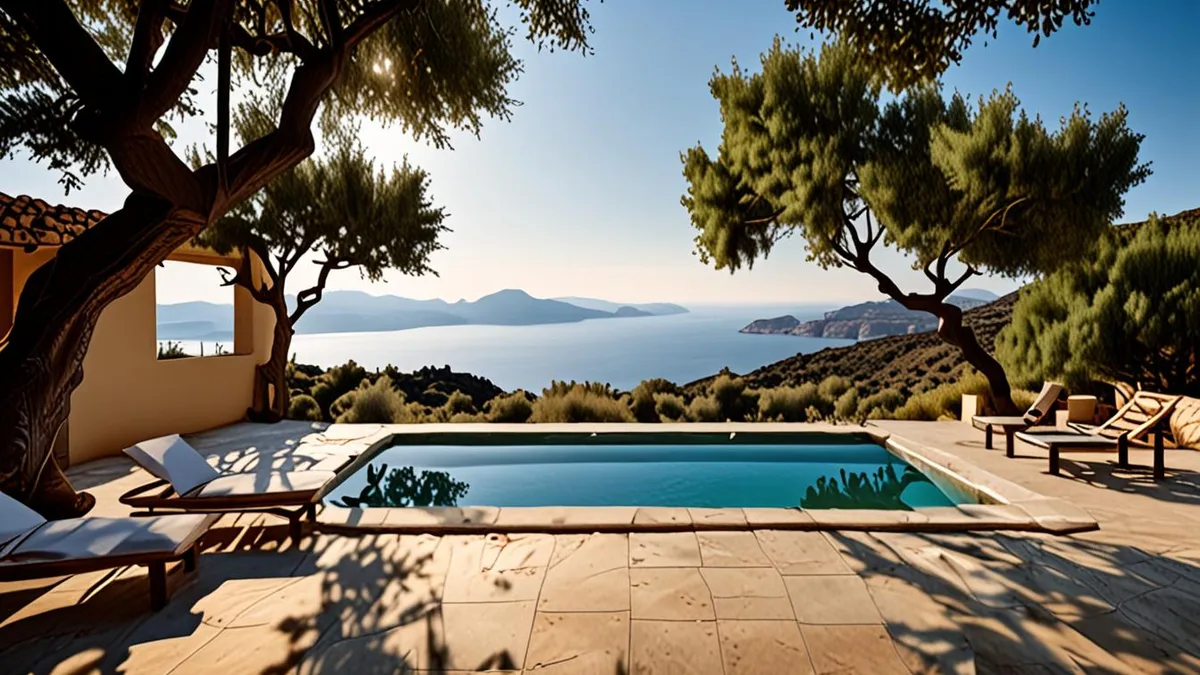
A Greek family villa commonly offers 2-4 bedrooms, a proper living area and outdoor space where children can play freely while parents relax nearby. Everyone gets a real bedroom, meals happen around a shared table, and the pool or garden becomes the center of the day rather than a shared facility. For many families, this alone justifies the choice.
What you give up
The trade-off is service. Resorts provide daily housekeeping, fresh towels and a front desk if the air conditioning fails or you need a late checkout. In a villa, you manage your own cleaning, keys, arrivals and any problems, sometimes with a local contact or property manager, sometimes just a phone number. On the plus side, a private villa pool removes the familiar July and August scramble for sun loungers at busy resort pools, where claiming a good spot can mean setting an alarm before breakfast.
Convenience: Meals, Kids’ Clubs and Getting Around
The biggest practical difference shows up at breakfast time. At a resort, you walk downstairs, fill a plate at the buffet and let the kids burn off energy at the kids’ club while you finish your coffee. Lunch, dinner, snacks and entertainment are all handled on site, which means no one has to plan, shop, cook or drive on any given day.
A villa flips that routine. You stock the kitchen yourself, decide every meal and usually drive to a taverna in the evening. That flexibility suits families who like choosing their own rhythm, but it does require effort: grocery runs, dishwashing and a rental car parked outside. Car hire is usually essential for villa stays, since most sit away from the coast and you will not want to walk a hot hillside road with shopping bags and tired children.
Location adds another layer. Many resorts are built right on or within walking distance of beaches and tavernas, so you can park the car for the whole week. Villas, by contrast, are often a 10-30 minute drive inland or up on hillsides for the views, which trades a short hop to the sea for space and quiet.
The food budget question matters too. All-inclusive packages cap your spending and remove surprises, but they also keep you at the property, since every meal is already paid for. Villas push you out to village bakeries, markets and family-run tavernas, which many parents count as the highlight of the trip.
- Kids’ club logistics: resort clubs are typically split by age group and run sessions through the day, giving parents genuine downtime without arranging a babysitter.
- Taverna timing: Greeks eat dinner late, often after 8 pm, so villa families with small children may end up cooking more than they expected or eating at tourist-oriented early-opening places.
- Driving in summer: roads near popular beaches get congested in July and August, so a 10-30 minute drive can stretch considerably at peak hours; factor that into day trips.
- Snack economy: a well-stocked villa freezer with ice lollies and fruit can quietly save a family a surprising amount compared with resort bar prices between meals.
Where to Stay: Islands and Regions That Suit Families
If you have already decided between a resort and a villa, the next question is where to base yourselves. Not every Greek island offers the same mix of accommodation, and picking the right region can matter as much as picking the right property type.
Crete, Rhodes and Corfu are the safest bets for families who want options. These three islands offer the widest choice of both family resorts and villas, so you can compare a large beachfront complex against a private house with a pool without changing destination. They also have the infrastructure to match: well-stocked supermarkets, medical facilities and plenty of tavernas that welcome children.
Halkidiki: the mainland’s resort stronghold
On the mainland, Halkidiki stands out. The three peninsulas are dotted with resort complexes, and the beaches here are known for being shallow and gently sloping, which makes them popular with families who have small children. If a resort holiday with everything on-site appeals to you, this is one of the easiest places in Greece to find it, often with shorter transfer times from Thessaloniki than a flight to an island.
Smaller Cycladic islands such as Paros and Naxos lean in a different direction. You will find far fewer large resort complexes here, and the accommodation scene favors villas and smaller boutique stays. These islands suit families who are happy to self-cater and drive in exchange for quieter villages and a more local feel.
The practical takeaway is simple: match the base to your style. If you want services, kids’ facilities and walkable beaches, head for the resort-heavy areas like Halkidiki, Rhodes or the northern coast of Crete. If privacy and space matter more, look at quieter islands where the villa stock is stronger. Checking what dominates a region before you book will save you from arriving somewhere that only offers the opposite of what you wanted.
When to Book and When to Travel
Greece’s beach season runs roughly from late May to early October, with July and August as the busiest and most expensive stretch. During those peak weeks, resort prices hit their ceiling and the best villas are snapped up early, so timing matters as much as destination.
For a summer trip, book 4-6 months ahead to get good availability, especially if you want a larger villa. Popular 3-4 bedroom properties on Crete, Rhodes and Corfu can be fully reserved by spring, and the remaining stock tends to be the priciest options.
If your dates are flexible, June and September are the sweet spots. The sea is already warm, prices drop noticeably and both resorts and villas feel calmer. Children who swim easily will still find the water pleasant, and tavernas and beaches are far less crowded than in August.
Shoulder-season villa rates can fall well below the €1,500-€5,000+ you’d pay for a peak week, which sometimes makes a big villa cheaper than a resort stay for the same dates. Check cancellation terms either way, as summer bookings often require deposits.
- Set a reminder for January: many villa owners and agencies open their summer calendars around the new year, so early birds get first pick of pools and sea views.
- Ask about changeover days: villas often run Saturday-to-Saturday rentals in peak season, which can limit flight choices or add a night’s hotel stop.
- Consider the last week of May: it sits inside the season but before school holidays, and resort pools and kids’ facilities are usually open by then.
- Watch minimum-stay rules: in July and August, some villas require week-long bookings, while in June or September shorter stays may be accepted.
Which Should Your Family Choose?
So which one actually delivers better value and less stress? If your priority is convenience, a resort usually wins. Kids’ clubs, on-site restaurants and predictable all-inclusive budgeting mean you can switch off the moment you arrive, and everything your family needs is within a short walk.
A villa, on the other hand, wins on space, privacy and value for larger families who are happy to self-cater and drive. With 2-4 bedrooms and your own pool, everyone gets room to breathe without paying for two resort rooms. In the end, the choice comes down to three things: your family size, your budget, and how much daily structure you want on holiday. If you have been through the same dilemma, share your experience in the comments or pass this article along to another family planning their Greek escape.