Planning a summer by the sea in Denmark sounds simple until you start comparing coasts. Should you head for the wide dunes of west Jutland, the polished beaches of the Danish Riviera near Copenhagen, the rocky Baltic charm of Bornholm, or the shallow family bays around Funen? Each stretch of coast suits a different budget, pace and travel style, and choosing the wrong one can turn a promising holiday into a lot of driving or a disappointing beach.
This guide to Danish coastal resorts breaks the decision down into practical parts. We compare Denmark’s main summer coastlines and their standout towns, explain when to book for the best prices, and give a realistic picture of what summer stays cost. You will also find advice on choosing between beach resorts, harbor towns and islands, plus packing and transport tips, and help matching a coast to your travel style, whether you are a family with young children, a couple after scenery, or a short-break traveler without a car.
Where to Stay: Denmark’s Main Summer Coastlines
Denmark may be a small country, but its summer coastlines are surprisingly different from one another. Picking the right region first, and the town second, is the smartest way to plan a seaside holiday here.
The wide sands of west Jutland
Jutland’s west coast, around Blåvand, Vejers and Rømø, is where you find Denmark’s widest sandy beaches. This is classic dune resort country: low summer houses tucked behind the dunes, small resort towns built around beach life, and an open, wind-swept feel you will not get anywhere else in the country. The beaches here are big enough that even in July you can usually find space to spread out.
The Danish Riviera and the islands
North Zealand’s coast, often called the Danish Riviera, includes towns like Hornbæk, Tisvildeleje and Gilleleje. These suit travelers who want proper beaches without straying far from the capital, which sits roughly 45-60 minutes away by car or train. The atmosphere is more polished and social than the west coast, with cafés, small shops and easy day trips to Copenhagen.
Bornholm, out in the Baltic, offers a slower island pace with a mix of attractions: round churches, smokehouses selling smoked herring, and rocky coves that contrast with sandy stretches. It is reachable by ferry from Ystad in Sweden, a crossing of about 1.5 hours, or by a 35-minute flight from Copenhagen. Finally, Funen’s south coast and the small islands around Faaborg are ideal for quiet family stays, where shallow, sheltered water lets children play safely at the shoreline.
When to Book Danish Coastal Resorts for Summer
The Danish summer resort season runs roughly from late May to early September, but the character of each month differs a lot. July is the busiest and priciest month, when Danish families take their own holidays and the most popular coastal towns fill up quickly. If you want the liveliest atmosphere and the warmest weather, July delivers, but you will pay for it and share the beach.
For July and early August stays, book 3-6 months ahead. This matters most in west Jutland and on Bornholm, where the best-located resorts and summer houses are reserved early by returning guests. If you are flexible on timing, the shoulder months are where the value sits: June and late August often cost 20-30% less than July while still offering usable beach weather, quieter towns and easier restaurant bookings.
It also helps to think about how the Danish coast compares with the rest of the region. If your plans might stretch beyond Denmark, our guide to Baltic Sea beach holidays covers neighboring coastlines that follow a similar seasonal rhythm.
- Midweek arrivals save money: many resorts price Friday and Saturday nights highest in summer, so a Sunday-to-Thursday stay in the same town can bring the nightly rate down noticeably.
- Summer houses book earlier than hotels: self-catering cottages in dune areas are often reserved a full season ahead by the same families, so search these first if that is your preferred style.
- Check cancellation terms before committing: Danish weather can be changeable, and a flexible rate is worth a small premium if your dates might shift.
- Watch for local school holiday dates: Danish schools break up around late June, and towns like Hornbæk and Skagen get noticeably busier from that point onward.
What Danish Coastal Resorts Cost in Summer
Danish coastal resorts are not cheap in high summer, but the range is wide enough to suit different budgets. In peak season, expect roughly DKK 1,200 to 2,500 per night for a double room, depending on the region, the hotel’s location and how close it sits to the beach. Simple rooms in smaller west coast towns sit at the lower end, while well-positioned properties on the Danish Riviera or Bornholm reach the top of that range.
Family rooms and summer houses
If you are traveling with children, budget more than the standard double rate. Family rooms usually cost more than standard doubles in July, and self-catering summer houses, the classic Danish option, also tend to price above a basic hotel room during peak weeks. The trade-off is space and a kitchen, which many families find saves money on meals over a week-long stay.
Getting better value
Timing is the easiest lever. Shoulder-season rates in June and late August fall noticeably below peak prices, often for identical rooms and views. The water is still swimmable, the towns are calmer, and you can often afford an extra night for what a July weekend would cost. Booking early matters too: the best-value rooms in popular towns like Skagen, Hornbæk and Rømø tend to disappear first, so reserving several months ahead usually secures a lower rate than waiting for a last-minute deal, which rarely appears in July.
Choosing Between Beach, Harbour Towns and Island Resorts
Denmark’s coastlines suit very different kinds of holidays, so it pays to match the place to what you actually want to do. The three main options — the wide dune beaches of west Jutland, the harbor towns of the north and the island of Bornholm — each deliver a distinct summer rhythm.
West Jutland: space, sand and surf
The Jutland west coast around Blåvand and Rømø has Denmark’s widest sandy beaches, and it is the natural choice for long beach walks, kite flying and a surfing-style holiday. The trade-off is geography: distances between towns are large, and the villages feel spread out rather than clustered. If you book here, plan your days around one stretch of coast rather than hopping between spots.
Harbour towns and compact islands
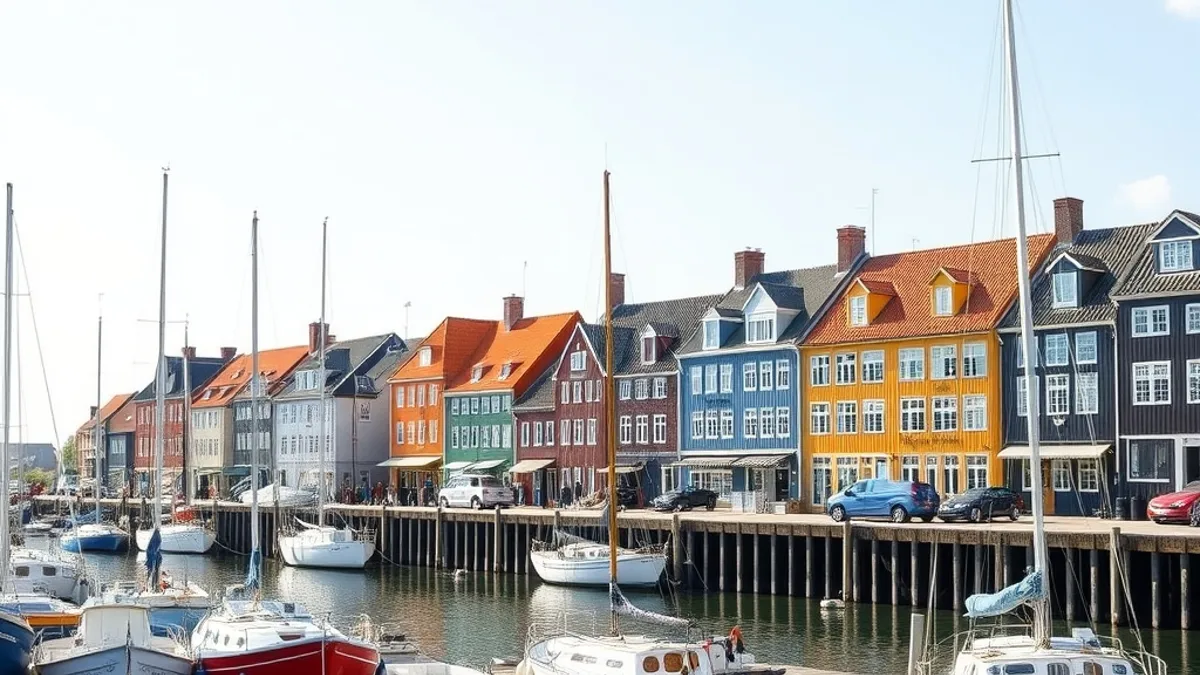
Harbour towns like Skagen and Gilleleje mix beach time with restaurants, ice-cream kiosks and a maritime atmosphere. You can walk from the marina to the sand in minutes, and evenings feel livelier than in the dune resorts. Gilleleje, on the Danish Riviera, is especially convenient if you want that harbor-town feel without straying far from Copenhagen.
Bornholm works best for travelers who want cycling, cliffs and beaches in one compact island. Round churches and smokehouses break up the beach days, and the island’s size means you can cover a lot without long drives. If sea views are your priority further afield, our guide to Gothenburg coastal resorts for sea views covers a similar Scandinavian shoreline with a different flavor.
Practical Tips for a Danish Seaside Summer Stay
Danish summer weather is milder than most visitors expect, and the coast adds its own twist. Even on days when the temperature reaches 20-22°C, coastal winds keep evenings cool, so layers and a windproof jacket belong in your bag no matter the forecast. A light scarf or fleece for after-dinner walks along the promenade will get more use than a second pair of shorts. Locals pack the same way: they plan for wind and shifting light rather than guaranteed sunshine, and travelers who copy that habit tend to enjoy their stay far more. Mornings can start gray and brighten by noon, so leave room in your schedule for spontaneous beach stops when the sun does appear.
The sea is another story. Water temperatures along the Danish coast peak at around 17-20°C in July and August, which is refreshing rather than warm. Many swimmers find a short dip followed by time on the sand more comfortable than long swims. Families with children will find shallow-water bays far more practical than open North Sea beaches, where the water deepens quickly and the wind can be strong.
- Choose west-facing beaches for evening light and east-facing bays for calmer swimming water, since the wind direction shapes how rough each coast feels on a given day.
- Book accommodation with drying space or a laundry room, because a week of beach days in Danish weather usually means damp towels and wetsuits.
- If you plan to explore beyond the beach, remember that renting a car helps most on the Jutland west coast, while North Zealand resorts are reachable by train from Copenhagen — check current timetables before you travel.
If Denmark leaves you hungry for more Scandinavian shoreline, Finland summer resorts for nature trips make a good comparison for travelers who prize forests and lakes alongside the coast.
Matching a Danish Coastal Resort to Your Travel Style
The best Danish coastal resort depends less on rankings and more on how you travel. A place that delights a family with young children can feel remote for a couple, and a town that suits a car-free weekend may frustrate anyone planning a week of exploring. Before you book, decide who is going and what your days should look like.
Families: shallow water first
Families should prioritize shallow bays on Funen’s south coast or Rømø’s wide flats over exposed North Sea beaches. The water shelves gently, children can wade for hours, and the wide sands leave room for games even in July. On the open west coast, the same conditions that attract surfers — wind and waves — make supervision harder with small children, so save those beaches for older kids or adults.
Couples and short-break travelers
Couples seeking scenery and quiet fit Bornholm or the northern tip of Jutland around Skagen. Bornholm pairs cliffs and cycling routes with a slower island pace, while Skagen’s light and dunes give evenings a distinctly romantic feel. Both reward travelers who enjoy walking and landscape more than nightlife.
Short-break travelers without a car get the most from North Zealand resorts, which sit within easy reach of Copenhagen by car or train. That means you can arrive Friday evening, spend Saturday on the beach and be back Sunday without renting anything. If you can stretch to a full week and want maximum space, west Jutland remains the widest, wildest option — just plan around the distances between towns.
Planning Your Danish Summer by the Sea
Choosing a Danish seaside summer stay comes down to two decisions: which stretch of coast fits your travel style, and when you go. Denmark’s main summer coastlines are west Jutland with its wide sandy beaches, the Danish Riviera on North Zealand, Bornholm in the Baltic, and Funen’s south coast with its shallow, family-friendly water. July is peak season with the highest prices, while June and late August offer better value and still bring usable beach weather.
Once you know whether you want long beach walks, cycling and cliffs, or calm bays for children, the right town usually picks itself. Book 3-6 months ahead if you’re set on July or early August, and match the coast to your travel style rather than chasing a single “best” resort. If this helped you plan your summer by the sea, leave a comment or share the article with a fellow traveler.