You have booked flights to Denmark, but a plain hotel room with beige walls does not feel like the trip you imagined. You want a place with character, yet the word “design” gets attached to everything, and it is hard to know what design hotels in Denmark actually deliver for the money. Are the rooms tiny? Is breakfast included? Do you need to stay in Copenhagen, or can you find the same quality elsewhere?
This guide answers those questions section by section. We explain what defines a Danish design hotel, where the best ones are located, and what rooms, dining and amenities you can realistically expect. We also cover typical nightly costs, the best booking windows, which travelers these hotels suit best, and how to pick the right one. By the end, you will know whether a design hotel is the right choice for your Danish trip.
What Defines a Design Hotel in Denmark
Danish design hotels are built around the same principles that made Danish furniture and lighting famous worldwide: minimalist Scandinavian interiors, natural materials like oak, wool and stone, and pieces from local designers rather than generic catalog furniture. Walking into one feels different from a standard business hotel. The palette is calmer, the lines are cleaner, and every object seems chosen rather than ordered in bulk.
Many of these hotels are not purpose-built towers. Most Danish design hotels opened after 2000, and many occupy converted warehouses, harborside buildings or mid-century blocks. That history shows in the architecture: exposed beams, high ceilings and windows placed where the original structure allowed, not where a chain’s blueprint demanded.
Lighting, art and the hygge factor
Lighting deserves special mention. Danish hotels take it seriously, layering warm lamps and pendant lights so rooms feel soft in the evening instead of clinical. Curated art, often by Danish or Nordic artists, appears in lobbies and hallways, not just guest rooms.
The overall aim is hygge, that distinctly Danish sense of cozy contentment, rather than opulence. Expect comfort and atmosphere instead of marble lobbies, gold fixtures or huge suites. If you judge hotels by square footage and chandeliers, this scene may puzzle you. If you value thoughtful details and a warm, calm mood, it delivers.
Where Design Hotels in Denmark Are Located
Copenhagen leads the Danish design hotel scene, and it is not close. The city has the largest concentration of design-focused properties, clustered in three main areas: around the harbor, in Vesterbro with its former meatpacking district and bars, and in the compact city center, where most hotels sit within 2-3 km of Nyhavn. Staying central means you can walk to most major sights and still pass strong architecture on the way.
Beyond the capital
Aarhus and Odense offer smaller but genuine design scenes. These provincial cities have fewer properties to choose from, yet prices run 15-30% below Copenhagen for comparable quality, which makes them smart picks if you want the same aesthetic on a tighter budget. Aarhus in particular has invested heavily in modern architecture and harborside redevelopment.
Coastal towns in North Zealand add another option. In summer, you can combine a design stay with beaches, seaside light and easy access from Copenhagen. The same appeal of stylish, characterful lodging exists across Europe, and if you are comparing destinations, a look at stylish hotels for a Lisbon city break shows how similar themes play out in southern Europe.
For most first-time visitors, though, the practical answer is simple: start in Copenhagen, where the choice is widest and everything is close together.
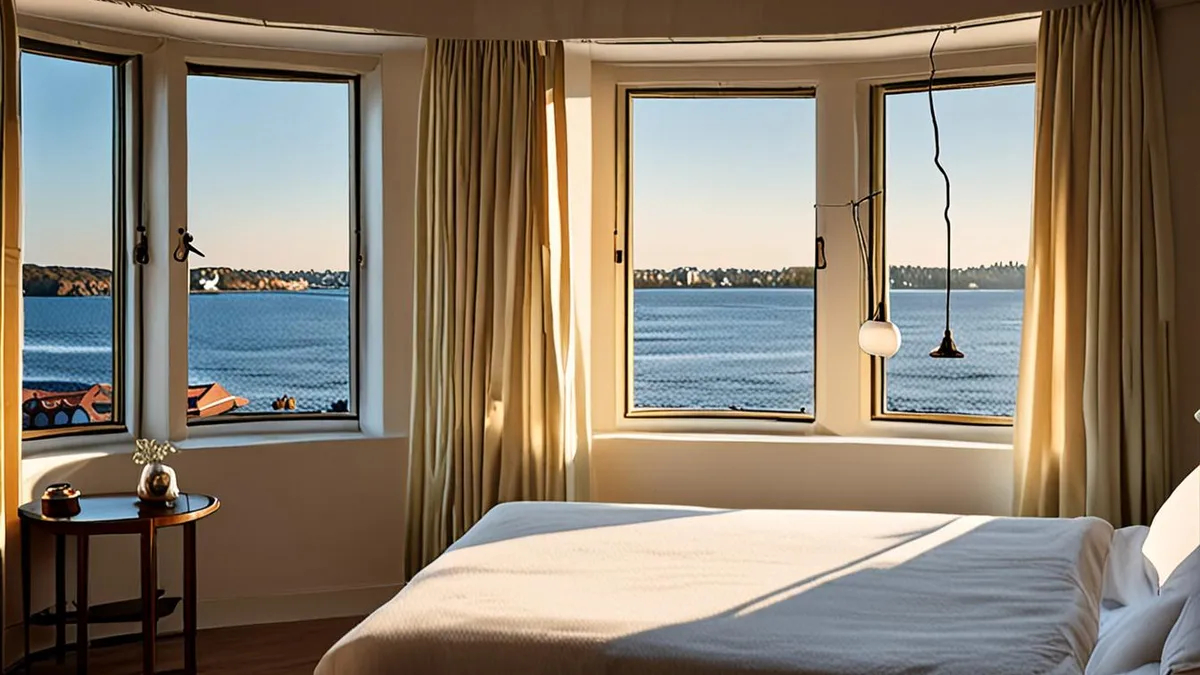
Rooms, Dining and Amenities to Expect
Danish design hotel rooms typically run compact but functional. Quality bedding, rainfall showers and smart storage are the standard, and built-in wardrobes, under-bed drawers and clever shelving make small footprints workable. What you lose in space you usually gain in comfort: the beds, linens and showers tend to outperform what you would find in a same-price chain hotel elsewhere.
Breakfast is usually included in Danish hotel rates, and it is rarely an afterthought. Many properties serve a smørrebrød-inspired buffet with dark rye bread, pickled herring, cheeses, eggs and strong coffee, so you can start the day like a local rather than with a sad continental tray.
The public spaces are a bigger part of the experience than in most hotels, and often the reason guests choose one property over another:
- Rooftop bars with harbor or skyline views, popular with locals as well as guests, especially on summer evenings.
- In-house restaurants that often rank as destinations in their own right, focusing on New Nordic cooking and seasonal Danish ingredients.
- Design shops in the lobby selling furniture, ceramics and lighting, handy if you want to take a piece of the aesthetic home.
Treat the lobby, bar and restaurant as an extension of your room. Many travelers arrive early or linger after checkout simply because the common areas are comfortable, sociable and worth spending time in.
When to Book and What Design Hotels Cost
Design hotels in Copenhagen are not budget accommodation, but they are not as expensive as many travelers fear either. A standard room typically costs between 1,200 and 2,500 DKK per night, with the exact rate depending on the season, the size of the room and how central the property is. Harbor-facing rooms and larger suites sit at the top of that range, while compact inner rooms come in lower.
Timing your booking around the seasons
Summer is when Copenhagen is at its liveliest and its priciest. July and August are peak season, when the city fills with visitors and hotel rates climb toward the upper end of the scale. If you want a design hotel during those months, book 2-3 months ahead. Waiting until the last minute usually means either paying more or settling for a room category you did not really want.
If your dates are flexible, aim for the shoulder months instead. May and September offer noticeably lower rates than midsummer, and the weather is often genuinely pleasant: long daylight hours in May, mild golden evenings in September. The city feels local again after the summer rush, and you can often get the same room you would have paid a premium for in July. Check current rates with your chosen hotel or booking platform, since prices shift with demand and events in the city.
Who Design Hotels in Denmark Suit Best
Design hotels in Denmark are not for everyone, and that is part of their appeal. They trade square meters for atmosphere, putting their budget into interiors, lighting and location rather than sprawling floor plans. Knowing whether that trade suits your travel style will save you from booking the wrong kind of stay.
Couples on a city break tend to get the most out of these hotels. The rooms are compact, but you will spend most of your time out exploring anyway, and coming back to a beautifully designed space with a walkable location beats a bigger room on the edge of town. If you love the idea of stylish urban stays elsewhere in Europe, the same logic applies to Zurich hotels for stylish city breaks, where design-forward properties follow a similar pattern.
These hotels also reward travelers who care about architecture and interiors as part of the experience itself. If you photograph lobbies, notice chair designers and appreciate a well-lit breakfast room, you will find plenty to enjoy without ever leaving the building.
- Business travelers: Many design hotels offer stylish lobbies and in-house cafes that work well as informal meeting or laptop spots, plus central locations that cut commute time.
- Families with young children: Rooms can feel tight for four people, so look for connecting rooms or family categories, or accept that a design hotel works best for shorter stays.
- Solo travelers: Social common areas like rooftop bars and shared lounges make it easier to meet people than in a conventional hotel.
How to Choose the Right Design Hotel
Choosing a design hotel in Denmark is mostly about matching the room and the rate to what you actually need. Because these properties prioritize style over space, a few practical checks before booking make a real difference. Work through the steps below and you will avoid the most common disappointments.
- Check the room size in square meters. Wide-angle photos make Scandinavian rooms look generous, but compact doubles can be surprisingly small. Listings usually state the size, so compare it with what you are used to before committing. If you plan to work from the room or travel with large suitcases, add a buffer to whatever figure you would normally consider comfortable.
- Decide how much the view matters to you. Harbor or canal views deliver the classic Copenhagen scenery, especially at sunrise and sunset, but they come at a premium. Inner-facing rooms cost less and are often quieter, so choose based on how much time you plan to spend looking out the window rather than out exploring.
- Compare what the rate actually includes. Morning meals are often bundled into the price at Danish properties, but not universally, and two similar-looking rates can differ noticeably once food is added. Read the inclusions line carefully and calculate the true nightly total before comparing hotels.
- Review the cancellation terms. Flexible rates and non-refundable rates can vary widely in price. If your plans might change, the flexibility is often worth the difference, particularly for shorter trips where a single night represents a large share of your budget.
A few minutes of comparison across two or three properties usually reveals clear differences in value. Once you have matched room size, view, inclusions and cancellation terms to your priorities, you can book with confidence and spend the rest of your trip enjoying the design rather than second-guessing it.
Wrapping Up Your Danish Design Hotel Stay
So is a design hotel in Denmark worth the money? In short: yes, if atmosphere matters to you. You get Scandinavian interiors built around natural materials and local designer furniture, central spots like Copenhagen’s harbor and city center, and breakfast usually folded into the rate. What you are buying is mood and thoughtful detail, not sheer square meters or opulence, and for many travelers that trade is exactly the appeal.
On budget, expect 1,200-2,500 DKK per night in Copenhagen, with design hotels in Aarhus and Odense typically costing 15-30% less. Book 2-3 months ahead if you want a summer stay, or aim for May and September to enjoy pleasant weather and lower rates. Check room sizes and what is included before you commit, and your stay should live up to the photos. If this helped you plan your trip, leave a comment or share the article.