You want a comfortable base within reach of the Pyrenees’ best hiking trails, but you don’t know which valleys and seasons actually deliver. That’s a fair worry — the range stretches across France, Spain and Andorra, and picking the wrong base can mean long drives to trailheads or glamping sites that shut before the high routes open.
This guide breaks glamping in the Pyrenees down by area and by season. We’ll cover why valley-floor sites work so well for hikers, the best hiking areas on the Spanish side, the top spots on the French side and in Cerdanya, when to go, how to choose between domes, tents and cabins, and how to book smart on timing and prices. By the end, you’ll know exactly where to base yourself and when to reserve for the kind of hiking trip you want.
Why Glamping in the Pyrenees Works for Hikers
The Pyrenees form a natural wall between France and Spain, with Andorra tucked into the middle. That geography is exactly why glamping works so well here: you can pick a base on either side of the range and still be within a short drive of serious trailheads. A site near Torla puts you at the gates of Ordesa’s canyon trails, while a stay on the Cerdanya plateau gives you walking access in two countries.
Comfort that survives a ridge day
After eight hours on a high ridge, the difference between a thin tent and a glamping setup is obvious. Real beds, proper heating and solid walls mean you actually recover overnight instead of shivering through it. You keep the mountain setting — many sites sit with direct views of the peaks you just hiked — without the drawbacks of a basic camp.
Valley-floor locations matter
Unlike remote mountain hotels, glamping sites cluster on valley floors where the trail networks begin. That means you can often walk from your tent to a marked path, or drive 10–30 minutes to a major trailhead in valleys like Ordesa or Cerdanya. You get morning starts without pre-dawn car journeys, and you return to a hot shower rather than a long transfer. For hikers who want maximum trail time and minimum logistics, this combination is hard to beat.
Best Areas for Hiking: Spanish Side
The Spanish side holds some of the Pyrenees’ most dramatic hiking, and each area suits a different style of trip. Before choosing, it helps to think about how much comfort you actually need on the ground — our piece on glamping versus camping for your trip covers that trade-off in detail. It also pays to decide early whether you want to be within a short drive of a major trailhead or base yourself somewhere quieter with more space around you.
Ordesa Valley near Torla is the headline act: classic canyon trails wind beneath the Monte Perdido massif, and the trailheads sit close to the valley’s glamping sites, often within a 10–30 minute drive. Further west, the Aigüestortes area in Catalonia offers a very different character, with high glacial lakes scattered between granite peaks. The Basque Pyrenees, at the range’s western end, trade altitude for green, rolling ridges.
- Ordesa practicalities: the main canyon trail is an out-and-back, so starting early from a nearby site lets you reach the quieter upper sections before day crowds arrive — especially useful during the busy July and August weeks.
- Aigüestortes logistics: this is a national park, so check current access rules and any park fees before you go, as they change year to year.
- Basque Pyrenees advantage: the gentler gradients and well-marked ridge paths make it one of the few areas where a mixed-ability group can share the same day out.
- Weather note: the western Basque hills are greener and wetter than the central high Pyrenees, so pack for rain even in summer.
Best Areas for Hiking: French Side and Cerdanya
The French side rewards hikers who want variety without the biggest crowds. The Cerdanya plateau straddles the Franco-Spanish border and offers wide, gentle valley walks, with access to high peaks like Carlit when you want a bigger day. Because the plateau sits at altitude but stays relatively flat, it works well as a base for both easy loops and serious summit pushes. Glamping sites here often put you within a short drive of trailheads, so you can leave the car behind for whole days at a time.
South-west of Cerdanya, Ariège and the Aude gorges suit quieter forest and gorge hikes, with shaded paths that stay pleasant even in warm weather. Near Saint-Lary, on the central French side, the Néouvielle reserve area is the pick for lake circuits — a chain of high glacial lakes linked by well-trodden paths. Pack a picnic from your cabin or dome kitchenette, since facilities around the lakes are minimal and you will want to linger between swims and photo stops.
- Carlit day trips: the summit route from the plateau is a solid half-day outing, and the wide valley paths make good warm-up walks on arrival days.
- Ariège character: expect beech and fir forest, old shepherd tracks and a noticeably slower pace than the famous Spanish canyons.
- Néouvielle timing: the reserve sits high, so lake circuits are best in the main June to September window when the passes are clear.
- Cerdanya bonus: the plateau’s position means you can plan rest-day walks on one side of the border and big hikes on the other without changing base.
When to Go: Seasons for Pyrenean Hiking
The Pyrenees reward good timing more than almost any range I’ve hiked. The reliable window for high routes and passes runs from June to September, when snow has cleared from the ridgelines and the refuges and cable-access points are operating. July and August are the busiest months, so expect fuller trails and busier valley sites if you travel then. If your trip centers on classic routes in the Ordesa Valley or circuits around the high lakes of Aigüestortes, aim squarely for this stretch and plan your days around early starts.
Shoulder season: value and quiet
May and September are my favorite months for a glamping base. Trails stay walkable at most elevations, the crowds thin out noticeably, and nightly rates typically sit at the gentler end of the usual range. The light is softer for photos, the valley meadows are at their best, and you can often arrange a shorter-notice booking without stress. Pack layers, though — mornings can be chilly, and a dusting of snow on the higher passes is possible in May.
From November to April, the picture changes. Many high passes close, and winter hiking is realistically limited to lower valley trails. Glamping site availability shrinks too, as some operators shut for the season or run reduced capacity. If you want a cold-weather mountain trip with more reliable infrastructure, consider a similar setup elsewhere — for example, this guide to glamping areas and seasons in the Dolomites covers another range with a well-developed shoulder-season scene.
Choosing Your Stay: Domes, Tents and Cabins
The accommodation type you choose matters more in the Pyrenees than in lowland destinations, because evenings cool down fast even in summer. Safari tents are the classic choice: canvas walls, proper beds, a deck facing the peaks. They suit summer trips perfectly, but if you’re hiking in May or September, check specifically whether the tent has heating — a heater or wood stove makes the difference between a cozy evening and wearing your down jacket at dinner.
Domes and cabins are the better bet for the shoulder months. Their solid or insulated structures handle cold nights far better than canvas, and many include kitchenettes, which is genuinely useful for hikers. Making trail-packed lunches the night before saves both money and the scramble to find an open bakery before an early start.
Whatever style you pick, compare the drive time to the actual starting point of your planned route. Around Ordesa and on the Cerdanya plateau, glamping sites are often within a 10–30 minute drive of the main access points — that’s the sweet spot. Beyond 45 minutes, you’re spending an hour of every hiking day in the car.
- Safari tents: usually the most affordable option and often sleep four to six, which works well for splitting costs in a group.
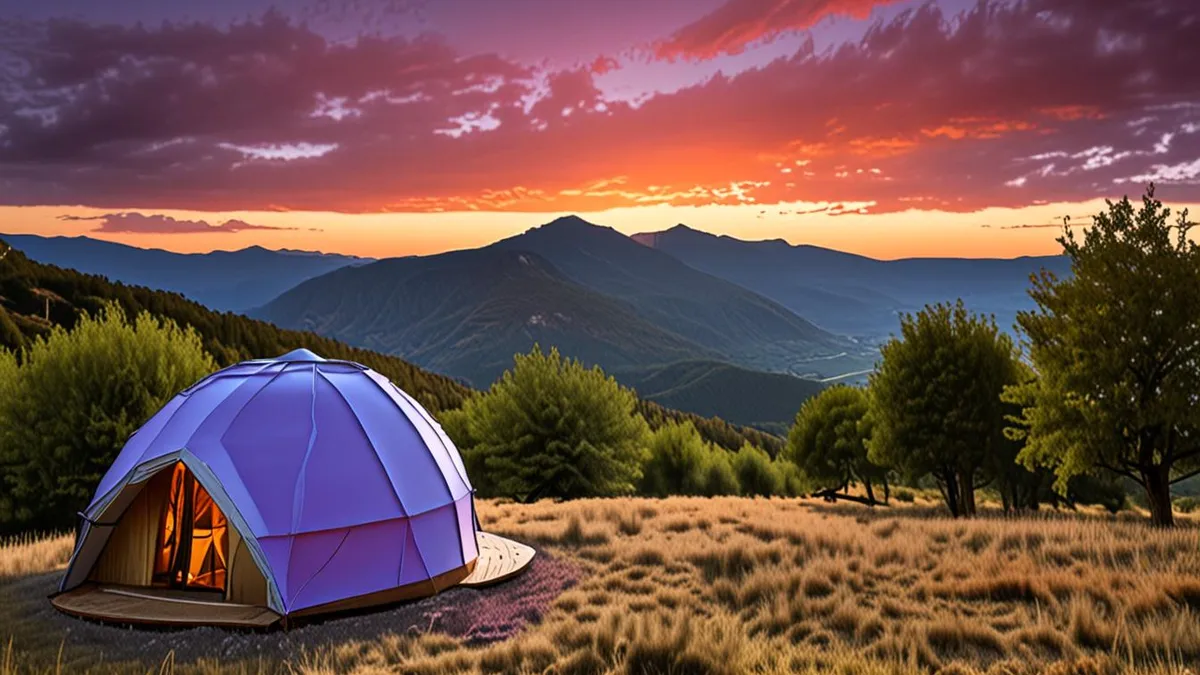
- Geodesic domes: frequently positioned for views and may include skylights over the bed — worth requesting a unit facing the massif you plan to hike.
- Wooden cabins: the most weatherproof choice and often the only style with reliable hot water pressure after a cold day on the trail.
- On-site extras: look for drying rooms or covered gear storage if you’re hiking in May or September, when afternoon showers are common.
For a broader sense of what different styles cost across the continent, this overview of how much glamping costs in Europe in 2025 puts Pyrenean prices in useful context.
Booking Smart: Timing and Prices
Pyrenean glamping has grown popular enough that the best valley sites genuinely sell out, so your booking strategy matters more than you might expect. For July and August stays, reserve 2–4 months ahead. Sites within a short drive of the Ordesa trailheads or on the Cerdanya plateau are the first to go, and by late spring you’ll often be left with the less well-located units — or nothing at all in your preferred valley.
Shoulder season flexibility
The rules loosen outside peak summer. For May, June or September trips, booking 3–6 weeks out is usually enough, and you’ll have far more flexibility on dates and unit choice. This is also when operators are more open to shorter stays or midweek arrivals that they’d decline in August. If your schedule is flexible, watch for gaps between existing reservations — a three-night window in early September can appear at short notice, especially if someone cancels.
On location, my advice is simple: prioritize proximity to your trails over interior frills. A basic safari tent ten minutes from a trailhead beats a luxury dome an hour away, especially on multi-day hiking trips where you’ll be tired at both ends of the day. Check current nightly rates directly with sites, as they shift with the season, and remember that the most scenic, best-positioned units — the ones overlooking the valley or closest to the path network — get snapped up first regardless of when you book.
Planning Your Pyrenees Glamping Trip
The right Pyrenees glamping trip comes down to three simple matches. First, match your base to the side of the range and the difficulty you want: the Spanish valleys for dramatic canyon and high-lake trails, the French side and Cerdanya for gentler valley walks with big-peak access, or the Basque Pyrenees for mixed-ability groups. Second, match your dates to your goals.
Aim for June to September if you want the high routes and open passes, or choose May and September for lower prices around €80–€150 per night and quieter trails. Book early for peak summer, when the best valley sites sell out first, and pick heated stays like domes or cabins for the shoulder months. Whichever valley you choose, keep that 10–30 minute drive to the trailhead in mind and you’ll spend your days on the ridges instead of the road. Have a favorite Pyrenean base or a question about planning your trip? Leave a comment or share this article with your hiking crew.