Both islands promise a Greek villa holiday, but they deliver very different experiences on budget, space and scenery, so which one fits your trip? The Santorini vs Crete villas question comes down to what you actually want from your stay: a dramatic caldera view from a compact cliff-edge property, or a sprawling villa with a private pool, garden and room for the whole family.
This guide breaks the choice down step by step. We compare the core character of each island’s villa scene, what you can expect to pay, how the seasons differ, where to base yourself on each island, how group size and stay type should shape your decision, and when to book. By the end, you should know exactly which island matches your group, your budget and your idea of a perfect Greek holiday.
Santorini vs Crete Villas: The Core Difference
Santorini sells one thing above all: the caldera view. Villas here are compact, dramatic properties carved into or perched along the cliff edge, often with cave-style interiors, small plunge pools and terraces that look straight over the flooded volcano. Space is at a premium because the caldera rim is limited, so expect intimacy rather than sprawl. What you pay for is the setting, and it is genuinely hard to replicate anywhere else in Greece.
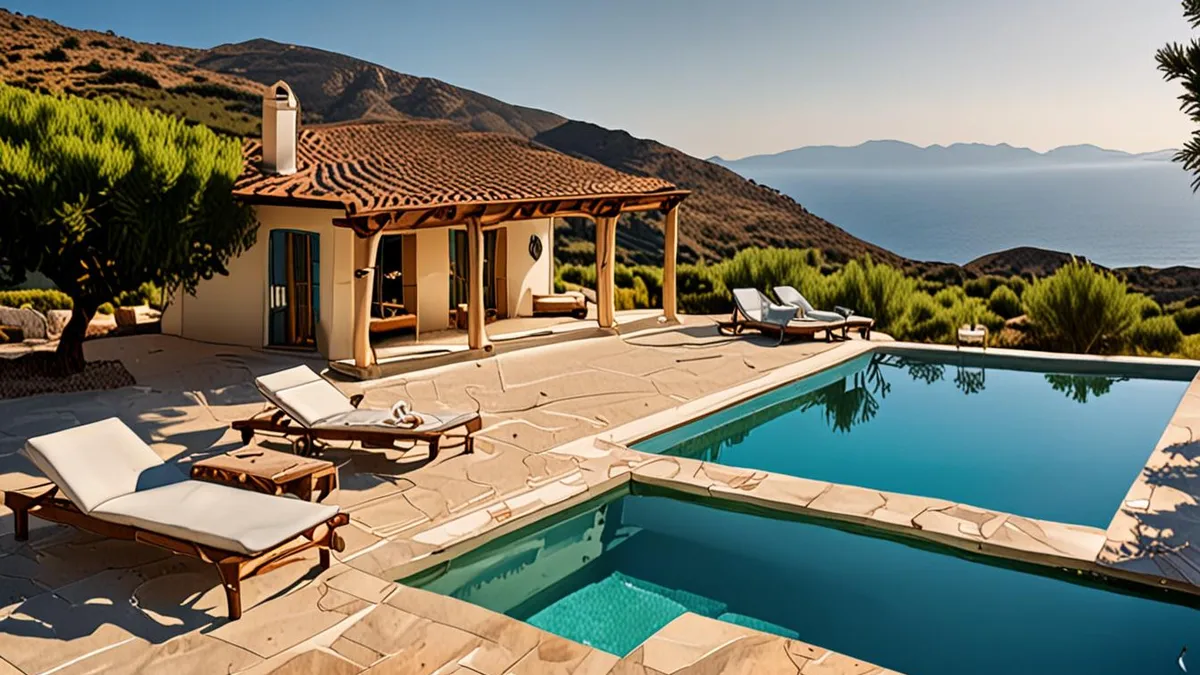
Crete makes the opposite pitch. This is Greece’s largest island, and its villa market reflects that: properties tend to be larger, with private pools, shaded gardens, outdoor dining areas and, in many coastal spots, direct or near-direct beach access. You trade the postcard cliff view for elbow room, and for many travelers that is a fair trade.
Who each island suits best
Santorini works beautifully for couples and short stays. Two or three nights in a cliff-edge villa with a plunge pool delivers a high-impact romantic break, and the island’s compact size means you can settle in quickly. It is less well suited to longer trips, since there is only so much ground to cover.
Crete rewards families and week-long holidays. With more bedrooms, bigger grounds, beaches on the doorstep and plenty of day-trip variety, a Cretan villa becomes a genuine base rather than just a place to sleep. If your group includes children or you plan to stay seven nights or more, Crete will usually feel like the more comfortable and better-value choice.
Villa Costs: What Each Island Charges
Villa prices on these two islands are not close. A caldera-view villa in Santorini typically costs 2-3 times more than a comparable inland villa on Crete, largely because the cliff-edge supply is so limited and demand is so intense. You are paying for the view and the location, not for extra square meters, since Santorini villas tend to be smaller properties.
Crete, by contrast, offers real room to save. Inland villages and the island’s south coast have budget-friendly villa options, especially outside the peak summer months, and those same properties often come with more bedrooms and bigger pools than their Santorini equivalents. If your priority is the villa itself rather than the view from it, your money stretches much further here. For a broader look at how the Greek islands compare on villa choice, this guide to choosing villas for a Greek island holiday is a useful next read.
How timing affects what you pay
On both islands, the shoulder months of May, June, September and October cut rates noticeably compared with high summer. You keep warm, swimmable weather while paying meaningfully less, and villa availability improves too. If you can shift your dates even a few weeks away from July and August, the savings on either island can be substantial, and on Crete they can be the difference between a modest villa and a genuinely impressive one.
When to Go: Seasons on Each Island
Santorini’s villa season runs roughly April to October, with July and August as the peak. Outside that window, many cliff-edge properties close or operate on a reduced basis, and since the island’s whole appeal centers on views and outdoor living, a villa stay outside the season loses much of its magic. The caldera terraces, the plunge pools and those long evenings watching the sunset all depend on decent weather, so timing matters more here than on most islands. Within the season, expect the caldera towns to be at their busiest and most expensive in high summer, and plan around that if peace and quiet are priorities.
Crete’s swimming season runs from May to October, with the sea at its warmest in August. Thanks to its southern location and sheer size, the island stays usable well into autumn, when temperatures are milder, the light is softer and the crowds have thinned. Villa life also stretches more naturally here, because larger properties with gardens and covered terraces remain comfortable even when the midday sun loses some of its force. That makes Crete the safer pick if your dates are flexible or fall outside the classic summer window, and it is worth asking villa hosts about pool heating if you plan a late-season stay.
Season details worth knowing
- July and August on Santorini mean peak crowds as well as peak rates, so a caldera-view terrace can feel busy even when you are relaxing at your own villa.
- May and June on Crete combine green landscapes and comfortable hiking weather with sea temperatures that are already pleasant for swimming by late spring.
- September on Crete is a sweet spot: the sea is near its warmest, family crowds have dropped, and villa rates ease below their August highs.
- October on Crete still offers swimmable sea in a typical year, though evenings cool down and pool heating becomes more relevant for villa stays.
Choosing Your Area: Crete’s Coasts vs Santorini’s Caldera Towns
Crete is a big island, about 160 km from one end to the other, and that size shapes every villa decision you make. The drive from the far west to the far east takes several hours, so choosing the wrong coast can mean long car journeys every day. Before you browse villas, decide whether you want the Chania, Rethymno, Heraklion or Lasithi coast, since each has a distinct character and its own villa market.
Where the premium villas sit
On Crete, the west coast near Chania is the premium villa zone. Expect the highest concentration of high-end properties, attractive old-town day trips and some of the island’s best-known beaches within easy reach. Rethymno offers a middle ground between west-coast polish and central convenience, while Heraklion and Lasithi suit travelers who want archaeology sites, quieter eastern beaches and often lower prices.
Santorini works completely differently. The island is only about 18 km long, so most villas sit within a 40-minute drive of the caldera, and many are far closer. You can base yourself almost anywhere and still see everything, which makes area choice less about logistics and more about the view itself.
Within Santorini, Oia and Imerovigli command the highest views, with Imerovigli offering the caldera panorama at a slightly calmer pace than Oia. Fira puts you near restaurants and transport, while inland villages trade the view for space and quieter evenings. If the caldera outlook is the reason you chose Santorini, prioritize Oia or Imerovigli; if you want more villa for your money, look just inland.
Space, Groups and Stay Types
The single biggest practical difference between the two islands is the size of the properties themselves. Crete villas commonly offer 3-4 bedrooms, which is exactly why families and groups of friends gravitate there. A typical Cretan villa gives everyone a proper bedroom, a large shared living area, a full kitchen and outdoor space that actually gets used.
Santorini villas are usually 1-2 bedroom cave-style properties, carved into the cliffside with compact rooms and terraces oriented toward the view. They are romantic and photogenic, but they are built for couples rather than six people sharing a fridge. Two couples traveling together can manage, but anything larger means booking multiple properties and splitting the group across different locations.
For groups who want shared pool space and privacy, Crete delivers far more value per person. You get one big pool instead of several plunge pools, one large dining terrace instead of separate balconies, and one booking instead of three.
- Outdoor living counts as square footage. Cretan villas often include shaded dining areas, barbecue corners and gardens, so your group can spend whole days on-site without feeling crowded.
- Bedroom configuration matters for mixed groups. Many larger Cretan villas offer a ground-floor bedroom, useful for older relatives or anyone who dislikes stairs, something narrow cave houses rarely provide.
- Multiple Santorini bookings change the dynamic. If your party needs two or three cave villas, you may end up in different towns, which turns a shared holiday into a coordination exercise.
Booking Timing and Getting There
Getting the booking right matters more on these islands than in most villa destinations, because the best properties are few, they book out early, and demand is concentrated in a short window. The good news is that the two islands follow different rhythms, so the planning effort differs too. Santorini rewards early, decisive action, while Crete is generally more forgiving if your dates are flexible. Here is how to approach each one.
- Start with Santorini if you want a caldera view in high summer. The pool of true caldera-facing villas is small, and competition for them is intense, so for July and August stays you should book 6-9 months ahead to have real choice rather than leftovers. If you can travel in the shoulder months instead, you will find more availability and lower rates.
- Give Crete a shorter runway. Crete has far more villa stock spread across four coasts, so a lead time of around 3-4 months is usually enough, even for summer. If you have your heart set on a specific premium west-coast property in peak season, treat it like Santorini and book earlier to be safe.
- Plan Santorini’s two-step journey. Santorini typically relies on flights plus a ferry connection from Athens or nearby islands, so build transfer time into your itinerary and confirm ferry schedules close to your travel dates, since they can shift.
- Simplify with Crete’s direct flights. In summer, Crete has direct international flights from many European cities, which means you can often land, pick up a rental car and reach your villa the same day. That convenience makes longer family stays much easier to organize.
Whichever island you choose, book refundable rates where possible and confirm the current flight and ferry options with your operator, since schedules and availability change from year to year. A little lead time is the cheapest upgrade you can buy on either island.
Which Island Should You Pick?
So which island should you pick? Santorini wins for views, romance and short, high-impact stays, and you pay for it: caldera-view villas typically cost 2-3 times more than a similar inland Cretan villa. Crete wins on space, families, beaches and better value across a longer season, with villas that often offer 3-4 bedrooms and room to actually live in.
The simplest way to decide is to match the island to your circumstances. If you are a couple chasing sunsets and don’t mind paying a premium for a compact, dramatic setting, Santorini will likely steal your heart. If you want a private pool, space for the kids to spread out and a week that feels like a proper home rather than a stylish hotel room, Crete is the stronger choice.
Whichever way you lean, both islands deliver something memorable — the trick is knowing what you want before you book. If this helped you choose, leave a comment or share the article with your travel companions.