Tuscany looks perfect in every photo: cypress-lined roads, hilltop towns glowing at sunset, vineyards stretching to the horizon. But the wrong area or the wrong month can turn that dream into a hot, crowded or rainy disappointment. Choosing a site in an inland valley for a July trip, or booking a mountain dome for a week of wine touring, are the mistakes that cost travelers their holiday.
This guide to glamping in Tuscany walks you through what actually matters. We explain why glamping suits this region so well, compare the four best areas from Chianti to the Apennines, and break down the seasons month by month. You will also find realistic 2025 prices, booking timelines, and advice on matching your tent, lodge or dome to the trip you want. By the end, you will know where to go, when to go, and how to reserve before the best units sell out.
Why Glamping in Tuscany Works So Well
Glamping in Tuscany works because it removes the usual trade-off between immersion and comfort. You sleep surrounded by vineyards and olive groves, often with nothing between your terrace and the hills, but you do it with a real bed, a proper bathroom and, at many sites, a shared or private pool. Waking up to roosters and morning mist no longer means sacrificing a hot shower.
It also fits the way Tuscany is best traveled: slowly. The region rewards lingering rather than ticking off sights, and a well-placed glamping site puts wine roads, hill towns and hot springs typically within a 30-60 minute drive. That means you can spend the morning at a thermal pool, the afternoon in a small village, and the evening cooking at your tent without ever rushing.
Why it beats a boutique hotel
Price is the third reason. Rural boutique hotels in the same landscape charge a premium for the view, and their rates climb fast in high season. A safari tent or lodge on a glamping site usually costs noticeably less, especially in shoulder season, while offering similar scenery and often better outdoor space. You trade a concierge for a hammock, and for most trips to Tuscany that is a fair deal.
Best Areas for Glamping in Tuscany
Tuscany is not one landscape but several, and the right glamping area depends on what you want from your trip. A couple chasing wine and city day trips needs something very different from a family looking for coast and cooler air. If you are unsure whether a tent-based stay suits you at all, it helps to first read glamping vs camping: which suits your trip better? and decide how much comfort you want to keep before choosing a region.
Here are the four areas that consistently work best for glamping, each with its own character:
- Chianti: the classic postcard region, sitting roughly between Florence and Siena, 30-60 minutes by car from either city. Glamping sites here sit among vineyards and olive groves, and many offer tastings or pairings with nearby wineries, so evenings rarely require a long drive.
- Val d’Orcia: a UNESCO-listed area of rolling hills, cypress-lined roads and quiet villages like Pienza and Montepulciano nearby. It is the pick for photographers and slow stays; light at dawn and dusk over the hills is the whole point of coming here.
- Maremma: the wilder south, where hills meet an uncrowded coast. It stays 2-4°C cooler than inland valleys in midsummer, and it is far less visited than the north, so you share trails and beaches with locals rather than tour groups.
- Garfagnana and the Apennines: forested mountains within reach of Lucca, best for hiking, cooler summer nights and travelers who want green scenery instead of vineyards.
For a first trip focused on wine and easy day trips, Chianti is the safest choice. For scenery and silence, choose Val d’Orcia. For heat relief and a rougher, wilder feel, Maremma wins, and the Apennines suit active travelers above all. Whichever you pick, match the area to your itinerary before you book, since driving times between regions can quietly eat into your days.
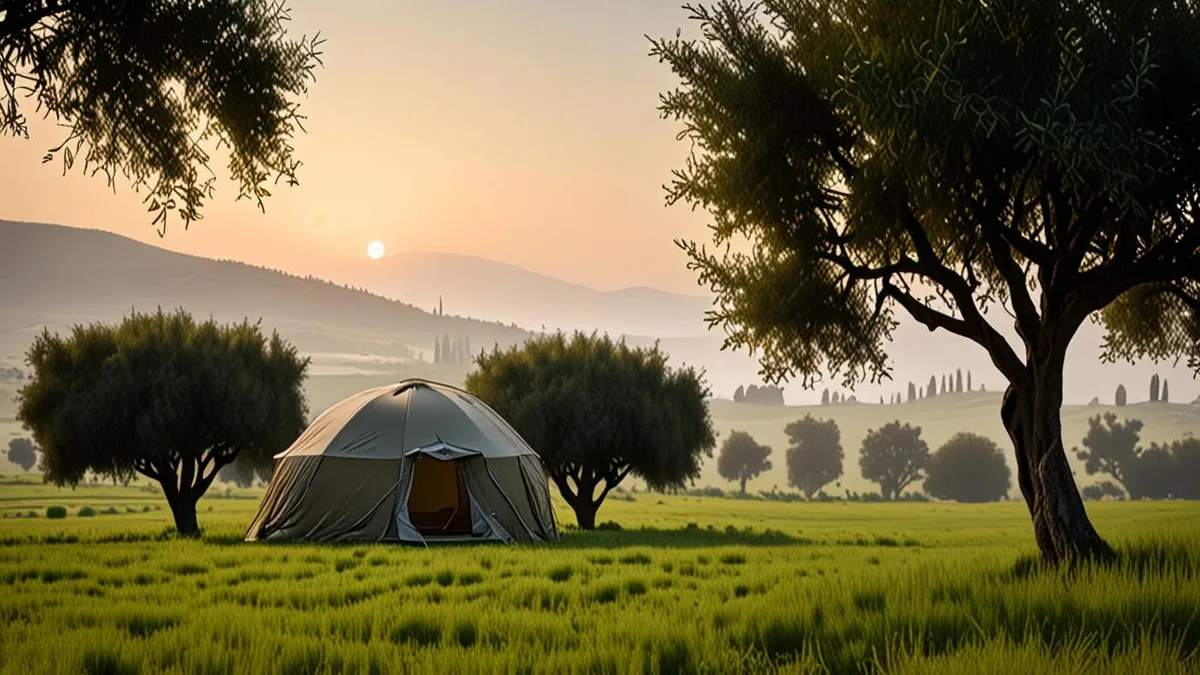
Best Seasons to Go
Timing shapes a Tuscany glamping trip more than almost any other decision. The same site can feel idyllic in June and stifling in August, and many places simply shut down in winter. Here is how the year breaks down.
The sweet spot: May-June and September-October
These shoulder months offer daytime temperatures of 20-28°C, landscapes that are green in spring and golden in autumn, and mid-range rates. Pools are open, evenings are warm enough for dinner outside, and sites are busy but not packed. If you want the best all-round combination of weather, price and calm, book here first.
Peak summer and the quiet edges
July and August bring 30-35°C heat, full pools, peak prices and real booking competition. It works if you plan around the heat, with early mornings out and long afternoons by the water, but reserve far ahead. April and late October are quieter and cheaper, though you should pack for rain and cool nights, especially in tents with limited heating. From November to March, most glamping sites close or run limited services, so winter trips generally mean different accommodation altogether.
What Glamping in Tuscany Costs in 2025
Glamping in Tuscany has grown up. What used to be a cheap alternative to a countryside inn now often costs close to one, especially for the tents and lodges with the best settings. In shoulder season, expect around €90-150 per night for a well-equipped unit for two, usually with a real bed, a private bathroom and access to a shared pool. That budget rarely stretches to more than a simple room at a countryside inn in the same weeks, so the value equation still favors glamping if comfort outdoors appeals to you.
Summer changes the math. In July and August, rates typically climb to €150-300+ per night, and the units with the best views or private pools sit at the very top of that range. Family-sized lodges and any setup with a private hot tub command a premium in every season. Before you commit, it helps to see how a Tuscan quote stacks up against what you would pay in France, Portugal or Croatia, which is exactly what this guide on how much glamping costs across Europe in 2025 covers.
- Position of the unit matters: a safari tent on the edge of the site with an unobstructed valley view can cost noticeably more than the same model facing the parking area, so compare individual units, not just the property.
- Weekend versus midweek pricing: many Tuscan sites apply a two- or three-night minimum and higher rates on Friday and Saturday arrivals in summer; shifting your stay to Sunday-Thursday can pull the nightly cost down.
- What “for two” really means: extra guests, especially children, usually add a per-person fee on top of the base rate, so a cheap quote for a couple can look very different once your family is priced in.
- Cleaning and linen fees: some operators bundle final cleaning and bed linen into the rate, others charge them separately, which can add a meaningful amount to a short two-night stay.
How to Book and When to Reserve
Tuscany’s best glamping units are limited in number, and the most photogenic ones go first. The sites with standout views over vineyards or cypress-lined hills often have only a handful of tents, lodges or domes, so a single busy weekend can wipe out the inventory. How far ahead you book depends almost entirely on when you want to travel, so it pays to work through a simple sequence rather than browsing randomly and hoping for the best.
- Pick your season first, then your area. Your dates determine everything else: summer demands early planning, while spring and autumn give you more flexibility and last-minute options.
- For July and August stays, reserve 3-6 months ahead. The largest lodges and the units with private pools or standout views sell out first, sometimes by early spring, so booking early is the best way to secure your pick of the top inventory.
- For May-June or September-October trips, 1-2 months of lead time is usually enough. Availability is broader and rates are mid-range, though popular weekends around local festivals can still fill up.
- Check exactly what is included before paying. Air conditioning matters enormously in July, when inland valleys can feel brutal, and heating matters just as much on April nights when temperatures drop after sunset. Ask whether both are available and whether they cost extra.
- Confirm driving times to your target towns. Tuscan roads are slow and winding, so a site that looks nearby on the map may take far longer than expected. A cheap site 90 minutes from Siena can quietly cost you a full day of your holiday in driving alone.
Once you have a shortlist, email the operator directly with your dates and questions rather than relying only on the booking platform listing. Small family-run sites often hold unlisted units, can clarify heating and cooling details, and may offer better terms for longer stays booked directly. Ask for photos of the specific unit you would get, since some sites run several layouts with very different views and space. Finally, reconfirm your arrival time a few days before you travel: many rural sites have limited reception hours, and late arrivals sometimes need to arrange key collection in advance.
Choosing the Right Stay Type for Your Trip
The stay type you choose shapes the whole trip, and in Tuscany it should follow both the season and the travel style. A couple chasing sunset views over the vineyards will want a completely different setup from a family of five with two kids who need their own sleeping space and a pool within sight of the terrace. Before you fall in love with a photo, write down what your days will actually look like: long mornings on the deck, or out driving to hill towns most of the day?
Safari tents and lodges are the natural fit for couples who want space and scenery: wide decks, proper beds and room to spread out, usually positioned for the best views on the site. Domes and timber cabins, by contrast, come into their own in spring and autumn, when cooler nights make their cosier, better-insulated feel an advantage rather than a compromise. Families should lean toward multi-room lodges in areas with good pool access, since a shared pool becomes the center of the day when temperatures climb.
It also pays to think about how the unit is built, not just how it looks. Canvas structures breathe beautifully in dry weather but can feel damp after rain, while solid cabins handle spring showers and cool evenings far better. If you are traveling in the shoulder months, ask specifically what heating or cooling is included in the rate, since some sites charge extra for it.
- Check cooling before booking a summer safari tent: canvas heats up fast, so look for units with air conditioning, shaded decks or a valley-facing position that catches the evening breeze rather than afternoon sun.
- Ask about insulation in domes and cabins: some are built for year-round use with proper heating, while lighter structures can feel cold on April and October nights; confirm what heating is provided and whether it costs extra.
- For families, count sleeping arrangements precisely: a “sleeps five” lodge may mean one proper double bed plus narrow bunk-style beds, which works better with older children than with toddlers.
- Match the area to the trip: Chianti suits wine-focused trips and day trips between Florence and Siena, Val d’Orcia delivers the classic rolling-hill scenery and quiet for photography stays, and coastal Maremma offers heat relief and fewer crowds in midsummer.
Wrapping Up Your Tuscany Glamping Plan
Tuscany looks perfect in every photo, but the wrong area or month can turn a dream trip into a hot, crowded or rainy letdown. The fix is simple: match the place to your trip and the season to your expectations. Chianti suits wine lovers and day trips, Val d’Orcia rewards slow, scenic stays, Maremma offers coast and cooler summers, and Garfagnana brings forested mountains for hiking.
For the best mix of weather, prices and calm, aim for May to June or September to October, when days sit at 20-28°C. Budget roughly €90-150 per night in shoulder season, rising to €150-300+ in July and August, and book 3-6 months ahead for summer stays. Get those choices right and glamping gives you the countryside Tuscany promised, with a real bed at the end of the day. If this helped you plan, leave a comment or share the article with a fellow traveler.