Many travelers book a “beachfront” hotel only to discover a road, cliffs or a 20-minute walk between their room and the sand. Choosing a hotel near a beach sounds simple until the photos, labels and map pins start working against you. The good news is that a few practical checks before booking can save you money, sleep and disappointment.
This guide walks you through the decisions that matter most: how far the hotel really is from the water, which destination and season suit your travel style, how to secure a genuine sea view without paying for a parking-lot outlook, what a beachfront room actually costs, when to book, and which facilities make a beach holiday easier. We finish with a short checklist you can run through before you press “reserve”. Each section covers its own topic, so you can jump straight to what concerns you.
How Far Is the Hotel Near a Beach, Really?
The word “beachfront” is one of the loosest labels in travel listings. Some hotels genuinely open onto the sand, while others sit on the far side of a busy coastal road or at the top of a cliff with a staircase worth of steps between you and the water. Before you book anything, open a map, find the hotel’s entrance and trace the actual route to the sand. Satellite view is your friend here, because it reveals what the polished listing photos leave out.
Distance categories are helpful for setting expectations. As a rough guide, treat hotels like this:
- Under 100 m: true beachfront. You can typically walk back to your room for sunscreen, snacks or a nap without planning it as an expedition.
- 100-500 m: beachside. Usually a level, easy walk, but check whether you cross a road or a promenade busy with evening crowds.
- Up to 1 km: a short walk on paper, but factor in hills, stairs, carrying beach gear and children, which can stretch the trip considerably.
Also look for obstacles that don’t show up as distance: a coastal road to cross with kids and inflatables, a cliff with many steps, a railway line or a working harbor between the hotel and a swimmable beach. One more angle: hotels a 10-15 minute walk from the sand often charge noticeably less per night, so if you don’t mind a stroll, stepping back from the waterline can be an easy way to trim your budget.
Picking the Right Beach Destination and Season
The best hotel near a beach starts with picking the right stretch of coast for how you actually travel. Families usually do well in shallow, gently shelving bays where children can paddle safely, while couples after nightlife should head for lively resort towns with beach bars and promenade restaurants. If your idea of a holiday is silence and a book, look for quieter coves and smaller villages instead of the big resort strips.
Choosing your season
If warm water matters most, aim for southern Europe’s peak season of June to August, when the sea is at its warmest and every beach facility is running. The trade-off is crowds and the highest prices of the year, especially in July and August. If you’re flexible, the shoulder months of May, June, September and October typically offer sea temperatures of 18-24°C, noticeably thinner beaches and lower nightly rates, which is often the sweet spot for value.
Check what’s underfoot
Finally, find out whether the beach in front of your hotel is sandy, pebbly or rocky before you commit. Pebbly beaches can be beautiful and clearer for snorkeling, but you’ll want water shoes, and rocky entry can be tricky for small children. Destination guides can help here; if southern Europe is on your list, browse our guide to Portugal beach hotels for a summer holiday to see what different coastlines offer.
Sea Views, Room Position and Noise
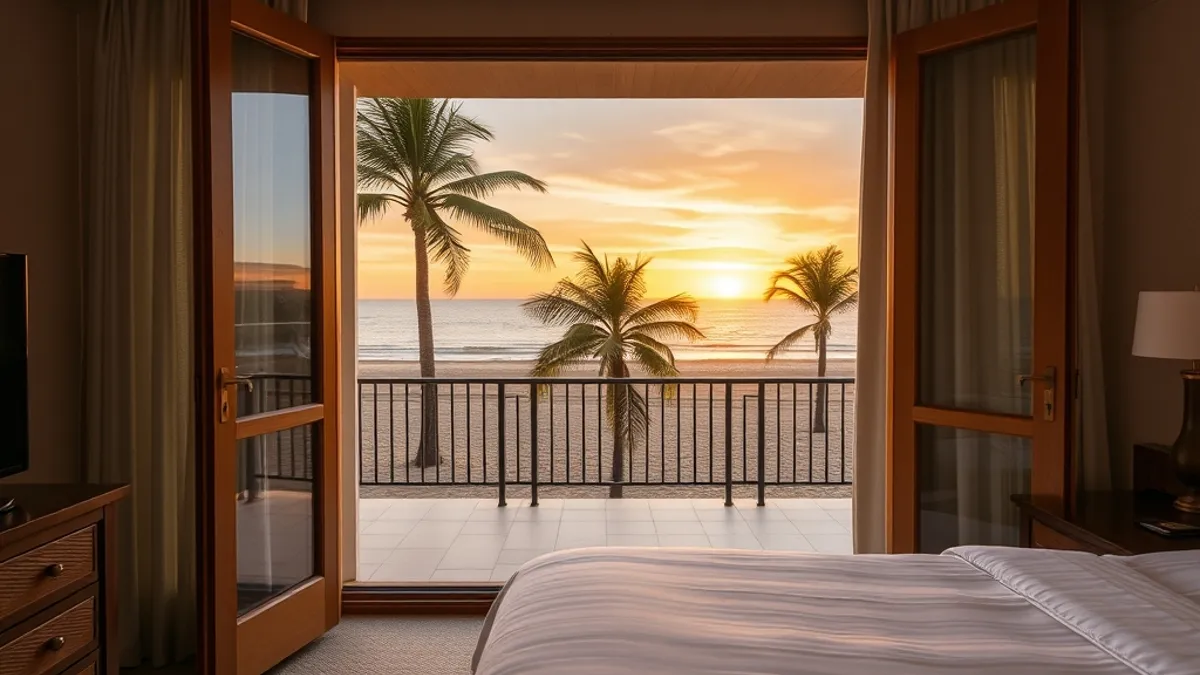
A “sea view” can mean three very different things, and the price difference between them can be sharp. A full sea view looks straight out over the water, a side sea view catches the coastline at an angle from the balcony corner, and an inland view overlooks the street, the car park or neighboring buildings. Always confirm the exact category in writing before you pay, and don’t assume the view is guaranteed until reception assigns the room.
Room position matters as much as the view label. Ground-floor rooms often face the garden or the pool, and pool-facing rooms rarely deliver the postcard outlook, so if a sea view is your priority, request a higher floor when booking. There’s also a noise side to beachfront living: in July and August, rooms facing the promenade can stay lively well past midnight with bars, music and strolling crowds. If you sleep lightly, ask for a rear room or an upper floor away from the street.
- Sun loungers and umbrellas: ask whether the hotel provides them free on its beach section, since some destinations charge per day for a pair of sunbeds and a parasol.
- Beach towels: confirm whether towels for the beach are included or only room towels, as some properties forbid taking room towels outside.
- Balcony specifics: check whether the sea view comes with a private balcony or just a window, which makes a real difference for morning coffee and drying swimwear.
- Refundable view categories: if paying extra for a full sea view, check whether the rate allows a change of room type if the view disappoints on arrival.
Budgeting: What a Beachfront Room Really Costs
The fastest way to blow a beach holiday budget is to fall in love with a sea-view room in July. The same room that costs 30-50% more in peak summer can be dramatically cheaper in the shoulder months, so if your dates are flexible, shifting your stay is the single biggest saving available. If they are not, a room set slightly back from the water often delivers most of the atmosphere at a friendlier price.
Decide on your maximum nightly rate before you start browsing, then filter strictly by that range. It is remarkably easy to overspend on views when a listing looks gorgeous at midnight, so treat your budget as a hard ceiling and only relax it if a room genuinely justifies the jump.
Room-only or half-board?
Seaside restaurants know their customers are captive, and prices along the promenade often reflect it. Half-board can look expensive at first glance, but if dinner at the hotel costs less than two or three restaurant meals a night, it may actually save money. Compare the difference honestly based on how often you plan to eat in.
Finally, read the small print. Beach hotels are notorious for tacking on parking fees, sunbed charges and resort fees on top of the room rate. Ask for the full total before you book, not just the headline nightly price.
When and How to Book
Sea-view rooms are the first to go in any popular beach destination, and for good reason: hotels only have a handful of them, and everyone wants one. Timing your booking well matters almost as much as choosing the right hotel. So does checking the fine print before you pay, because a listing photo can flatter a room in ways the reality never will. A little planning here saves you from paying a premium for a view of the parking lot.
- Book 3-6 months ahead for July and August. Peak-season sea-view rooms sell out early, and late bookers are usually left with inland views or inflated prices. Reserving well in advance gives you the widest choice at the fairest rates.
- Choose a free-cancellation rate when booking early. Plans change, and prices sometimes drop. A flexible rate costs a little more in some cases, but it protects you if your dates shift or you find a better option later.
- Read recent reviews that mention the beach specifically. Search reviews for words like beach, noise and view. Guests will tell you if the “beachfront” hotel actually sits across a busy road, or if the promised sea view is mostly a sliver between two buildings.
- Compare prices before paying. Check the hotel’s own website against the major booking platforms. Direct booking sometimes includes perks such as a better room or breakfast, while platforms may offer a lower headline rate.
A few extra minutes of comparison is often worth more than any discount code. Lock in the right room early, keep your booking flexible, and verify the details other guests have already tested for you. Do that, and the only surprise waiting at check-in is how good the view looks in person.
Facilities That Matter for a Beach Holiday
Facilities that feel optional when you book can define a beach holiday. The difference between a good and a frustrating stay often comes down to small practical details: a working air conditioner on a humid night, a pool when the sea is choppy, and somewhere to shower before your evening flight. Photos on booking sites rarely show any of this, so it pays to read between the lines of the listing and dig into recent guest reviews before you commit. Think honestly about how you will actually use the hotel on a day-to-day basis, not just how it looks in the gallery. A sleek lobby means little if the room is stuffy, the pool is packed by mid-morning and there is nowhere to rinse off salty feet before dinner. Make a short list of the things that matter most for your trip, then check each one off before you pay.
Checklist for the essentials
- Air conditioning. Confirm it is included in the rate rather than an extra paid locally, and check reviews for comments about whether it actually cools the room properly in high summer.
- A pool. On windy days, or when jellyfish appear, a pool becomes the main event rather than a bonus. Families in particular will use it constantly.
- Luggage storage and late showers. Checkout is often mid-morning, long before your flight. Ask whether you can store bags and use a shower on your last day, ideally near the pool or spa.
- Breakfast times that suit early swims. If you like to swim before the crowds, check when breakfast starts so you are not choosing between coffee and the calm morning sea.
- A beach bar or snack option. Lunch by the water saves long treks back to the room with sandy children in tow.
- Parking or shuttle access. If you rent a car, confirm the parking situation and its cost in advance; some coastal hotels have very limited spaces.
Families should go one step further and ask about kids’ pools, shallow beach entry and connecting rooms, since these can make or break a trip with small children. It also helps to think about the rhythm of your days. If you plan to spend most of them outside, you need less from the room; if you expect rainy afternoons or long naps indoors, comfort and climate control matter far more. Couples who mostly want the beach and nearby restaurants can often skip the pool entirely and save money on a simpler hotel. A short email to the hotel before booking will usually answer all of these questions in one reply, and the speed and clarity of that reply often tells you a lot about the service you can expect once you arrive.
Your Beach Hotel Checklist at a Glance
Most beach hotel disappointments come down to one thing: the listing said “beachfront,” but reality said otherwise. Before you book, verify the true walking distance to the sand on a map and look for obstacles like coastal roads, cliffs or harbors in between. Then match the season to your budget, from June to August for the warmest water to the shoulder months for better value.
Next, confirm the view type, room position and likely noise level before paying, since these details make or break a beach stay. Reserve 3-6 months ahead for peak-season trips to get the widest choice, and double-check the facilities you actually need, from air conditioning to beach towels after checkout. Work through these four points and you’ll end up with a hotel that matches the photos, not one that surprises you on arrival. If this checklist helped, leave a comment or share the article with a fellow traveler.