You love the idea of saying your vows with the sea behind you, but the logistics feel like a fog. What does a resort wedding abroad actually include, how do you get 40 guests to the right place at the right time, and what will the whole thing really cost once rooms, food and extras are added up?
This guide walks through the full picture. We start with why a resort wedding abroad makes planning easier, then cover the best months to book and how far ahead to reserve. From there we break down what wedding packages typically include, how to budget the entire trip for you and your guests, and how to pick a destination that suits your group. We finish with guest management, the legal side of marrying abroad, and a short wrap-up to pull your plan together. By the end, you should know roughly what to expect at each stage and where the money goes.
Why Choose a Resort for a Wedding Abroad
The biggest argument for a resort wedding abroad is simple: everything happens in one place. The ceremony on the lawn, the reception on the terrace and the guest rooms are all on the same property, so nobody has to organize transfers between venues. Older relatives can rest in their rooms between events, kids can be watched nearby, and the couple never spends the morning coordinating a convoy of taxis.
One coordinator instead of ten suppliers
Resort wedding coordinators handle local suppliers, setup and timing as part of the package. That means one point of contact for the florist, the cake, the music and the ceremony arch, all of whom work on the property regularly. You are not chasing five vendors across a language barrier or worrying whether the chairs will arrive on time. The coordinator has done this setup dozens of times and knows how the day should flow.
A holiday, not just a wedding
For your guests, the wedding becomes the anchor of a proper vacation. They can arrive a couple of days early, lounge by the pool and explore the area, which makes the long-haul trip feel justified rather than like an expensive obligation. Many guests plan their annual holiday around the date, so a destination wedding at a resort often gets better attendance than couples expect. The shared setting also gives people time to actually talk to each other, instead of scattering straight after the last dance.
When to Book and Which Months Work Best
Timing is the single biggest lever on both cost and comfort. For peak summer dates, reserve your venue 12-18 months ahead, because June and September are the most popular months at Mediterranean resorts and the best ceremony spots go first. If you are flexible and aiming for shoulder season, 6-9 months of lead time is typically enough.
Why shoulder season wins
May, early June and late September offer reliable warm weather, and venue costs in those windows can run 20-30% lower than peak July and August. Your guests also benefit: flights and rooms are usually cheaper outside the school-holiday crush, and the heat is gentler for older relatives in suits. The Mediterranean resort wedding season runs roughly May to October, so you have a decent spread of options without gambling on weather.
Always confirm the weather backup
Before you sign anything, ask exactly what happens if it rains or the wind picks up. Most resorts provide an indoor or covered terrace option at no extra charge, but the details matter: how many guests it holds, how far it is from the ceremony spot and how quickly the switch can happen. Get the backup plan written into the contract rather than relying on a verbal assurance during the sales visit. A quick email confirming the wet-weather arrangement protects everyone later.
What a Resort Wedding Package Actually Includes
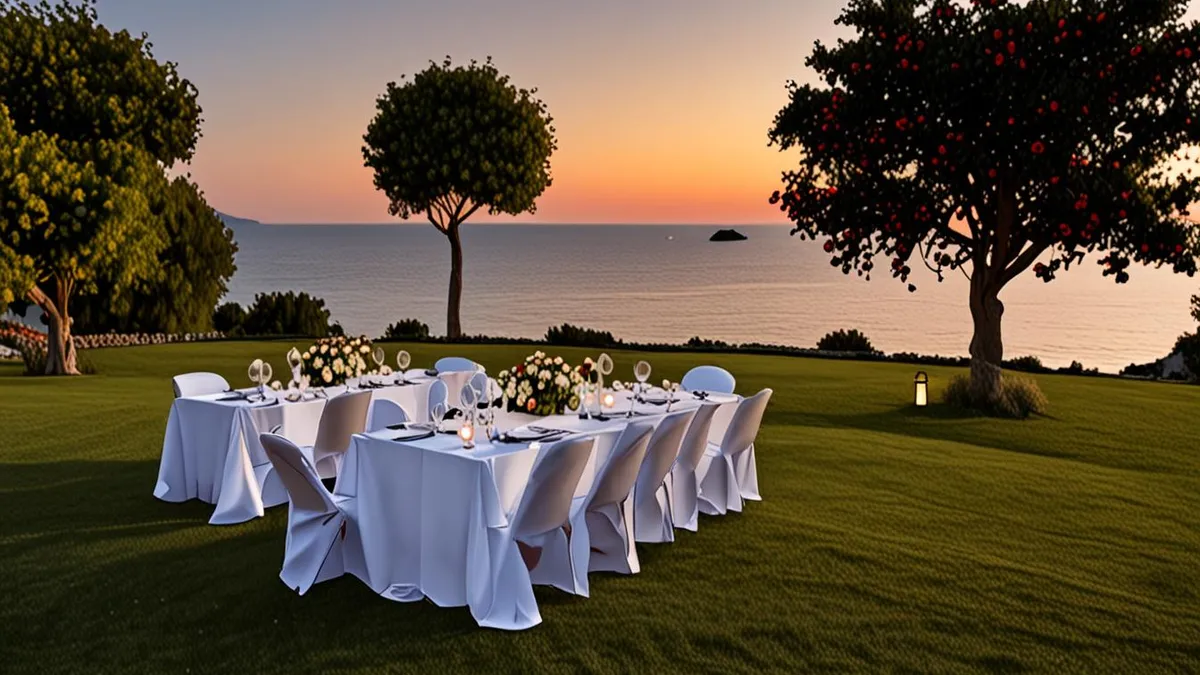
Resort wedding packages typically range from €3,000-€10,000 for the ceremony and reception basics. At the lower end you are usually getting ceremony setup, chairs, a simple arch and a coordinator; higher tiers add better venues, more styling and longer receptions. Before you compare prices between resorts, make sure you are comparing the same things, because inclusions vary a lot.
The biggest variable on top of the package is catering. Per-person food and drink for the reception typically adds €60-€120 per guest, depending on whether you choose a buffet, a served dinner and whether drinks flow freely all evening. With most couples inviting 20-60 guests, that catering line alone can rival the package price, so it deserves as much attention as the ceremony itself.
It is just as important to know what is not in the package. Flowers, photography, hair and makeup and entertainment are often separate line items, each quoted by local suppliers the coordinator brings in. If you are also weighing up whether an all-inclusive room block makes sense for your guests, our guide on how to choose an all-inclusive resort and what to check covers the room-side details in depth.
- Minimum guest numbers: many resorts require a minimum headcount for the reception before they will open their wedding venues, so a small 20-guest party may face a surcharge or a smaller ceremony space.
- Room block commitments: some properties only hold your preferred wedding date if you commit to filling a set number of rooms, which shifts part of the financial risk onto you if guests book elsewhere.
- Styling upgrades: the standard arch and chairs are usually functional rather than beautiful, so expect extra charges for upgraded florals, linens or lighting if the look matters to you.
- Overtime and late-night fees: receptions that run past a set end time can trigger hourly charges for staff and venue use, worth clarifying before the party gets going.
Get every inclusion and exclusion in writing, then price the gaps separately. A package that looks cheap on paper can end up costing more than a fuller one once the separate line items are added back in.
Budgeting the Full Trip: Venue, Rooms and Extras
Beyond the wedding package itself, the biggest line item is usually guest accommodation. At most Mediterranean resorts, all-inclusive rooms run around €100-€250 per person per night, which covers meals, drinks and often snacks throughout the stay. If your guests are staying three or four nights, that adds up quickly, so it pays to understand what the room rate actually includes. If you’re weighing meal plans, our guide to all-inclusive versus half-board pricing breaks down when each option saves money.
What the total looks like
For a typical celebration with 20-60 guests, most couples should budget €15,000-€40,000 in total, including rooms and the reception. That range covers the venue package, food and drink, accommodation for part or all of the party, and the small extras that always appear. Write the numbers down early and update them as quotes come in, because a budget that lives only in your head tends to drift.
Decide who pays for what
Many couples cover a welcome dinner or a share of their guests’ room costs as a thank-you for making the long trip. There’s no single right answer, but you need to agree the split with your partner and your families early, and then communicate it clearly to guests. Nothing sours a wedding week faster than a guest discovering they’re expected to pay for a dinner they assumed was hosted.
Finally, build in a buffer of 10-15% for currency movements and last-minute supplier additions. Exchange rates shift, a photographer cancels, or you decide on extra flowers the week before. A cushion turns those moments into minor annoyances instead of crises.
Choosing the Destination and Resort Setting
The destination sets the tone for the whole week, so it deserves more thought than a quick scroll through resort photos. Your guest list, budget and preferred month will all point you toward different corners of the Mediterranean, and each region has its own practical strengths.
Islands versus mainland coast
Cyprus and Malta offer long seasons and compact island logistics, which makes them excellent for smaller guest lists. Everything sits close together, transfers are short, and guests can combine the wedding with a proper island holiday. If you’re torn between the two, our comparison of Cyprus and Malta for a resort break covers the differences in detail. The Spanish Costas and the Balearics, meanwhile, give you the widest choice of beachfront resorts and direct flight routes, which matters when you’re asking dozens of people to book tickets.
Match the resort to your guest mix
Think honestly about who is coming. Family-friendly properties suit multi-generational groups, with kids’ pools and activities keeping younger guests happy while older relatives appreciate easy access and quieter corners. Adults-only resorts suit smaller parties who want a relaxed, grown-up atmosphere around the wedding day. Neither is better; they simply fit different crowds.
Whatever you choose, visit the resort in person before signing the contract, or at minimum arrange a video walkthrough with the wedding coordinator. Photos on a booking site rarely show you the ceremony lawn at 4 pm, the state of the covered terrace, or how far the reception room sits from the guest blocks. An hour of checking now can save you a very awkward surprise on the day.
Managing Guests, Legalities and the Wedding Week
A resort wedding abroad is really a three-to-five day event, not a single afternoon, and that shapes how you organize both your guests and the paperwork. Most couples invite 20-60 guests, which is a big enough group that clear communication matters. A little structure early on keeps everyone relaxed and makes the stay feel like a shared holiday rather than a logistical scramble.
- Send save-the-dates 8-10 months out. Guests need time to book flights and rooms alongside the room block, and the earlier they know the dates, the better the prices they’ll find. Include the resort name, the airport to fly into, and roughly how many nights to plan for. A simple wedding website or group email thread works well for updates.
- Check the legal requirements for marrying on site. Some countries and resorts allow a legal ceremony on location, while others mean you hold a symbolic ceremony abroad after completing a civil ceremony at home. Ask the resort coordinator early, since the answer affects your timeline and any documents you need to prepare. Rules vary by country, so verify current requirements with the local authorities or your coordinator.
- Plan a welcome evening and a post-wedding brunch. These two informal gatherings bookend the wedding day and turn a short stay into a genuine holiday. A casual drinks reception on arrival night and a relaxed brunch the morning after give guests time to actually meet each other, especially when people arrive on different flights.
- Give guests a clear cost breakdown per person. Set out what you’re covering and what they’re paying for, from room nights to optional excursions. Nobody should be surprised by the total spend once they’re already on the plane.
Handle these four steps early and the wedding week largely runs itself. Your guests arrive knowing what to expect, your paperwork is sorted months in advance, and you’re free to enjoy the celebration you actually traveled all this way to have. A shared itinerary sent a few weeks before departure is often all it takes to keep things smooth.
Wrapping Up Your Resort Wedding Plan
A resort wedding abroad bundles venue, catering and guest rooms into one coordinated event, which is exactly what makes planning manageable. Instead of juggling separate suppliers and transfers, you work with one coordinator on one property while your guests enjoy a holiday around the big day.
The practical takeaway is simple: book 12-18 months ahead and lean toward May, June or September, and a typical celebration for 20-60 guests lands in the €15,000-€40,000 range. Clear guest communication and a written package breakdown prevent most budget surprises, so get every line item in writing before you sign. If this helped you picture your own beachfront wedding, leave a comment or share the article with someone who needs it.