Planning group lodge holidays for eight or more people comes with a catch: most lodge listings sleep two to six guests, so the moment your headcount passes eight, the search pool shrinks dramatically. And the lodges that do fit a big group vary wildly in layout, price and booking terms, which makes comparing them harder than picking a place for a couple.
This guide walks you through the whole process. We start with why a large-group search needs different tactics, then compare lake, mountain and countryside settings. From there we cover the layout details that make or break a shared stay, how to budget and split costs fairly, the best time to book and travel, and the questions worth asking a host before you pay. Finish with the wrap-up checklist and you will be ready to shortlist with confidence.
Why Group Lodge Holidays for 8 or More Need a Different Search
Here is the first reality check: the vast majority of lodge listings sleep two to six people. Once your group passes eight, you are no longer browsing the general pool — you need to filter specifically for properties that advertise a true 8+ capacity, or accept early on that you may be booking two adjacent units and planning meals around two kitchens.
That filter matters more than it sounds. Large-group lodges are a small share of the supply in most regions, which means the best ones — the ones with proper communal space, several bathrooms and a garden big enough for everyone — sell out first. If you wait until spring to book a summer week, you will often be choosing between leftovers rather than the lodges you actually wanted.
Think about how the group will actually live together
Capacity numbers tell you nothing about whether the trip will work. What decides that is how the group functions day to day: a shared kitchen that lets two people cook without colliding, enough bathrooms so nobody queues at 8 a.m., and a living area where the whole group can sit at once instead of splitting into awkward corners. When you compare listings, look past the headline “sleeps 12” and study the floor plan. A lodge with two small living rooms can feel cramped for a group of ten, while one with a single large open-plan space often works far better.
Choosing the Right Setting: Lake, Mountain or Countryside
The setting shapes the whole mood of a group trip, so start by matching it to what your group actually wants to do. Lakeside lodges suit mixed-age groups beautifully: grandparents can enjoy flat walking paths along the shore, kids can swim, and the anglers or paddleboarders in the group have their playground on the doorstep. Everything happens within a short walk of the lodge, which keeps the group together.
Mountain lodges reward hiking-focused groups. Waking up with trails outside the door turns every morning into an adventure, and evenings on a terrace with a mountain view are hard to beat. Just check the practical side: look for lodges with trail access of under 30 minutes by car, otherwise half of every day disappears into driving. If you are torn between the two, our comparison of lakeside versus mountain lodges in Austria breaks the trade-offs down in detail.
Countryside and forest lodges offer the most privacy and space, which matters enormously for groups of eight or more. You are far less likely to worry about noise, and the grounds give room for group activities.
- Space for a proper BBQ: countryside lodges often come with a large garden, a dedicated grill area and outdoor seating for the whole group — things lakeside and village properties frequently lack.
- Room for games and gear: forest settings usually mean parking space for trailers or racks, storage for bikes, and room for lawn games without disturbing neighbors.
- True seclusion: a detached countryside lodge means your group’s late evenings, music and laughter stay your own business, which is rarely possible at a lakeside resort with neighboring units.
Layout and Facilities That Make or Break a Large Group Stay
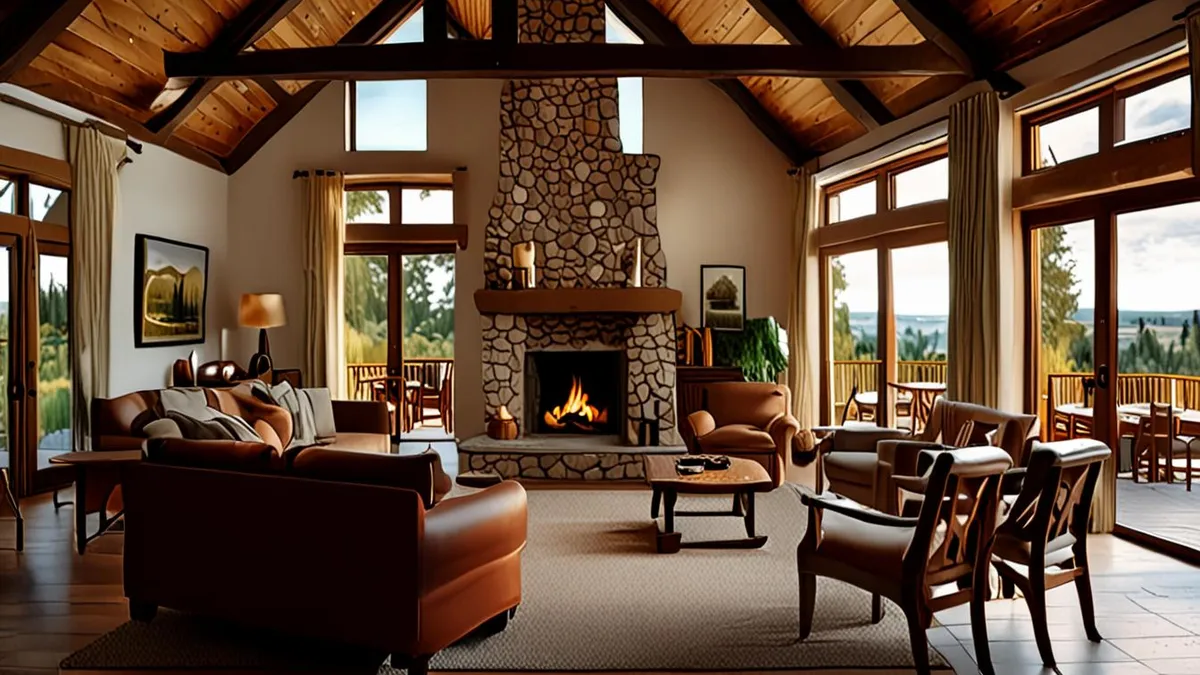
Layout is where large-group bookings are won or lost. The two numbers to check first: bathrooms and bedroom types. Aim for at least one bathroom per four guests — for a group of eight, that means two full bathrooms minimum, and three is genuinely comfortable. Then look at the bedrooms. If every room is a double, couples are fine but friends traveling together end up sharing beds or fighting over sofa beds. A good large-group lodge mixes doubles with twin rooms.
The kitchen and dining area are the real capacity tests. A dining table that seats eight or more is non-negotiable — squeezing ten people around a six-seater ruins every meal. In the kitchen, look for two ovens or a large hob with five or more burners, because cooking for a big group in one small oven takes hours. Photos often hide this, so ask the host directly.
Ask for the full floor plan before you commit, not just the photo gallery. Lodges that sleep eight or more are sometimes spread over two floors or a separate annex, which changes how the evenings feel. Check where the bedrooms sit in relation to the living room, and whether stairs could be a problem for older relatives or anyone with limited mobility.
Outdoor space deserves a quick check too. A covered terrace or veranda effectively doubles your evening capacity in fine weather, and it gives the group somewhere to spread out beyond one living room. Ask how many people the outdoor table seats and whether there is lighting for after-dark evenings outside.
- Parking for 2-3 cars: with eight or more guests you will likely arrive in two or three vehicles, so confirm there is off-street parking for all of them rather than relying on street spots.
- Laundry facilities: a washing machine (and ideally a dryer) is a quiet hero on week-long group trips, especially for families with kids or anyone hiking and swimming daily.
- A living area that fits everyone: count the seats, not just the floor space — a lounge with a sofa for four and two armchairs forces half the group to perch on the floor every evening.
Budgeting and Splitting Costs Fairly
Money is where group trips get tense, so sort the numbers before you book. For a dedicated large-group lodge, expect roughly €25-60 per person per night in low season and €60-120 in high season. The exact figure depends on the region, the standard of the property and how remote it is, but this range gives you a realistic starting point for the conversation with your group.
Here’s the good news: booking one large lodge typically works out 10-25% cheaper per person than reserving two or three smaller units in the same area. You also save on extras that smaller bookings rack up, like separate cleaning fees. If you want to see how these figures play out across different times of year, the article on what lodge stays in Latvia cost by season breaks down real price patterns worth comparing.
Splitting costs without the awkwardness
Agree on a system before you travel, not during the trip. Either collect a shared pot that covers the lodge, food and fuel upfront, or set up a splitting app so every expense is logged and divided automatically. Both work — the failure mode is having no system at all and chasing five people for money a month later.
One cost people forget: the security deposit. Large-group lodges commonly require a refundable deposit of €300-800, returned after the host inspects the property. Decide in advance who fronts it and how you get it back, and give the group a quick walkthrough of house rules on arrival so nobody’s share is at risk over a scorch mark or a broken glass.
When to Book and When to Travel
Timing is one of the biggest levers you have when booking a lodge for a large group. For the classic summer window of June through August, and for winter stays between December and February, aim to reserve 6-12 months ahead. Large-group properties are limited in number, and the best ones for 8 or more guests are usually the first to be snapped up for school holidays and festive-season dates.
If your group has any flexibility, consider the shoulder months instead. May, September and October typically cut rates by 20-40% compared with peak season, and you will have far more properties to choose from. For a hiking-focused trip, early autumn can be ideal: trails are quieter, and you will not be competing with families on summer break. If a summer lakeside trip is non-negotiable, start looking at options for lodge holidays in Poland well before the year turns.
Watch the minimum-stay rules
One detail catches many groups out: peak-season bookings for 8 or more guests usually carry minimum stays of 3-7 nights. That is great value if you are planning a full week away, but frustrating if you only wanted a long weekend. Check the minimum-stay requirement for your exact dates before you commit, and if it does not fit your plan, ask the host whether shorter gaps in the calendar can be filled. Off-peak stays often come with more flexible terms, which is another point in favor of the shoulder months.
Questions to Ask the Host Before You Confirm
Once a lodge looks promising on paper, a short message to the host can save your group from the most common large-group disappointments. Listings often round up capacity, so “sleeps 8” might mean six real beds plus a sofa bed that only suits a teenager who doesn’t mind the living room. Ask the host to describe the exact bed configuration, room by room, before you pay the deposit.
Privacy and house rules matter just as much. Some lodges sit on shared grounds with neighboring units a few meters away, which changes the mood of a trip built around late dinners and games. Confirm whether the whole property is yours alone, whether amplified music or outdoor gatherings are allowed after a certain hour, and whether day visitors can join for an afternoon BBQ without breaching the rental agreement.
Finally, think through arrival day. Collecting keys, doing a walkthrough and agreeing on cleaning expectations is simple for two travelers but gets complicated with eight people and three cars arriving at different times. A five-minute exchange with the host now prevents a stressful first evening.
- Ask whether sofa beds, rollaway beds or bunk rooms count toward the stated capacity, and request photos of each sleeping space so nobody ends up on a floor mattress they didn’t agree to.
- Check if quiet hours are enforced on-site or by neighbors, and whether the host has ever had noise complaints from groups your size.
- Confirm whether events such as birthdays or small parties are permitted, since some hosts require written approval or an extra fee even for modest celebrations.
- Ask how keys are handed over for a big group: a lockbox, an in-person welcome or a self-check-in code, and whether someone can check in earlier to receive the rest of the group.
- Request the check-out checklist in writing, including whether dishes must be done, trash sorted and beds stripped, because cleaning standards often affect how much of the deposit is returned.
- Find out who to contact during the stay if an appliance fails or a fuse trips, and how quickly the host or a local caretaker can respond.
Wrapping Up Your Group Lodge Plan
Finding a lodge for 8 or more people is tricky because most properties sleep far fewer, and the handful that do fit differ enormously from one listing to the next — in how they are set up, what they charge and how their owners handle reservations. The fix is to search differently from the start: filter early for true 8+ capacity, and decide whether a lake, mountain or countryside setting actually matches what your group wants to do.
Then do the homework that makes the trip work. Get a realistic sense of what large lodges cost per person per night, plan your booking window around peak summer or winter demand, and verify the bed configuration, deposit amount and house rules with the host before paying anything. A short list of questions sent before you confirm will save more headaches than any filter ever could. If this helped you plan your own group stay, leave a comment or share the article with the friends you’re traveling with.