You’ve booked the perfect glamping trip, and then the forecast turns: a storm system rolls in and threatens to soak the whole weekend. It’s a frustrating moment, but it doesn’t have to ruin anything. With the right planning, rainy day glamping can be just as memorable as the sunny version you imagined, and sometimes even more relaxing.
This guide walks you through everything you need to plan a wet-weather stay with confidence. We’ll cover why rain can actually improve your trip, how to choose accommodation that shrugs off bad weather, when and where to book for the best rates and flexibility, what to pack, and how to fill gray hours with indoor activities and cozy extras. We’ll also share destination ideas where rain adds to the scenery rather than spoiling it, then wrap up with a simple checklist so your next stormy forecast feels like an opportunity instead of a problem.
Why Rainy Day Glamping Can Still Be a Great Trip
Most travelers see a rainy forecast and cancel or reschedule. That instinct is exactly why wet days can work in your favor. Popular regions like the Dolomites or the area around Lake Bled get noticeably quieter when the sky opens up, because the fair-weather crowds stay home. Trails, viewpoints and lakeside paths that feel packed in July can feel almost private on a drizzly Tuesday.
Your wallet benefits too. Off-season and rainy-month bookings typically cost 20-40% less than peak summer dates for the same units, so a stay that was out of budget in August may suddenly fit in October. Check current rates with operators, but the pattern holds across many destinations.
Cozy weather plays to glamping’s strengths
Traditional camping struggles in rain: wet canvas, muddy gear, cold nights in a sleeping bag. Glamping is built for exactly the opposite. Solid roofs keep you dry, heating keeps you warm, and a real bed means a rainy evening becomes a reason to read under a blanket rather than a night of discomfort. In many ways, gray weather is when glamping justifies its price the most. Lean into it: bring a good book, plan slow mornings, and let the rain do the work of clearing the trails for you.
Choosing Weather-Resilient Glamping Accommodation
The single biggest decision you can make for a wet-weather trip is choosing a hard-sided unit. Canvas tents, even premium safari-style ones, will eventually let in damp, condensation and the drumming noise of heavy rain. Geodesic domes, cabins and A-frames handle rain far better: water runs off their curved or pitched roofs, windows let you watch the storm from inside, and the structure itself stays dry and quiet. If you’re planning a cold-season or very wet trip, it’s worth reading our winter glamping guide, since the same weatherproofing logic applies.
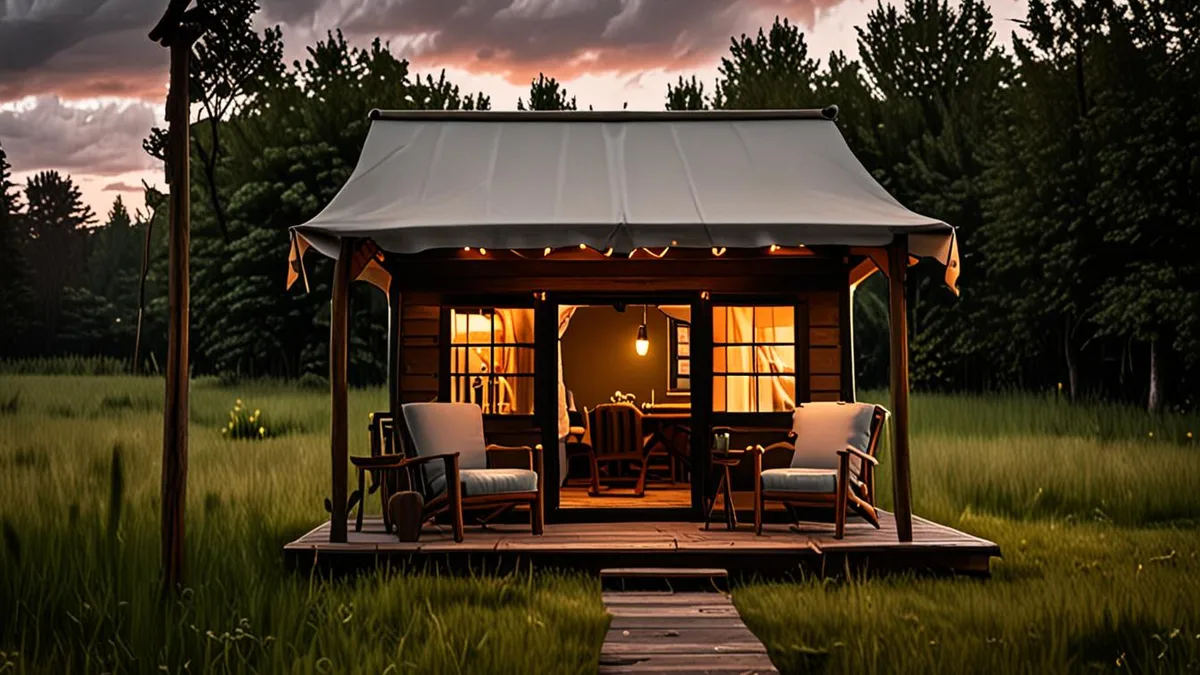
Once you’ve narrowed down hard-sided options, look at how the unit handles the space just outside its walls. A porch, awning or sheltered fire pit lets you step outside, cook or enjoy the fresh post-rain air without getting soaked. This is the top feature to filter for when booking, and it’s often what separates a pleasant rainy stay from a cooped-up one.
What to confirm before you book
Listing photos don’t always tell the whole story, so message the host directly and ask about the details below before you commit.
- Heating source: ask whether the unit has a stove, radiator or electric heater, and whether it runs all night or only when staff light it.
- Flooring: confirm the floor is waterproof or sealed, since bare wood and carpet absorb mud and wet boots quickly.
- Roof overhang and drainage: ask whether the entrance stays dry in driving rain and whether the site drains well after heavy downpours.
- Power and lighting: in a storm, reliable electricity matters for heating, charging devices and simply seeing where you’re walking at night.
A short message to the host costs nothing and answers questions no listing description will. Hosts who answer clearly and quickly are usually a good sign for the stay itself.
When and Where to Book for Bad Weather Stays
Weather-proof units are the most in-demand glamping stays for a simple reason: everyone wants them once the forecast turns. If you’re targeting peak season, book domes and cabins 2-3 months ahead. The hard-sided options with heating and solid roofs sell out first, and by the time you’re watching the forecast a week out, the best-protected units are usually gone. Booking early also gives you more choice in location, so you can pick a sheltered valley spot instead of whatever’s left on an exposed ridge.
Timing your trip around the weather
Shoulder months are the sweet spot for rainy day glamping. Late September and early May often bring lower rates and fewer severe storms than midsummer, when afternoon thunderstorms are common in many mountain regions. You still get long enough days for hiking between showers, but the crowds and prices drop. If you want a sense of what different regions and seasons typically charge, our guide to glamping costs in Europe breaks down how prices shift through the year.
Finally, protect yourself with a flexible cancellation policy. Weather forecasts change, and a stay booked a few months out may land on a genuinely stormy weekend. Before booking, read the cancellation terms carefully and favor operators that allow free changes or refunds within a reasonable window. A slightly higher rate with flexible terms often beats a cheaper non-refundable booking that you end up forfeiting when a storm rolls in. Some hosts even offer rebooking credit for weather-related cancellations, so it never hurts to ask before you pay.
Packing List for Wet Weather Glamping
Packing for a rainy glamping trip is mostly about one idea: keep things dry and dry things fast. A waterproof jacket with a 10,000 mm rating is a reliable benchmark for wet glamping trips, so start there and build your kit around it. Add quick-dry layers made from synthetic fabrics or merino wool, since cotton stays damp for hours and gets cold fast. Pack at least one spare pair of shoes, because stepping into soggy sneakers on day two is a miserable way to start the morning.
For day trips, keep it simple. One 20-30 L daypack covers wet-weather day trips comfortably, and a single spare outfit sealed in a dry bag inside it can save the whole outing if you get caught in a downpour. If you’re weighing a canvas tent against a solid-roofed cabin for a wet forecast, this guide to glamping versus traditional camping explains why the difference matters so much in bad weather.
Evenings are the part people underestimate. When the rain settles in, you’ll likely spend them inside, so entertainment deserves real space in your bag.
- Bring two or three physical books rather than one, since a long wet stretch can outlast a single read.
- Pack a compact deck of cards or a small travel board game that fits on a dome’s limited table space.
- Download a playlist or a few podcast episodes before you leave, because rural glamping sites often have weak or no cell signal.
- Toss in a small microfiber towel for drying off boots, dogs and damp gear overnight.
Planning Indoor and Break-in-the-Rain Activities
The biggest rainy-day mistake is arriving with no plan and then scrolling maps on a wet afternoon. Instead, spend twenty minutes before your trip researching indoor options near your site: a thermal spa, a covered market, a small regional museum. Anything within a 30-minute drive counts as a solid backup, and having two or three of them noted down means a washed-out day turns into a spa visit instead of a soggy argument about what to do.
Work with the forecast, not against it
In storm-prone summer months, rain often arrives in predictable bursts rather than lasting all day, and the driest window is usually the morning. Check the forecast each evening and schedule your hikes and sightseeing for those dry stretches, saving afternoons for the indoor options you researched. A hike that starts at eight can end under clear skies while the storm rolls through over lunch.
Use what your site already has
Before you book, or at least before you arrive, ask your host what the property offers for wet days. Many glamping sites have on-site extras that never make it into the listing photos: a sauna, a hot tub, a covered lounge or a sheltered fire pit where you can still sit outside between showers. Knowing about these in advance changes how you feel about a rainy forecast entirely. A day with a morning hike, an afternoon in the sauna and an evening by a covered fire pit doesn’t feel like a compromise at all.
Destination Ideas That Handle Rain Well
Some destinations don’t just tolerate rain, they depend on it. The Azores are green precisely because it rains often there, and Slovenia’s Lake Bled area turns misty and dramatic in wet weather, with fog drifting across the water and forested hillsides glistening after a shower. In places like these, a rainy day isn’t a failed itinerary, it’s part of the scenery you came for. Pack accordingly and the weather becomes atmosphere instead of a problem.
Alpine and forest destinations work on the same principle. Zakopane in Poland’s Tatra Mountains and Germany’s Black Forest both offer dense tree canopies that soften drizzle and plenty of cozy lodges where wood interiors and warm food make wet evenings feel intentional. The forest itself gives you something to look at even in gray light, and trails under tree cover stay far more pleasant than exposed ridgelines.
Where you should be more careful is the coast. Exposed clifftop and beachfront sites take the full force of wind and driving rain during storm season, and a canvas awning is no fun in a gale. Sheltered valleys and forest settings consistently fare better in rough weather.
- Choose sites in a valley or on a sheltered hillside rather than an open ridge, where wind-driven rain hits hardest.
- Look for destinations with natural thermal spas or indoor pools nearby, so a fully wet day still has a highlight.
- Pick regions known for short, passing showers rather than days of steady rain if your dates are fixed.
- Favor areas with covered markets, wine cellars or taverns within easy reach, which turn gray afternoons into local food experiences.
Wrapping Up Your Rainy Day Glamping Plan
A storm forecast in your inbox doesn’t have to mean a ruined trip. Rainy day glamping works when you pick hard-sided stays, pack smart and book flexible dates. A dome or cabin with heating and covered outdoor space keeps the wet weather outside where it belongs, while a waterproof jacket and a dry bag with spare clothes keep you comfortable on the trails between showers.
The bigger surprise is what rain gives back: off-season rates are typically 20-40% lower than peak summer prices, and popular regions feel far quieter under a gray sky. With a little planning, wet weather becomes an advantage rather than a setback, and a cozy stay with rain on the roof can end up being the most memorable night of the trip. If you’ve had a great glamping trip in the rain, share your story in the comments or pass this article along to a fellow traveler.