Planning a beach holiday on the Croatian coast usually comes down to one big decision: villa vs resort in Croatia. A private villa promises space, a pool of your own and total flexibility, while a resort bundles restaurants, pools and daily service into one easy package. Both can deliver a fantastic week by the Adriatic, but they suit very different budgets, group sizes and travel styles.
This guide breaks the choice down into the details that actually matter: what each option really costs per person, where villas and resorts cluster along the coast, how beaches and facilities compare for kids and swimmers, the best times to book and travel, and which option fits your group type. By the end, you should know exactly which style of stay matches your trip.
Villa vs Resort in Croatia: The Core Differences
The fundamental difference comes down to what you’re renting. A villa is a private home, usually with its own pool, a full kitchen, several bedrooms and often outdoor dining space. You arrive, you settle in, and the place is yours. A resort, by contrast, is a single property built around shared facilities: multiple restaurants and bars, pools, often a spa, and staff who handle housekeeping, meals and activities every day.
Who each option suits
Resorts work best for travelers who want everything on-site. If the idea of deciding where to eat every evening sounds like work rather than relaxation, a resort removes that decision entirely. Villas suit people who want space and a home base: room to spread out, a fridge stocked the way you like it, and no neighbors by the pool at 8 a.m.
How dining changes the rhythm of your trip
Self-catering in a villa means morning grocery runs, cooking breakfast in your own kitchen and driving to taverns or town restaurants for dinner. It’s slower and more flexible, but it does involve daily planning. Half-board or all-inclusive dining at a resort flips that rhythm: meals appear on schedule, days revolve around the pool and beach, and nobody argues about where to eat. Neither approach is better; they simply create different kinds of holidays, and it’s worth deciding which rhythm you want before you book.
Costs: What Each Option Really Costs per Person
Villa and resort pricing work in completely different ways, so comparing them per person is the only fair test. Villas are priced as a whole property, which means the total cost divides beautifully across a group. For groups of 4-8 people, a villa’s per-person cost can undercut resort rooms in July and August, when resort rates are at their highest. Couples, on the other hand, often find resorts more economical, because resort pricing is per room and a small villa means paying for empty bedrooms.
Timing matters too. Peak-season villa rates often run 30-60% higher than in May, June or September, so the same villa can be a bargain in June and a stretch in August. Resort pricing tends to move less dramatically between seasons.
Also remember that the nightly rate is not the full bill. Villa stays add car hire and grocery costs, while resorts may bundle meals and transfers into the price. The same logic applies across the Mediterranean, as this guide to choosing villas for Greek island holidays explains.
- Security deposits: many villa owners ask for a refundable damage deposit on arrival, which you’ll need to budget for upfront even though it comes back.
- Cleaning fees: some villas charge a final cleaning fee or require mid-stay cleaning for longer bookings, so ask before you commit.
- Resort extras: spa treatments, boat trips and some à la carte dining at resorts usually cost extra on top of the room rate, even at all-inclusive properties.
- Parking and tolls: if you hire a car for a villa stay, factor in highway tolls and parking fees when visiting towns like Dubrovnik or Split.
Where Each Option Works Best on the Croatian Coast
Location is where the villa vs resort choice becomes very concrete. Large resorts cluster around Dubrovnik, Split and Istrian hubs like Porec and Rovinj. These are exactly the places where you want to step out of your hotel and be within walking distance of a beach, a promenade and a row of restaurants. If your ideal evening is wandering into town for dinner without touching the car keys, a resort zone delivers that.
Where villas dominate
Villas dominate quieter stretches of the Dalmatian coast and the islands, where development is spread out rather than concentrated. The trade-off is distance: many villas sit 10-30 minutes’ drive from beaches and towns. That seclusion is the whole appeal for some travelers, but it only works if you’re comfortable hiring a car and planning your days around drives.
Walkable vs drivable holidays
Resort areas mean walkable beaches and dining; villa areas mean car hire and day trips. Neither is better, but they shape your week differently. A resort stay can be genuinely car-free, while a villa week usually turns into a loose schedule of beach runs, supermarket stops and explorations of coves and hilltop villages. If you want a deeper look at specific regions, this guide to Croatia’s coastal villa areas covers where villas concentrate and what each stretch of coast offers.
Beaches and Facilities: Pebble Coves, Pools and Kids
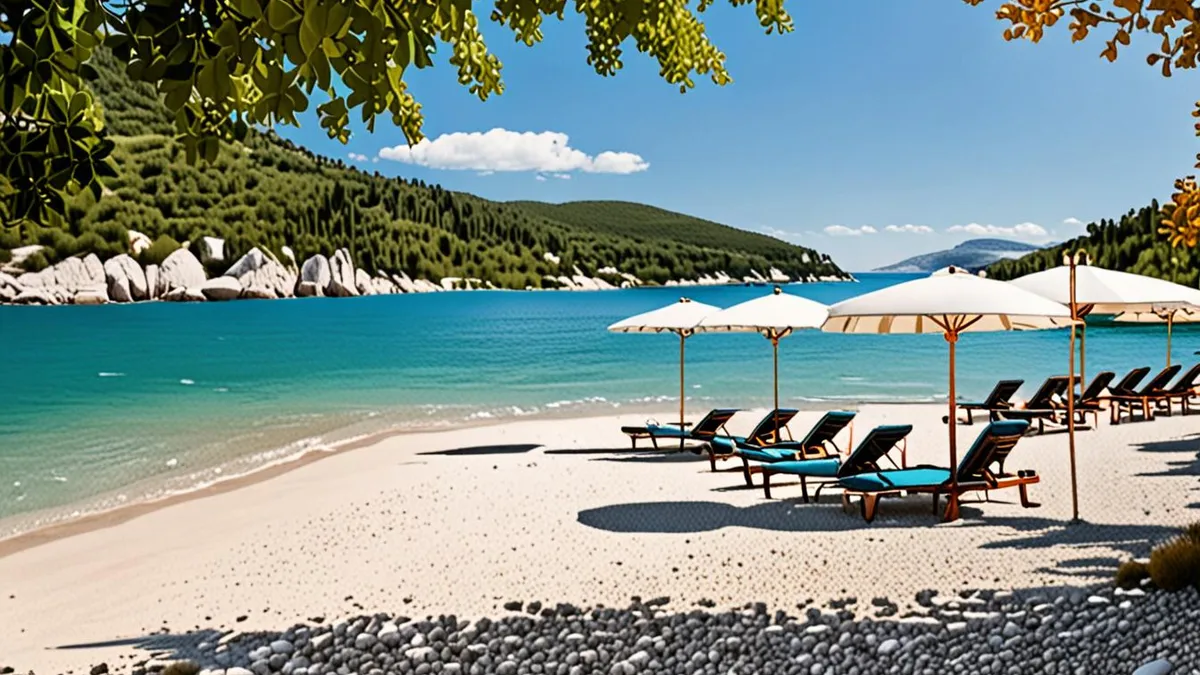
The first thing many travelers notice about the Croatian coast is that the beaches are not sandy. Most stretches, especially along the Dalmatian coast, are pebble rather than sand, and some coves are rocky enough that getting into the water barefoot is genuinely uncomfortable. This applies no matter where you stay, so pack water shoes for everyone in your group, including kids.
Pebble beaches have real upsides, though. The water tends to be remarkably clear, the shoreline stays cool underfoot even in August, and you won’t be shaking sand out of your bag every evening. Many coves also have pine trees right at the edge, giving natural shade that sandy beaches rarely offer. A lightweight mat or a couple of folding loungers make pebble days far more comfortable than towels alone.
What resorts bring to the beach
Resorts are built around convenience. You typically get supervised pools, kids’ clubs and direct beach access, so a day with young children involves very little logistics: breakfast, pool, beach, lunch, repeat. On-site facilities also mean a shorter walk back for forgotten goggles, snacks or an afternoon nap, which matters more than it sounds when you have small children in tow.
What a villa day looks like
A villa flips the rhythm. Your pool opens whenever you do, and nobody reserves sunbeds at dawn. Groups who prefer swimming on their own schedule, lingering over a late lunch or swimming after dinner tend to love this flexibility. The trade-off is that a beach trip usually means a drive, since many villas sit a short distance inland from the coast, so plan beach days ahead rather than drifting down on a whim.
When to Book and When to Travel
Timing shapes both what you pay and what your stay feels like. July and August are the busiest and warmest months on the Croatian coast, and demand for the best villas and resort rooms is intense. For those peak weeks in popular coastal areas, book 4-6 months ahead to have a realistic choice of properties rather than whatever is left.
If your dates are flexible, the shoulder season is where Croatia shines. Late May, June and September bring warm sea, long daylight hours and noticeably thinner crowds, and villa rates drop accordingly. A villa that feels expensive in August can become excellent value in June, when you still get the private pool and the space but pay a fraction of the peak price.
Resorts behave differently. Their pricing tends to hold steadier across the season, and they keep more services running, so a resort stay in June feels much like one in August, just quieter.
- Late May: the sea is still warming up, so pool-focused stays like villas get the most from the season, while sightseeing along the coast is at its most comfortable.
- June: sea temperatures are pleasant for swimming and school holidays haven’t started, making it the sweet spot for family villa weeks at reduced rates.
- September: the sea is at its warmest of the year after months of sun, ideal for groups who plan to swim every day without peak-season crowds.
- Booking windows: if you’re aiming for shoulder season, waiting a little longer often works, since availability is easier and owners may be open to adjusting terms for longer stays.
How to Choose for Your Group Type
The right accommodation depends less on the destination and more on who is traveling. A setup that delights a family of six can feel oversized and impractical for a couple on a four-night break, so start with your group type and work backward from there.
Couples usually want location and atmosphere over square meters. A resort room near Dubrovnik or Split, or a small villa within walking distance of a town like Rovinj, keeps evenings simple: dinner out, a stroll along the waterfront, no driving. For a short romantic stay, paying for a four-bedroom villa and a full kitchen rarely makes sense.
Families with young children often get the most from resorts. Kids’ clubs, supervised pools and on-site restaurants take the daily planning off your plate, which matters when naps and early dinners dictate the schedule.
Groups of friends and multigenerational families are where villas earn their keep. With several bedrooms and generous shared living space, everyone gets room to spread out, and splitting one rental between a few households keeps the trip comfortable without anyone feeling cramped in separate hotel rooms.
- Couples: look for small villas with a private pool a short walk from a town center, so you get privacy without depending on a car every evening.
- Families with young kids: check whether the kids’ club age range matches your children, since clubs often group by age and may not cover toddlers.
- Large groups: confirm the villa genuinely sleeps your full party in real beds, and that the dining table and living area can seat everyone at once.
- Car-free travelers: if you won’t rent a car, put walkability first when booking — check the actual distance to the nearest beach, restaurant and small shop on the map before you commit, rather than trusting “near the sea” in the listing description.
The Bottom Line for Your Croatian Beach Holiday
So, villa or resort? If you’re traveling as a group of 4-8, especially in May, June or September, a villa usually wins on privacy, space and per-person value. If you’re a couple or have young kids and want everything handled for you, a resort near Dubrovnik, Split or the Istrian coast is the easier, more comfortable pick.
In the end, the right choice comes down to three things: your group size, your budget, and how much daily service you actually want on holiday. Weigh those honestly and the decision makes itself. If this helped you plan your Croatian beach trip, leave a comment or share the article with your travel crew.