Every parent knows the feeling: you want your kids to experience sleeping under the stars, but you also want real beds, warmth and a bathroom within reach. The hard part is that first-timers often can’t tell a great site from a risky one until they’ve already paid and arrived. Choosing to choose a glamping site carefully is what separates a magical first family trip from a soggy, sleepless disaster.
This guide walks you through the decisions that matter most. We’ll look at why the right site matters so much, how to pick a location close to home, which stay types suit young kids, and which facilities to confirm before booking. Then we’ll cover realistic budgets and booking timing, suggest family-friendly regions in Europe, and finish with a simple checklist for your first trip. Follow it step by step and your first outdoor stay has a much better chance of becoming a family tradition.
Why the Right Glamping Site Matters for a First Family Trip
There’s a big difference between a one-night experiment and a family tradition, and the site you pick usually decides which one you get. If the tent leaks, the beds are thin or the bathroom is a ten-minute walk through mud, your kids will remember the misery, not the stars. Many families try glamping once, have a rough night, and quietly cross it off the list forever — even though a different site would have changed everything.
That’s because kids judge a trip by comfort, not by scenery. Grown-ups can appreciate a mountain view at 6 a.m.; a five-year-old only cares whether the bed is soft, the tent is warm and the toilet is close. Meet those three needs and the adventure takes care of itself.
The balance that makes it work
The best family glamping sites do two jobs at once. They give children a sense of adventure — a canvas door to unzip, a fire pit, animals or woods to explore — while giving parents a genuine way to relax, knowing everyone will sleep warm and dry. When one of those halves is missing, the trip tips too far toward either a hotel with a view or a camping trip with extra steps. Aim for both, and you’ve found a site worth returning to.
How to Choose a Glamping Site Location Close to Home
For a first family trip, resist the urge to drive halfway across the country. Keep your first glamping stay within a 1-2 hour drive of home. If the night goes badly — a cold kid, a forgotten comfort toy, a sudden storm — you can simply pack up and drive back, no cancelled flights, no wasted vacation days. That safety net lets you relax and actually enjoy the experience.
Terrain matters just as much as distance. With small children, prefer a flat, fenced or clearly bounded pitch over steep slopes or sites right at the water’s edge. Kids wander, and a visible boundary lets you sip coffee without hovering. If you’re unsure whether glamping is even the right format for your crew, reading up on glamping versus traditional camping can help you decide before you book.
Finally, look at what surrounds the site, not just what’s inside it. A short drive to a small town makes a big difference when you need milk, medicine or a rainy-morning activity.
- A village shop within about 15 minutes means you can buy bread, milk or a missing toothbrush without turning the trip into a supply expedition.
- A nearby pharmacy covers the moments you can’t plan for, like a fever at midnight or a reaction to an insect bite.
- A public playground close to the site gives kids a familiar, low-stakes place to burn energy on arrival day and on rest days between walks.
Pick the Right Stay Type for Your Family
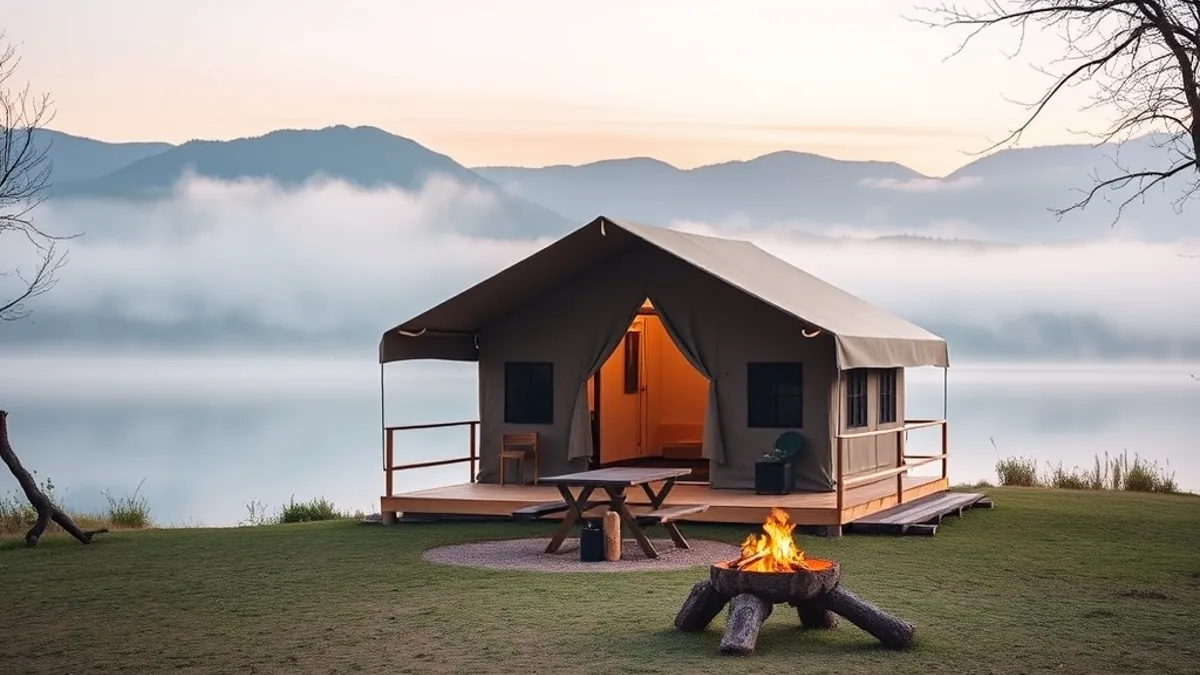
The tent type you choose shapes the whole trip, so don’t just book the prettiest photo. For first-timers, safari tents and lodge tents are the safest bet. They sit on solid wooden floors, come with real beds and usually include a covered porch — three features that make rainy mornings and early bedtimes far easier with kids in tow.
Domes and pods are a good option if you’re traveling in cooler months. They hold heat better than canvas, but ask the site directly whether the heating is sized for a family of four, not just a couple. A dome that’s cozy for two can feel drafty with two kids in it.
What to skip on a first trip
Basic bell tents look romantic and photograph beautifully, but they offer the least insulation, the thinnest flooring and the least privacy. Save them for a later trip, once your family knows it loves sleeping outdoors — or book one only if the site has proper shared indoor facilities nearby.
- Check the bed configuration, not just the bed count. Some family units sleep four on paper but put kids on a narrow bench-style bed; ask for exact layouts if your children are used to their own beds.
- Ask what happens during a storm. Sturdy units have reinforced frames and sealed seams; a quick question about wind ratings tells you a lot about build quality.
- Look for storage space. A chest or wardrobe keeps bags, snacks and spare clothes off the floor, which matters enormously in a small tent with two kids.
Check Family Facilities Before You Book
When you travel with kids under 8, the facilities on site matter more than the view from the porch. A tent can look stunning in the photos, but if the nearest toilet is a five-minute walk down a gravel path and your toddler wakes up needing it at 2 a.m., that walk will define the trip. Before you pay anything, confirm in writing whether the unit has an en-suite bathroom or how far the shared facilities actually are.
Food is the second thing to nail down. Cooking three meals a day on a small camping stove with tired children is not relaxing, so look for a proper kitchen area or a breakfast option on site. Many family-oriented glamping sites offer a simple breakfast delivered to your tent or served in a common lodge, which takes a lot of pressure off the morning routine.
Then check the unit itself, not just the site. Ask these specific questions before booking:
- Sleeping capacity: look for units sleeping 4+ with real beds, and confirm exactly how the beds are arranged so you are not squeezing two kids onto one narrow single.
- Heating: ask whether the heater can keep the whole unit warm at night, not just the living area, and how it is powered.
- Blackout options: tents with windows or translucent panels can wake children at dawn, so ask about blinds, curtains or darker sleeping zones.
- Travel cot space: confirm there is floor space and permission for a travel cot, since some units pack beds wall to wall.
- Kid-friendly extras: a fire pit with seating, a small animal area, shallow swimming water or a play zone can fill the hours between activities without any planning from you.
Budget and Booking: When and How Much
Family glamping in Europe typically costs 90-250 EUR per night, and that range is wide for a reason. A basic lodge tent in low season sits near the bottom, while a heated safari tent with an en-suite bathroom in peak summer can easily reach the top. Decide early what your non-negotiables are, because a private bathroom and heating are usually the features that push the price up.
Timing matters just as much as the nightly rate. Family-size units sell out first, so book 2-3 months ahead for any May to September stay. If you wait until a few weeks before, you will often find only two-person units left, which is useless with kids.
Watch the minimum-stay rules
Many sites require 2-3 nights on weekends, which can quietly double the cost of your first trip. If you only want a one-night test run, look at midweek dates or filter for sites without a minimum stay. Planning around these rules is usually easier than trying to negotiate them after booking.
For a detailed breakdown of what drives prices up and down across the continent, see how much glamping costs in Europe in 2025. It helps you judge whether a quote is fair for the comfort level you are getting.
Where to Go: Family-Friendly Regions to Consider
You do not need to fly far for a great first family glamping trip. Some of the best options are in Central Europe, where mountains, lakes and good roads sit close together, and family-size units are a normal part of the offer rather than an afterthought.
Slovenia and Lake Bled
Slovenia around Lake Bled combines calm nature, short walks and family-size glamping units in one compact area. Distances are small, the scenery is gentle rather than intimidating, and you can fill a day with a lakeside stroll and still be back at the tent before the kids melt down. If this region appeals to you, our guide to glamping around Lake Bled covers where to stay in more detail.
The Dolomites, Zakopane and the Black Forest
The Dolomites offer alpine family stays that work best from June to September, when paths are clear and cable cars and mountain huts run on full schedules. Outside that window, weather at altitude can be unpredictable, so check conditions before committing.
Poland’s Zakopane area and Germany’s Black Forest suit families who want mountains with easy infrastructure. Both regions have villages with shops and pharmacies close to most sites, well-marked walking trails, and plenty of low-effort activities like chairlifts and forest paths. That combination makes them forgiving choices when you are still learning how your family handles an outdoor stay.
Your First Family Glamping Trip, Simplified
Your first family glamping trip does not need to be complicated. Keep the journey short so a forgotten sleeping bag or a rough night is easy to fix with a quick drive home, choose a solid, heated unit that sleeps 4+ with real beds, and you remove most of the risks that put new parents off camping in the first place. The magic of sleeping outdoors stays, while the cold tent and the midnight dash across a dark field do not.
Before you pay, run through the essentials: budget 90-250 EUR per night depending on season and comfort, book 2-3 months ahead for a May-September stay, and confirm bathrooms, kitchen access and kid-friendly surroundings on-site. Get those right and your first trip is far more likely to become a family tradition than a one-night experiment. If this helped you plan, leave a comment or share the article with another family thinking about their first glamping trip.