Many travelers book the cheapest room type only to arrive and find it dark, cramped or facing a brick wall two meters away. The frustrating part is that a better room was often available at the same hotel for little or no extra money. Knowing how to choose a hotel room before you pay turns that gamble into a decision you control.
This guide walks you through the details that actually shape your stay: matching room size to your trip length, checking what a view really overlooks, reading floor plans between the photos, picking the right floor and position in the building, and spotting the noise and light issues that reviews can reveal. We also cover when and how to book the right room type, and how a few requests at reservation time can secure a better room than a higher price bracket would. By the end, you will know exactly which questions to ask and where to find the answers.
How to Choose a Hotel Room Size That Fits Your Stay
Room size matters far more the longer you stay. A compact room under 20 m² is perfectly fine for one or two nights, when you really only need a bed and a shower. But stretch that same room across a week and the walls start closing in, especially once suitcases, chargers and laundry take over the floor. For a week-long stay, 25-30 m² feels comfortable, giving you space to move around without doing gymnastics over your luggage.
Check the actual measurements
Standard European double rooms average 18-25 m², while superior rooms typically start at 28-30 m², so the category name alone tells you little. Always check the m² figure and the bed dimensions on the hotel’s own website. A “double” can mean one large bed or two singles pushed together, a common setup in Europe that couples often dislike. If bed size is not listed, email the hotel and ask.
Families should compare two options before booking: connecting rooms versus one large family room. The family room often costs 20-40% less than two separate rooms, which adds up quickly over a week. The trade-off is privacy, so weigh what matters more for your crew: a shared space and a lower bill, or two rooms and your own door.
Room Views: What to Check Before You Pay for One
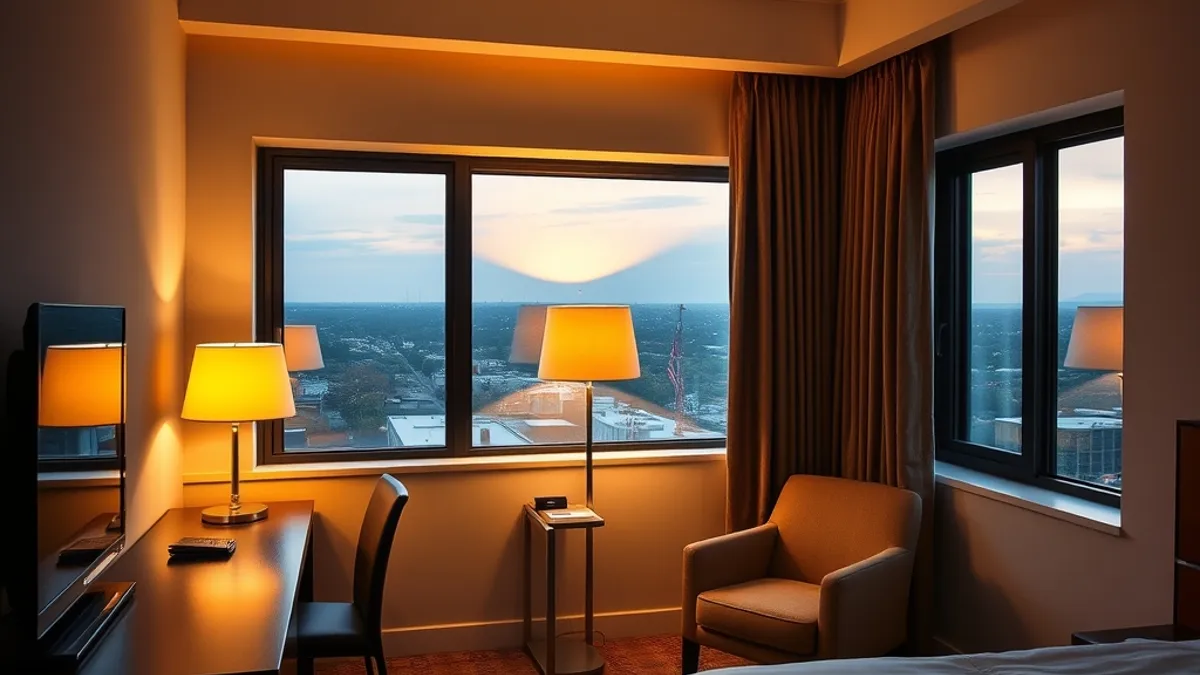
A “sea view” label can mean many things, and not all of them involve much sea. Before you pay for one, confirm what the room actually overlooks using guest photos rather than the hotel’s marketing renders. Sites like booking platforms let travelers upload their own pictures, and those candid shots show whether you will see the horizon or the roof of the restaurant next door. Look for photos taken from inside the room, not just of the view from the rooftop terrace.
What a view really costs
High-floor rooms can cost 10-20% more than lower-floor equivalents, and landmark views carry a similar premium. Whether that is worth it depends on how much time you will actually spend looking out the window. Also think about orientation: if you love natural light with your morning coffee, an east-facing room catches the sunrise, while a west-facing one gives you golden hour instead. Decide which matters to you before booking, not after.
Be especially careful with the phrase “partial view,” a common upsell trap in old city centers where buildings crowd together. Ask directly whether partial means a wide angle over the rooftops or a sliver of sea squeezed between two apartment blocks. A specific question gets a specific answer, and front desk staff will usually tell you honestly what the room faces.
Layout and Floor Plan: Reading Between the Photos
Photos show you the bed and the window; they rarely show you how the room actually works. That is why floor plans and room diagrams are worth hunting down on the hotel website, or requesting by email if they are not published. A simple diagram tells you more about daily life in the room than a dozen wide-angle photos, because it shows proportions, door positions and where the furniture sits.
Corner rooms usually have windows on two sides and more natural light, which makes them feel noticeably larger than their square footage suggests. If the hotel lets you request a specific room position, corners are a smart ask.
Layout flaws are harder to spot but easier to live with if you catch them early. Avoid long narrow layouts where the bed sits beside the door, since every comings and goings wakes the sleeper and you shuffle sideways past the foot of the bed. And check whether the bathroom door opens directly onto the sleeping area, which matters if one of you gets up early.
- Wardrobe and storage space: narrow rooms often have shallow closets or none at all, forcing you to live out of your suitcase for the whole stay.
- Window that opens: some city hotels have sealed windows, which matters if you like fresh air or want to gauge street noise before sleeping.
- Distance from bathroom to bed: in awkward layouts, a midnight trip means crossing the entire room in the dark, bumping into luggage along the way.
For longer stays, prioritize a separate seating area or a proper desk so one person can work while the other rests. Two people sharing one small room with nowhere to sit apart is a recipe for a shorter trip than you planned.
Floor Level and Position Within the Building
Once you have narrowed down size and view, the floor you book on quietly shapes the whole stay. Rooms on floors 3-8 hit a sweet spot: high enough for decent city views and a buffer from street noise, but low enough that you can take the stairs if the lifts are busy or temporarily out of service. Anyone who has waited ten minutes for a crowded elevator with luggage will appreciate that fallback.
Position within the building matters just as much as the floor itself. The most common noise complaints come from rooms next to elevators, ice machines and service areas, so it pays to request a room at the end of a corridor or on the quiet side of the property. A short note in your reservation usually does the job.
The ground floor trade-off
Ground-floor rooms are convenient for arrivals, luggage and anyone who dislikes lifts, but in cities they often trade that convenience for street noise and reduced privacy. Passersby can look straight in if curtains stay open, and late-night foot traffic is hard to escape. In resort settings a ground-floor room may work well; in a busy urban center, think twice before choosing one.
Noise, Light and Comfort Details That Make or Break a Room
Two rooms in the same hotel, at the same price, can sleep very differently. Orientation is the biggest factor: rooms facing inner courtyards are typically 5-10 dB quieter than street-facing rooms, which is a real, noticeable difference if you are a light sleeper. When booking, ask which side of the building your room sits on, and favor the courtyard in lively neighborhoods, near bars or along main roads with night traffic. If the reservation system does not show orientation, a short email to the hotel usually gets you a straight answer.
Light matters too, especially in summer when the sun rises early. A bright, airy room is pleasant during the day but can be frustrating at 5 a.m. if the curtains are thin. Reviews are the best source for how well a room actually sleeps, since guests mention the things marketing photos never show. This is also true when comparing city options, whether you are browsing stylish hotels in Zurich or elsewhere. Before you commit, scan reviews for these comfort details:
- Blackout curtains: look for comments about gaps in the curtains or light leaking around the edges, a common issue in converted older buildings.
- Window quality: reviewers often mention single glazing or rattling frames, which makes traffic noise harder to block at night.
- Air conditioning: some older European buildings offer only fans in summer, so confirm cooling exists if you are traveling in warm months.
Ten minutes spent reading recent reviews about noise, light and cooling can protect far more nights of good sleep than any upgrade at check-in. Pack a small kit as backup: earplugs, an eye mask and, if you are sensitive to stuffy air, a portable fan. These weigh almost nothing and cover the gaps that even a well-chosen room can leave.
When and How to Book the Right Room Type
Choosing the right room type is only half the job; the other half is booking it in a way that actually gets you that room. Hotels allocate rooms days or even hours before arrival, and the travelers who end up in the best ones are usually the ones who asked early and clearly. The best-value categories tend to disappear first, with popular options often selling out 2-4 weeks before peak-season weekends. For summer holidays and ski weeks, treat early booking as part of the strategy rather than an afterthought. The four steps below take a few minutes each and cost nothing extra.
- Book the specific category you want. Reserve the exact room type and rate rather than a flexible “run of house” option, which gives the hotel freedom to assign anything from a cramped single to a room beside the lift.
- Add written room requests to your reservation. Note preferences such as a high floor, quiet side or a specific view directly on the booking, so they are on record before you arrive and staff can plan around them.
- Reconfirm a few days before arrival. A short email or phone call to the hotel reminds staff of your requests and gives them time to factor them into the room allocation.
- Ask again at check-in if requests are not guaranteed. Front desks often have unsold better rooms they release on the day, and a polite question at the desk can work wonders, especially outside full-occupancy periods.
This approach works for any trip type, from city breaks to mountain getaways. If you are planning a winter trip, the same logic applies when choosing where to stay, as covered in this guide to picking a hotel for a ski holiday in Austria. A few clear, early requests cost nothing and often secure a better room than paying for a higher category would. The pattern is simple: be specific, be early and be polite, and you give yourself the best possible odds without spending a cent more.
Wrapping Up Your Room Choice
Choosing a hotel room does not have to be a gamble. The cheapest room type often turns out dark, cramped or facing a wall, while a room that is only slightly more expensive can transform the whole stay. The right choice comes down to five things: size, view, layout, floor position and noise – all of which you can check before you pay.
Use floor plans and guest photos instead of trusting marketing images, and book early with clear requests about floor, view and quiet side. A few extra questions at booking often secure a better room than moving up a price bracket would. If this helped you plan your next trip, leave a comment or share the article with a fellow traveler.