Cyprus looks simple on a map, but its coastlines could hardly be more different. The west mixes sandy bays with ancient sites, the east has the island’s finest sand and shallow water, and the south trades some beach drama for lower prices and city convenience. That variety is great news until you have to pick one area for a week away, and suddenly every forum and listing seems to contradict the last.
This guide breaks down the best coastal areas for Cyprus villas, from family-friendly Coral Bay and Protaras to quieter stretches near Larnaca and Zygi. We look at what each region offers, what a villa realistically costs per week, when to book for peak summer, and how to check that a villa’s “near the beach” claim holds up. By the end, you should be able to match an area to your budget, your group and the kind of beach days you actually want.
Why Cyprus Villas Suit Beach Holidays
A villa changes the whole rhythm of a beach holiday. Instead of queueing for a sun lounger at a hotel pool in July, you have your own, usually with a private pool and often with direct or near-direct sea access. When the public beaches are at their most crowded, you can simply walk back to your own terrace, swim, and return to the sand later when it thins out.
Villas also make strong financial sense for groups and families. A three- or four-bedroom villa with a shared kitchen and living space typically splits the weekly cost better than booking three or four separate hotel rooms, and you get far more space per person. Add in self-catering, and the savings over a fortnight can be significant.
A long swimming season
One of Cyprus’s quiet advantages is the length of its sea season. The water is comfortable for swimming from around late May to October, which is longer than in most other Mediterranean destinations. That gives you a generous window of shoulder months when the sea is warm, the beaches are calmer and villa rates are noticeably softer than in July and August.
Paphos and the West Coast
The west coast around Paphos offers arguably the best all-round mix on the island: sandy beaches, major archaeological sites such as the Tombs of the Kings and the mosaics of Kato Paphos, and an international airport that sits roughly 15-30 minutes from most villas in the area. That short transfer matters more than you might think, especially with tired children or a late arrival.
Coral Bay: the family pick
Coral Bay is where most families end up, and for good reason. It has a shallow, sandy bay that shelves gently, tavernas and shops within walking distance of most streets, and the highest density of villas in the region, so choice is wide and competition keeps standards up. If your priority is an easy beach day without a car journey, start your search here.
Peyia and Tala tell a different story. Their villas sit on hillsides 2-4 km inland, which means cooler evenings and often superb sea views, but it rarely means a stroll to the shore. Check the actual walking distance to the beach before booking, not just the distance in a straight line. If you want to compare villa-hunting across the region, our guide to choosing a villa for an island holiday in Greece covers many of the same principles.
Ayia Napa, Protaras and the East Coast
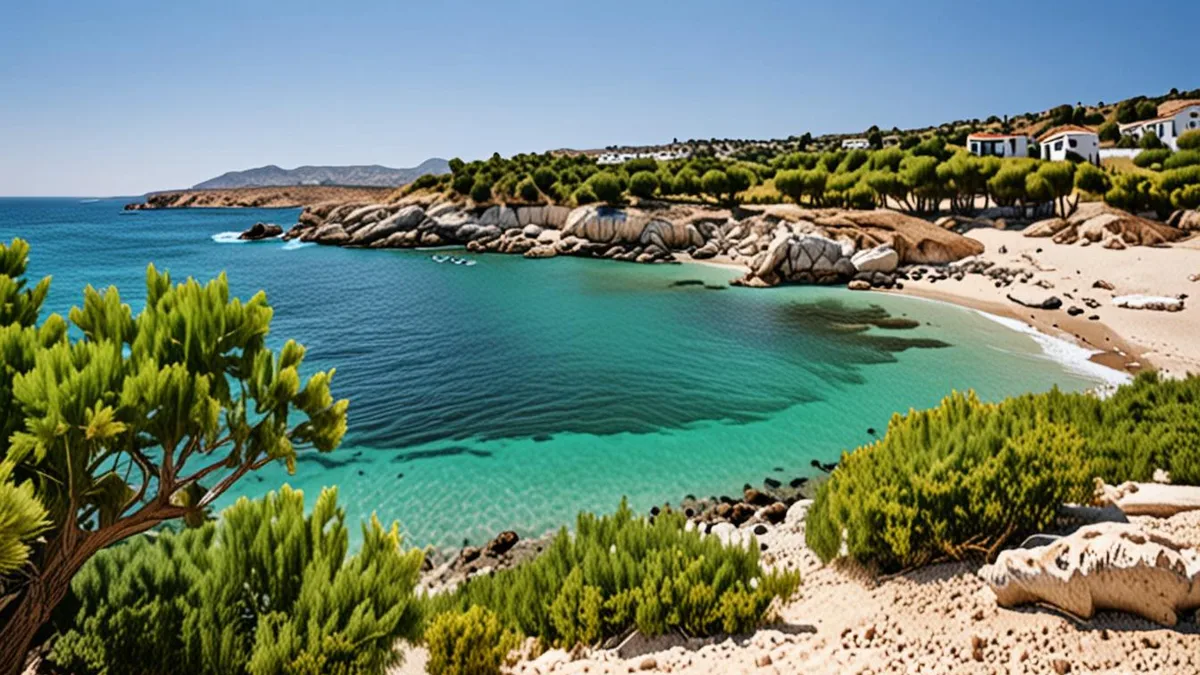
The east coast has the finest sand beaches on the island, and Fig Tree Bay in Protaras is the name most travelers recognize. The water here is calm and shallow, which makes it ideal for children, and the beaches are well maintained even at the height of summer. If soft sand and safe swimming are your top priorities, this is the coast for you.
Protaras or Ayia Napa?
The two resort towns share a coastline but not a personality. Protaras leans toward quieter family villas, with restaurants and small beaches close by and a relaxed evening pace. Ayia Napa, a short drive to the south, focuses on nightlife and a livelier atmosphere, so it suits groups of friends and travelers who want energy after dark as well as on the beach.
Popularity comes at a price. This area sees the highest peak-season demand on the island, and weekly rates for a three-bedroom villa often reach the €3,000-€4,500 top of the island range in July and August. If the east coast is your choice but the peak numbers are not, consider the shoulder months of May, June, September or October, when the sea is still warm and rates drop considerably.
Limassol, Larnaca and the South Coast
Limassol works best for travelers who want a city on their doorstep rather than a purely beach-focused stay. Villa areas sit a short drive from a long seafront promenade, a wide choice of restaurants, bars and shops, and a marina area that stays lively much of the year. You get the space and privacy of a villa, but with urban conveniences that smaller resort villages simply do not have.
Better value around Larnaca
If price matters more than nightlife, look at Larnaca and its eastern suburbs. Weekly rates here often come in 20-30% below the peak prices you will pay on the east coast around Protaras and Ayia Napa, while you still get sandy stretches, a palm-lined seafront and easy access to the international airport. It is a practical base for families who want a villa budget to stretch further.
Between Limassol and Larnaca, the coastline turns quieter. Spots such as Governor’s Beach and the small fishing village of Zygi suit travelers who want calm coastal stays rather than resort entertainment. Both are known for their fish tavernas, where the catch of the day is often the main attraction, and the pace of life slows noticeably compared with the island’s busier resort towns.
When to Book and What Cyprus Villas Cost
Timing has a big impact on what you pay for a Cyprus villa. July and August are the most demanded weeks, especially for seafront properties with private pools, so owners release and fill these slots early. For a July or August stay, aim to reserve 4-6 months ahead to keep real choice over location and beach access. Shoulder months are more forgiving: May, June, September and October can often be booked 2-3 months out, though the best-value seafront villas still move quickly.
On budget, the weekly rate for a 3-bedroom coastal villa in peak season depends heavily on seafront position, pool and standard, and it can vary widely across the island. Travel in the shoulder months and you can often save 30-40% compared to July and August. If you have compared villa costs elsewhere, the pricing logic is similar to what Spanish villa holidays cost and what to expect, with location and proximity to the sea driving the biggest differences. Ask the owner or agent for the full price up front, including any extras, so you can compare villas fairly.
Beyond the nightly rate, a few practical details catch travelers out when booking a beach villa in Cyprus:
- Minimum stay rules: most seafront villas require 5-7 nights in summer, so short break requests are often refused in peak weeks.
- Changeover days: some owners set fixed arrival days, commonly weekends, which can limit flight flexibility if your airline does not fly daily.
- Security deposit: expect to pay a refundable deposit against damage, usually collected before arrival and returned after checkout.
- Air conditioning: confirm whether it is included in the rate or charged separately by meter, as this adds up in July and August.
It is also worth checking the cancellation policy before you pay the deposit. Peak-season weeks are hard to rebook if plans change, so some owners keep strict terms in July and August while offering more flexibility in the shoulder months. A quick email covering deposits, extras and cancellation terms saves confusion later and gives you everything in writing.
How to Choose the Right Coastal Villa
With so many coastal areas to pick from, the easiest way to narrow your search is to work through a short checklist before you commit to any booking. A villa that looks perfect in photos can disappoint in person if it sits on a steep hillside a long way from the sand, or if the pool is too cold to actually enjoy. Spending an extra hour on verification before you pay the deposit is far easier than trying to move villas after you arrive. These steps help you avoid the most common and most expensive mistakes.
- Match the area to your travel style. Families with children generally get the best fit in Protaras or Coral Bay, where the water is shallow and amenities are close. Couples and quieter travelers often prefer Peyia in the west or a low-key spot on the south coast.
- Verify the real beach distance in walking time. Ask how many minutes the walk takes, not how many meters away the sea is. Hillside villas around Peyia and Tala often advertise being “near the sea” while the return climb is steep and tiring in summer heat.
- Confirm pool heating if you travel early or late in the season. In April, May or October an unheated pool can be too cool for comfortable swimming, so check whether heating is available and whether it costs extra.
- Read recent guest reviews for the specific villa. Look for comments on beach access, noise from nearby roads or bars, and how accurately the listing photos reflect the property today.
Work through these steps in order and you will usually end up with a shortlist of two or three villas that genuinely match your trip, rather than a compromise you discover only after arrival. It also makes comparing prices much simpler, because you are weighing like-for-like properties instead of guessing which listing hides a catch. If two villas pass every check, the deciding factor is often something small, such as shaded parking or a covered terrace for evening meals, so note those details as you go.
Planning Your Cyprus Beach Villa Trip
Once you have narrowed down the coastline, the next step is choosing between individual villas, and that is where listings can mislead. Photos are taken from flattering angles, and a “sea view” can mean a distant glimpse from the upstairs balcony rather than a short stroll to the water. Ask the owner or agent for the actual walking route to the nearest beach, including any steps or steep slopes, especially on the hillside areas along the west coast.
It also pays to read recent guest reviews rather than relying on the overall score. Look for comments about noise from nearby roads or bars, the condition of the pool, and whether the air conditioning works well in every bedroom. If a villa has no reviews yet, ask why it is new to the market and request references or a video walkthrough before paying a deposit.
Finally, think about how you will get around. Most coastal villas outside the main resort towns are easiest to reach with a rental car, so check parking at the property and whether the driveway suits the vehicle you plan to hire. A little extra research at this stage saves a lot of disappointment on arrival.