You’ve probably seen the photos: a glass-fronted dome on a green meadow, snow-capped peaks behind it, and a steaming coffee on the deck. Glamping in the Alps promises exactly that kind of summer escape, but many travelers hesitate. Will the weather ruin the trip? Are the prices as steep as the mountains? And how far in advance do you actually need to book?
The good news is that most of these worries come down to timing and preparation, not luck. This guide walks you through what alpine glamping is really like in summer, which regions offer the best value, when to go, what you can expect to pay, and how to book smartly. We’ll also cover packing, because mountain nights are colder than most first-timers expect. By the end, you’ll know whether a safari tent in Slovenia or a luxury dome in the Swiss Valais fits your budget and travel style.
What Summer Glamping in the Alps Is Actually Like
Alpine glamping in summer is far more comfortable than most people imagine, but it’s still the mountains, and the mountains set the rules. On a typical July or August day, valley temperatures reach a pleasant 20-28°C, ideal for lounging outside your tent with a view. Once the sun drops, though, nights cool to 5-10°C even in midsummer. This is why insulated tents and domes matter: a well-built unit with a wood stove keeps you warm, while a thin summer tent will have you sleeping in your fleece.
Afternoon storms are part of the rhythm
July and August bring frequent afternoon thunderstorms to the Alps. These usually build over the peaks in the early afternoon and clear by evening, leaving fresh air and often a spectacular sunset. Locals treat this as a normal daily rhythm rather than a trip-ruiner, and you should too. Plan hikes and excursions for the morning, and keep a book handy for the stormy hours.
Most alpine glamping sites sit at 1,000-1,800 m elevation. That means thinner air, noticeably strong sun, and big day-night temperature swings you won’t find at sea level. Take the altitude seriously on your first day: drink plenty of water, go easy on strenuous hikes, and apply sunscreen even on cloudy mornings.
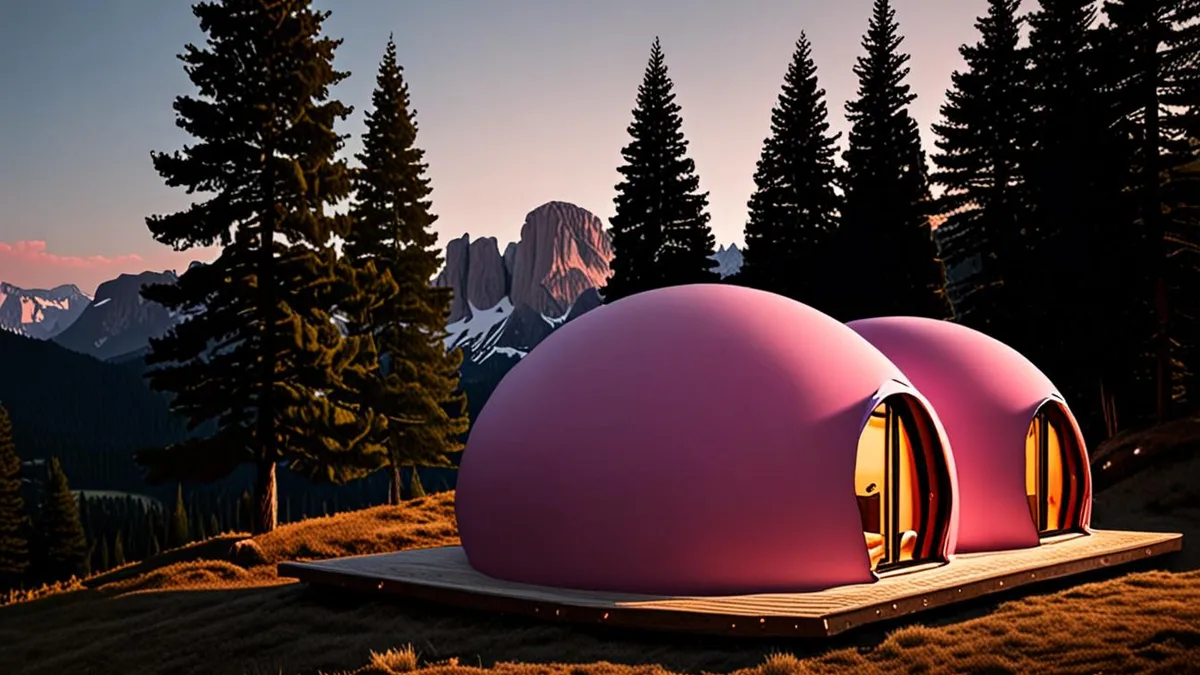
As for the accommodation itself, expect real comfort. Stays range from safari tents and geodesic domes to luxury pods, often equipped with wood stoves, proper beds, and en-suite bathrooms. Many units have panoramic windows or private decks, so you can watch the weather roll over the peaks without leaving your bed.
Best Regions for Alpine Glamping in Summer
The Alps stretch across eight countries, but a handful of regions consistently deliver the best summer glamping experiences. Each has its own character, price level, and season length, so it pays to match the region to your priorities before you book anything.
The Swiss Valais around Zermatt is the luxury end of the market. Domes here often come with Matterhorn views, high-end furnishings, and price tags to match, the steepest in the Alps. If budget is secondary and the view is everything, this is where you’ll spend it.
The Italian Dolomites hit a sweet spot: dramatic rock scenery, mid-range pricing, and a long operating window from June through September. For a closer look at this region, glamping in the Dolomites: best areas and seasons breaks down where to stay and when.
Slovenia’s Julian Alps near Lake Bled combine lake-and-mountain settings with some of the friendliest rates in the region, making them a favorite for travelers who want scenery without the Swiss price tag.
- Swiss Valais and Zermatt: car-free Zermatt village means many sites rely on shuttle or cable-car access, so check how you’ll reach your dome with luggage before booking.
- Italian Dolomites: many sites sit near cable cars that open in summer, letting you ride up for high-altitude views and walk down to your tent.
- Slovenian Julian Alps: the lake setting adds swimming and paddleboarding to a hiking trip, something pure mountain regions can’t offer.
- Austrian Tyrol: alpine huts and family-run farms sit throughout the trail networks, so you can plan multi-day walks with proper meals along the way.
- French Chamonix valley: the valley floor gives you access to both French and Italian side trails, with lifts running from several points in summer.
Austrian Tyrol and the French Chamonix valley suit hikers above all. Both have dense trail networks that often start right from the glamping sites themselves, so you can lace up your boots at your tent door and be on the mountain within minutes.
When to Go: Choosing Your Summer Window
Timing is the single biggest factor in whether your alpine glamping trip feels like a bargain or a splurge. The season runs roughly from June to September, but the four months are not interchangeable, and the differences show up in both your bill and your daily experience.
The shoulder months: June and September
June and September give the best overall balance: trails are open, the weather is mild, and rates typically run lower than peak season. These months attract fewer crowds too, so you’ll share viewpoints and village cafés with a fraction of the July and August masses. If your schedule allows any flexibility, this is where you should aim.
Two caveats apply. Early June can still hold snow on the higher routes, which limits high-altitude hiking until later in the month. And in September, some glamping sites close partway through the month as operators wind down for the season, so confirm your chosen site’s exact closing date before you plan a late-September trip.
July and August bring the warmest weather and full lift and activity schedules, with cable cars, mountain restaurants, and guided excursions all running at capacity. The trade-off is peak crowds and peak prices, plus the highest chance of sharing your sunrise view with a dozen other travelers. If you’re weighing a tent against a hotel room for a busy summer week, it helps to think through what each option actually gives you; our guide to glamping versus traditional camping breaks down the practical differences.
One more consideration: if you’re set on a specific dome or a specific view, the shoulder months also make last-minute planning easier, since availability is generally better than in the peak weeks.
How Much Alpine Glamping Costs in Summer
Alpine glamping costs more than camping, but far less than most mountain hotels. For a couple in a standard dome or safari tent during the summer season, expect to pay in the range of €120–€350 per night depending on region and comfort level. That usually covers a real bed, en-suite bathroom and often breakfast, which softens the sticker shock considerably.
At the top end, luxury domes with panoramic windows and private saunas can reach up to €500 per night in the warmest, busiest weeks. These are the units with Matterhorn or Dolomite views, and they tend to book out first, so if a specific view matters to you, lock it in early.
Timing matters as much as unit type. Staying in June or September instead of peak season means paying noticeably less for exactly the same dome, so a midsummer splurge becomes affordable shoulder-season luxury. If you want a broader comparison of prices across the continent, this guide on what glamping costs across Europe in 2025 puts alpine rates in context.
A few other cost factors to keep in mind:
- Family units and multi-room tents typically cost more per night than couple pricing, but can still beat booking two separate hotel rooms in a resort village.
- Wood stove fuel and sauna access are usually included in the nightly rate, unlike some ski-season properties that charge extras for heating.
- Tourist or local taxes are added per person per night at most alpine sites and change from year to year, so check the current rate when you book.
- Half-board packages are increasingly offered at higher-end sites and can be worth comparing against nearby restaurant prices before you commit.
How and When to Book
Alpine glamping sites are small by nature, often with just a handful of domes or tents spread across a meadow or terrace. That intimacy is part of the charm, but it also means availability is tight even outside the busiest weeks, and a little planning goes a long way. This is especially true if a specific view matters to you, because the best-positioned units are usually the first to go. Here is how to book smart.
- Decide your dates first. July and August are the warmest months and the most in demand, so booking 3–6 months ahead is the safe play. The best-view units sell out first, often well before the rest of the site. June and September trips, by contrast, can usually be booked 1–2 months out with good availability and fewer crowds to compete with.
- Check the unit orientation. Sites rarely advertise which domes face the main peaks, so email or call before booking and ask which unit has the view you want. Then request it by name if possible, and get the confirmation in writing.
- Aim for a midweek arrival. Arriving Monday through Wednesday cuts prices and crowd levels versus weekend stays in every summer month. Many sites apply lower midweek rates automatically, but it never hurts to ask.
- Read the cancellation terms carefully. Mountain weather makes flexible rebooking valuable, since an afternoon thunderstorm or a closed trail can justify shifting your dates. Free cancellation up to a week or two before arrival is common but not universal, so check before you pay.
- Confirm what is included. Policies vary widely between eco-sites and luxury operators. Verify whether breakfast, bedding, firewood and parking are part of the rate, since extras can add up quickly over a multi-night stay.
If your dates are flexible, set a reminder rather than booking impulsively. Waiting a short time for a cancellation on a midweek slot in September often pays off with a better unit at a lower rate. Small sites are usually happy to keep your details on file and alert you when something opens up, so a friendly email can genuinely work in your favor.
What to Pack for an Alpine Summer Stay
Packing for an alpine summer stay is really packing for two seasons in one day. Valleys can sit in the mid-20s°C while your tent high on the mountainside shivers through a night in single digits, so layers matter far more than a big suitcase. Think of your bag as a small wardrobe that shifts from beach weather to late autumn within a few hours.
The golden rule: bring a down or fleece jacket even in midsummer, because nights regularly fall to 5–10°C in the mountains. Days feel warm in the sun, then the temperature swings hard once the sun drops behind the peaks. Dressing in removable layers lets you adapt without ever being caught out.
Weather and terrain shape the rest of your kit. Afternoon thunderstorms are a normal rhythm in July and August, and trails around most sites are rocky rather than smooth, so your footwear choice matters more than you might expect. Pack with the storm-and-scree reality of the high Alps in mind.
Beyond the basics, these items earn their space in your bag:
- A waterproof shell jacket rather than a poncho, since mountain storms often arrive with wind and a poncho turns into a sail.
- Sturdy hiking shoes with grip instead of trail runners if you plan to walk above the tree line, where scree and wet rock are common after a storm.
- High-SPF sunscreen and sunglasses rated for strong alpine sun; UV exposure is noticeably stronger at altitude, and burns happen faster than at sea level.
- A headlamp with fresh batteries, because some eco-sites keep lighting deliberately minimal after dark and paths between tents can be unlit.
- A power bank, since a number of eco-friendly sites limit outlets to a shared lodge or run low-capacity solar setups.
- Quick-dry clothing rather than cotton, so a caught-in-the-storm afternoon does not leave you with damp layers for the next morning.
The Bottom Line on Summer Glamping in the Alps
Summer glamping in the Alps is far more predictable than many travelers fear. Yes, the weather brings big day-night temperature swings and common afternoon thunderstorms, but the storms usually clear by evening, leaving you with stunning views and crisp mountain air. If you want the best value, aim for June or September; if you want the warmest and liveliest weeks, July and August deliver, at the cost of crowds and peak prices.
On budget, plan for roughly €120-€350 per night for a couple depending on region and comfort level, with luxury domes reaching up to €500. For peak dates, book 3-6 months ahead, since the best units go first. With realistic expectations about weather and timing, an alpine glamping trip can be one of the most memorable ways to experience the mountains. Have you tried it, or are you planning a trip? Leave a comment or share this article with a fellow traveler.